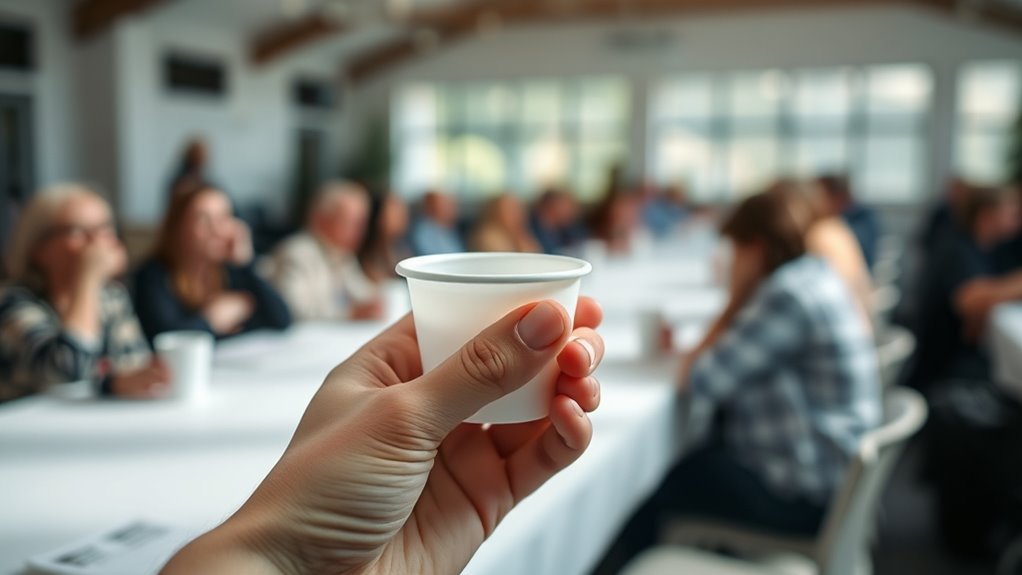
A blind taste test is a method where you evaluate foods or drinks without seeing them, relying only on your senses of taste and smell. This approach removes visual cues that can influence your judgment, helping you focus solely on flavor, texture, and aroma. It can reveal subtle differences and improve your tasting skills. If you’re curious about how this process works and its benefits, keep exploring to learn more.
Key Takeaways
- A blind taste test evaluates foods or drinks without visual cues to focus on flavor and aroma.
- It involves hiding visual information to challenge sensory perception and improve taste discrimination.
- Participants rely on taste and smell to identify or compare products, often leading to surprising results.
- The process enhances awareness of subtle flavor differences and deepens understanding of sensory contributions.
- Used in culinary and scientific settings to assess product quality and refine palates.
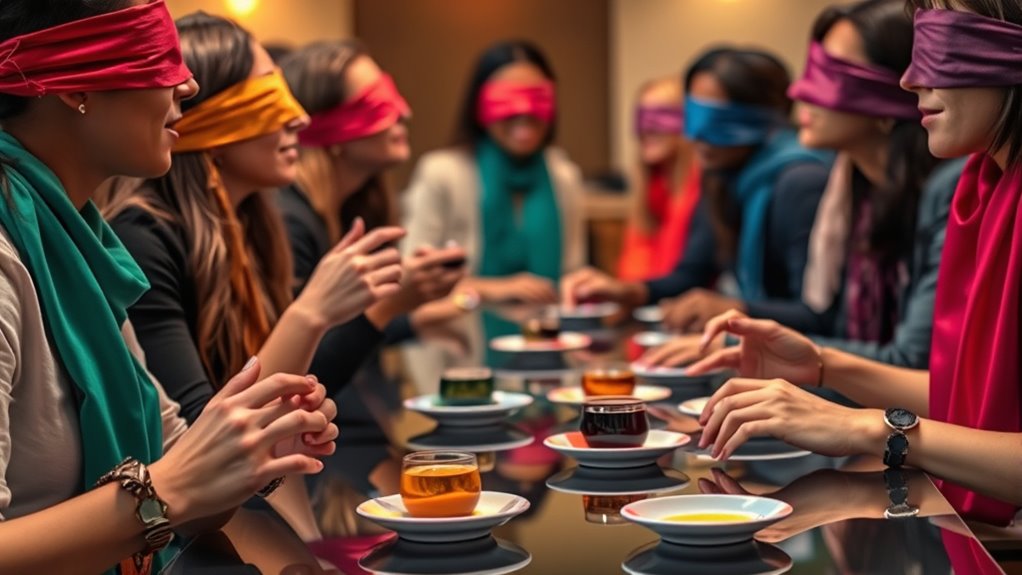
Have you ever wondered if you can truly tell the difference between foods or drinks without seeing them? That curiosity is exactly what a blind taste test explores. It’s a fascinating way to challenge your senses and test your ability to identify flavors without visual cues. When participating in a blind taste test, your sense of sight is deliberately kept out of the equation, allowing your other senses to take center stage. This process is rooted in sensory evaluation, a scientific method used to measure and analyze how we perceive different tastes, textures, and aromas. By removing visual influence, you get a purer sense of flavor detection, which helps reveal how much your senses contribute to your overall perception of food and drink.
During a blind taste test, you focus solely on the flavors, textures, and aromas of what you’re tasting. Without seeing the item, your brain relies heavily on your taste buds and olfactory senses to make judgments. This can be surprising because our eyes often influence our expectations—if we see a familiar fruit or beverage, we tend to anticipate a certain taste. When those visual clues are taken away, your palate is forced to do more of the work, making the experience both a challenge and an eye-opener. You might find yourself misidentifying a drink or food in a blind test, but that’s part of the fun—discovering how much you actually know about what you’re eating or drinking.
The essence of flavor detection in a blind taste test lies in how well you can distinguish subtle differences between similar products. For example, you might compare different brands of soda or identify the specific ingredients in a flavored snack. Sensory evaluation plays a key role here because it systematically breaks down the components of taste—sweetness, bitterness, acidity, saltiness—and helps you understand how they come together to form the overall flavor profile. As you focus on these elements, you’ll begin to notice nuances that might normally be overshadowed by visual cues or preconceived notions. This heightened awareness can improve your tasting skills and deepen your appreciation for the complexities of food and drink. Additionally, understanding sensory evaluation can enhance your ability to select high-quality products and refine your palate over time.

The Original Great Whiskey Challenge Bar Tasting Taste Test Kit – Blind Bourbon Spirits Ultimate Tasting Game – Bourbon Whiskey Vodka Rum Wine Tasting Set
- Complete Blind Taste Test Kit: Includes everything needed for tasting
- Lettered Glasses: Three A/B/C labeled tasting glasses
- Wooden Bottle Tags: Reusable A/B/C tags for bottles
As an affiliate, we earn on qualifying purchases.
As an affiliate, we earn on qualifying purchases.
Frequently Asked Questions
How Are Blind Taste Tests Different From Regular Taste Tests?
Blind taste tests differ from regular taste tests because you rely solely on your sensory perception, without being influenced by branding, packaging, or other visual cues. This approach helps you focus on the true flavor and quality of the products, giving you a more honest assessment of consumer preferences. You’re able to make unbiased judgments, ensuring your opinions are based strictly on taste rather than external factors.
What Types of Products Are Typically Tested in Blind Taste Tests?
In blind taste tests, you usually evaluate products like wines, coffees, chocolates, and snacks. You focus on flavor profiles and perform sensory evaluations without bias. This method helps you accurately compare taste, aroma, and texture, revealing true preferences. By removing packaging and branding cues, you can better identify subtle differences and determine which product excels in flavor, making blind taste tests essential for honest assessments.
How Can Bias Be Minimized During a Blind Taste Test?
Think of bias as fog clouding your judgment; to clear it, you need sharp tools. Use randomization techniques to assign samples unpredictably, so personal preferences don’t sway results. Keep observers blind to sample identities to eliminate observer bias, like hiding the map in a treasure hunt. These steps make sure your taste test stays fair and objective, revealing true preferences without external influence.
What Equipment Is Necessary to Conduct a Blind Taste Test?
To conduct a blind taste test, you’ll need minimal equipment, mainly focusing on sensory deprivation tools like opaque cups or covers to hide the samples’ appearance. Prepare samples carefully, ensuring consistent portion sizes and temperature to avoid bias. You might also use neutral utensils and plain plates to keep the focus on taste. This setup helps you accurately assess flavors without visual influence, making your results more objective.
Are There Any Health or Safety Concerns With Blind Taste Testing?
Are you aware of the health and safety concerns with blind taste testing? You should be, because allergic reactions can occur if allergens aren’t properly identified, and contamination risks might affect results or cause illness. Always guarantee ingredients are clearly labeled, use sanitized equipment, and supervise participants to prevent accidental exposure. Taking these precautions helps keep everyone safe while enjoying unbiased tasting experiences.
Conclusion
A blind taste test is like opening your senses to a world beyond appearances, revealing true flavors without bias. By trusting your palate over color or packaging, you discover what really stands out. It’s a journey that strips away illusions and highlights genuine preferences. So, next time you try one, remember—you’re revealing a treasure chest of taste, letting your senses be the guide through a symphony of flavors waiting to be explored.