

To guarantee safety and hygiene, you should always follow personal hygiene policies that include using proper hair restraints like caps or hairnets and managing jewelry appropriately. These practices prevent loose hair or jewelry from contaminating products or surfaces, especially in food service, healthcare, or manufacturing settings. Consistently maintaining these standards helps protect health and promotes a professional environment. If you want to learn more about implementing effective hygiene measures, you’ll find useful tips here.
Key Takeaways
- Hair restraints like caps or hairnets prevent loose hair from contaminating products or surfaces.
- Personal grooming includes regular hair washing and neat styling to uphold hygiene standards.
- Jewelry should be managed or removed to avoid contamination and adhere to workplace policies.
- Proper hair management and jewelry guidelines support a clean, safe, and professional work environment.
- Implementing these policies reduces contamination risks and promotes overall workplace hygiene and safety.
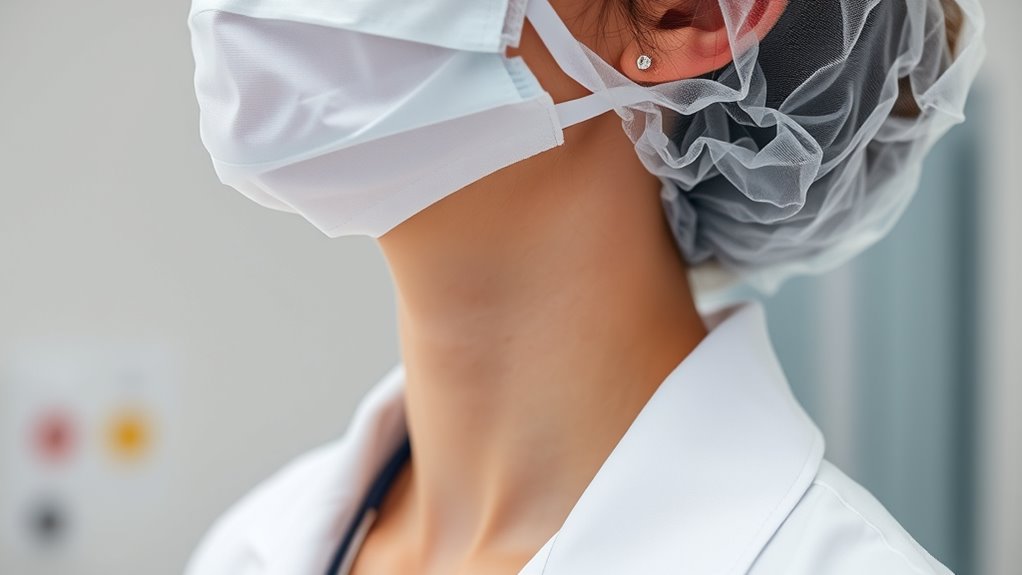
Personal hygiene policies are essential guidelines that help maintain a clean and healthy environment in the workplace or any organization. When it comes to workplace cleanliness, adhering to specific practices around hair restraints and jewelry plays a vital role. Your personal grooming routines directly impact not only your health but also the safety and hygiene standards of your work environment. Whether you’re working in food service, healthcare, or manufacturing, following these policies helps prevent contamination and promotes a professional atmosphere.
Personal hygiene policies ensure a safe, clean, and professional environment for all.
One of the key aspects of maintaining workplace cleanliness is properly managing hair. Loose hair can easily fall into food, equipment, or other materials, risking contamination. That’s why many workplaces require employees to wear hair restraints such as caps, hairnets, or visors. These are designed to contain hair effectively, ensuring it doesn’t come into contact with products or work surfaces. When you follow this rule consistently, you’re actively contributing to a safer, more hygienic environment. It’s a simple step that makes a significant difference, especially in industries where cleanliness is paramount. Additionally, awareness of narcissistic behaviors can help in recognizing and addressing manipulative dynamics that may affect team cohesion and communication.
Your personal grooming routines should also include regular hair washing and keeping hair neatly styled. This reduces the likelihood of stray hair falling out and minimizes the presence of dandruff or scalp oils that can compromise hygiene. Combining proper grooming with the use of hair restraints creates a thorough approach to workplace cleanliness. Remember, the goal isn’t just to follow the rules but to foster a culture of cleanliness that protects both colleagues and clients.
hairnets for food service workers
As an affiliate, we earn on qualifying purchases.
As an affiliate, we earn on qualifying purchases.
Frequently Asked Questions
Are There Specific Types of Jewelry Prohibited During Work?
Yes, during work, you should avoid wearing jewelry like rings and bracelets that could pose contamination risks or get caught in equipment. Ring restrictions typically ban large or multiple rings, while bracelet policies often restrict dangling or loose bracelets. These measures help maintain hygiene and safety standards. Always check your workplace’s specific jewelry guidelines, and when in doubt, leave jewelry off to prevent accidents and keep the environment safe.
How Should Employees Handle Facial Hair With Hair Restraints?
Think of facial hair grooming as tending a garden—your goal is neatness and safety. To guarantee hair restraint compliance, you should trim or neatly style facial hair so it stays contained under hair restraints. Use appropriate grooming tools, and always check that your facial hair doesn’t interfere with safety equipment. This way, you keep your work environment clean, safe, and compliant, just like a well-maintained garden thrives.
What Are the Consequences of Not Following Hygiene Policies?
If you ignore hygiene policy violations, you put yourself at risk of serious employee health risks and potentially cause contamination. You could face disciplinary actions, including warnings or suspension, and in severe cases, termination. Not following these policies damages your reputation and can lead to legal issues for the organization. Always adhere to hygiene standards to protect yourself, coworkers, and customers from health hazards.
Can Head Coverings Be Customized or Decorated?
You can customize or decorate head coverings within specific guidelines to guarantee safety and hygiene. Check your facility’s decoration guidelines, which typically allow subtle customization like adding logos or simple designs, but restrict excessive adornments that could contaminate food. Use safe materials that don’t compromise the covering’s integrity, and always keep decorations neat and secure. This way, you personalize your head coverings while maintaining adherence to hygiene standards.
Are There Different Policies for Different Departments or Roles?
You’ll find that department variations and role-specific policies act like a tailored suit, fitting each area perfectly. Different departments may have stricter rules on hair restraints and jewelry to guarantee safety and hygiene, while roles with direct patient contact might enforce tighter restrictions. It’s like a dance where each step is choreographed to match the rhythm of your specific responsibilities, keeping everyone safe and compliant no matter where you work.
Conclusion
By following these personal hygiene policies, you help create a welcoming environment where everyone feels comfortable. Properly managing hair restraints and jewelry ensures a tidy appearance and smooth operations. Remember, paying attention to these small details keeps the focus on the positive experience you aim to provide. When you embrace these habits, you gently support a professional atmosphere that benefits both you and those you serve, making every day a little brighter and more pleasant.