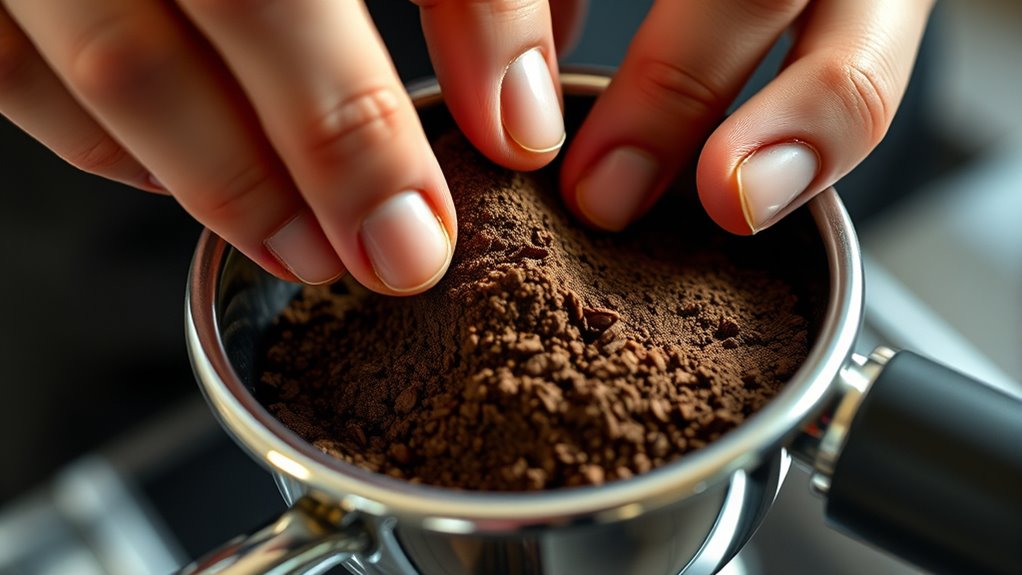

To properly prepare a puck, focus on even distribution of rubber material and careful tamping to compress it uniformly. Use controlled pressure to shape and compact the rubber without deforming or over-densifying it, ensuring a smooth and round surface free of indentations. Paying attention to temperature, grind consistency, and tamping techniques helps eliminate irregularities that could affect bounce and speed. Keep these details in mind, and you’ll discover how small adjustments can considerably improve performance.
Key Takeaways
- Proper puck preparation involves careful distribution of rubber material for uniform density.
- Tamping applies controlled pressure to shape and compress the puck evenly, ensuring consistent performance.
- Use calibrated tools or manual methods to achieve even tamp pressure and a perfectly round surface.
- Maintaining consistent grind size and temperature is crucial for reliable puck interaction and control.
- Attention to detail in both distribution and tamping minimizes irregularities, improving bounce, speed, and handling.
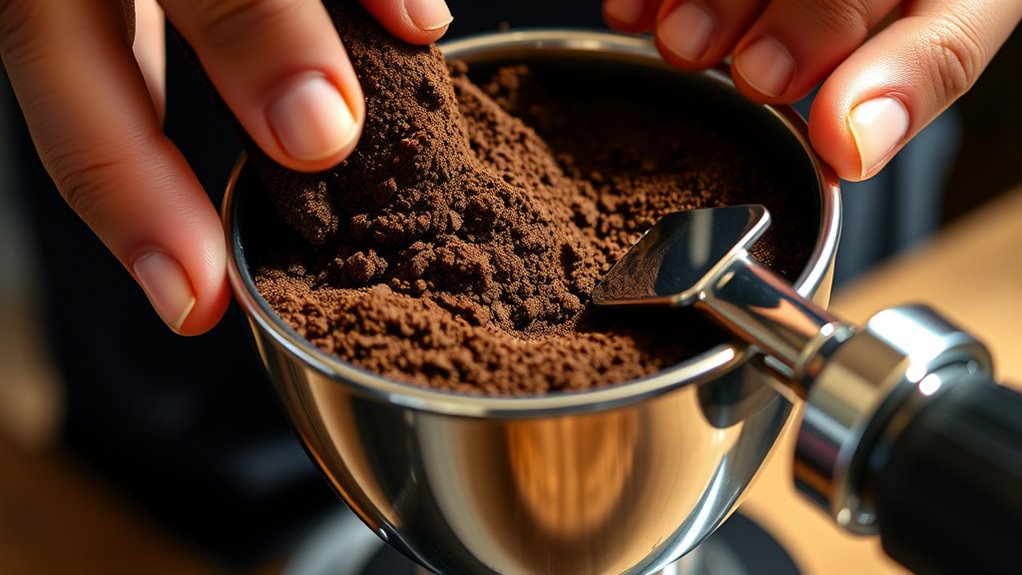
Have you ever wondered what goes into preparing a puck for a game? It’s more than just grabbing a standard piece of rubber and tossing it onto the ice. Proper puck preparation involves careful distribution and tamping, which directly influence performance and consistency. When you focus on grind consistency, you ensure that each puck has a uniform surface, which is essential for predictable handling and accurate shooting. Achieving this requires precision in grinding; you want to avoid uneven surfaces or rough edges that can cause unpredictable bounces. Regularly checking and maintaining your grinding equipment helps you produce pucks with a smooth, even surface every time. Consistency in grind size means every puck interacts with the ice in the same way, giving you reliable control throughout the game.
Once the puck’s surface is properly ground, the next step is tamping. Tamping involves applying the right tamp pressure to shape and compress the rubber evenly. Too much pressure, and you risk deforming the puck or creating an overly dense surface that affects bounce and speed. Too little, and the puck remains uneven, leading to inconsistent performance. You need to find that sweet spot where the tamp pressure is just enough to firmly compress the rubber without compromising its integrity. This step is indispensable for ensuring that each puck has a uniform density and weight, which affects how it glides on the ice, how it reacts when shot, and how well it maintains its shape during play.
The key to effective tamping is control. Using a calibrated press or a consistent manual technique helps you apply even pressure across the entire puck surface. As you do this, pay attention to the feel of the pressure—firm but not excessive—and to the resulting shape. You want a puck that’s perfectly round, with no visible indentations or bulges. Proper tamping also helps eliminate air pockets or inconsistencies that could cause irregularities in bounce or speed. When you combine precise grind consistency with correct tamp pressure, you create a puck that performs reliably, giving you a competitive edge on the ice.
Additionally, proper temperature control during the manufacturing process can influence how well the rubber responds to grinding and tamping, leading to more consistent results.
In the end, puck preparation is about meticulous attention to detail. By ensuring grind consistency and applying the right tamp pressure, you control how the puck interacts with the ice and your stick. This precision makes all the difference in gameplay, helping you deliver accurate shots and maintain control during fast-paced action. It’s a process that demands focus, but the payoff is a puck that’s perfectly prepared to meet the demands of the game.
As an affiliate, we earn on qualifying purchases.
Frequently Asked Questions
How Does Puck Preparation Affect Overall Coffee Flavor?
Puck preparation directly impacts your coffee flavor by influencing aroma and crema development. When you evenly distribute and tamp the grounds, you create uniform resistance for water, leading to ideal extraction. This enhances the coffee’s aroma and promotes a rich, creamy crema. Poor preparation results in uneven extraction, dull flavors, and thin crema. So, taking care with puck prep ensures your espresso is flavorful, aromatic, and beautifully topped with crema.
What Tools Are Best for Distributing and Tamping?
Imagine you’re wielding a legendary tool—like Excalibur—when choosing your distribution and tamping tools. A precision distributor ensures even coffee grounds, while a calibrated tamper helps you apply consistent tamping pressure. Use a distribution tool with a flat edge to level grounds smoothly, and a sturdy tamper that fits comfortably in your hand. Regular grinder calibration complements these tools, guaranteeing ideal extraction and a balanced, flavorful shot every time.
How Do Humidity Levels Influence Puck Consistency?
Humidity levels considerably influence puck consistency by affecting moisture control. If the air is too humid, your coffee grounds absorb excess moisture, making the puck softer and potentially causing channeling during extraction. Conversely, low humidity can dry out the grounds, resulting in a brittle puck that’s hard to tamp evenly. By maintaining stable humidity, you guarantee consistent moisture levels, helping you achieve a well-formed, uniform puck for ideal extraction.
Can Puck Preparation Techniques Vary for Different Espresso Machines?
Of course, your espresso machine demands its own special puck prep dance. Different machines have unique portafilter sizes, basket shapes, and pressure profiles, so your distribution and tamping techniques must adapt. Ignoring machine compatibility risks uneven puck consistency and subpar espresso. So, embrace the quirks, tweak your method, and remember: a one-size-fits-all approach isn’t the espresso world’s style. Customization is key for perfect shots every time!
What Are Common Mistakes to Avoid During Puck Preparation?
To avoid mistakes during puck preparation, focus on maintaining distribution consistency and applying even tamping pressure. Don’t overfill or underfill the basket, as uneven coffee grounds affect extraction. Avoid tamping with excessive force, which can cause channeling, or too little pressure, resulting in weak shots. Make certain the coffee is evenly distributed before tamping, and use consistent pressure each time to achieve ideal extraction and flavor.
Conclusion
Mastering puck preparation is like tending a delicate garden—you need to carefully distribute and tamp the material to guarantee a perfect foundation. When you pay attention to these details, your gameplay becomes smoother and more controlled, like a well-oiled machine. Remember, a well-prepared puck is the key to opening your full potential on the ice. So, take your time, stay focused, and let your puck’s flawless setup be the secret weapon in your arsenal.