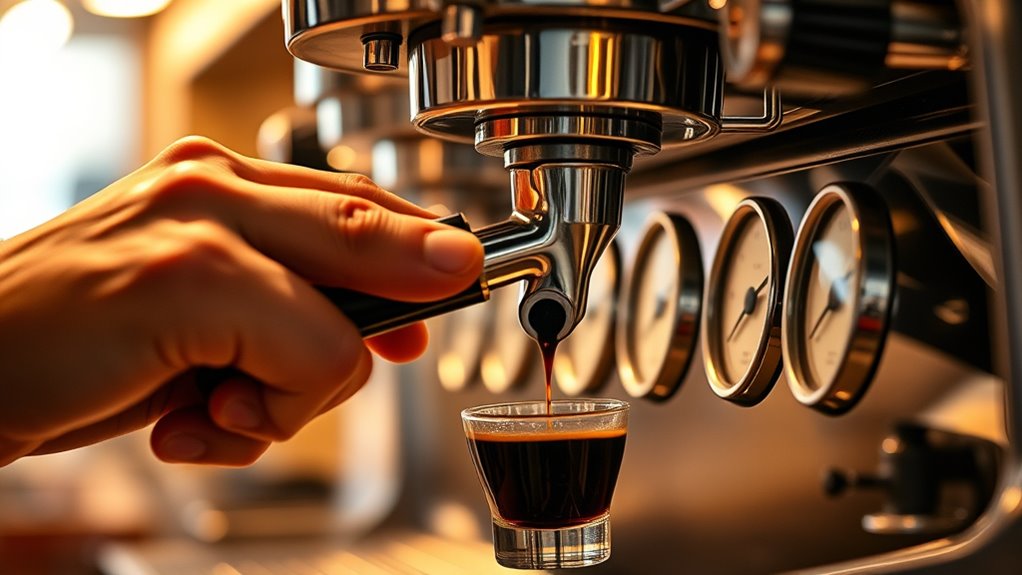

Espresso pressure profiling involves adjusting the pressure applied during extraction to influence flavor, body, and clarity. By precisely controlling pressure at different stages, you can enhance sweetness, reduce bitterness, and bring out unique coffee qualities. Achieving consistent results depends on proper calibration of your machine and mastering your technique. When you understand how to manipulate pressure profiles, you’ll unleash your coffee’s full potential. Continue exploring to discover how to craft truly exceptional espresso shots.

Get kitchen staples and gadgets delivered free — and shop member deals
- Fast, free delivery on millions of items
- Access to Prime Big Deal Days deals on October 6–7
- Prime Video, Amazon Music and more included
Key Takeaways
- Pressure profiling adjusts the pressure applied during extraction to influence flow rate and flavor development.
- It involves varying pressure settings at different stages of the shot to enhance sweetness, clarity, or body.
- Precise machine calibration ensures accurate control over pressure changes and consistent results.
- Starting with a standard profile, baristas can modify pressure ramps to tailor espresso characteristics.
- Combining technique and calibration allows for nuanced control, elevating espresso quality and showcasing coffee’s unique profile.
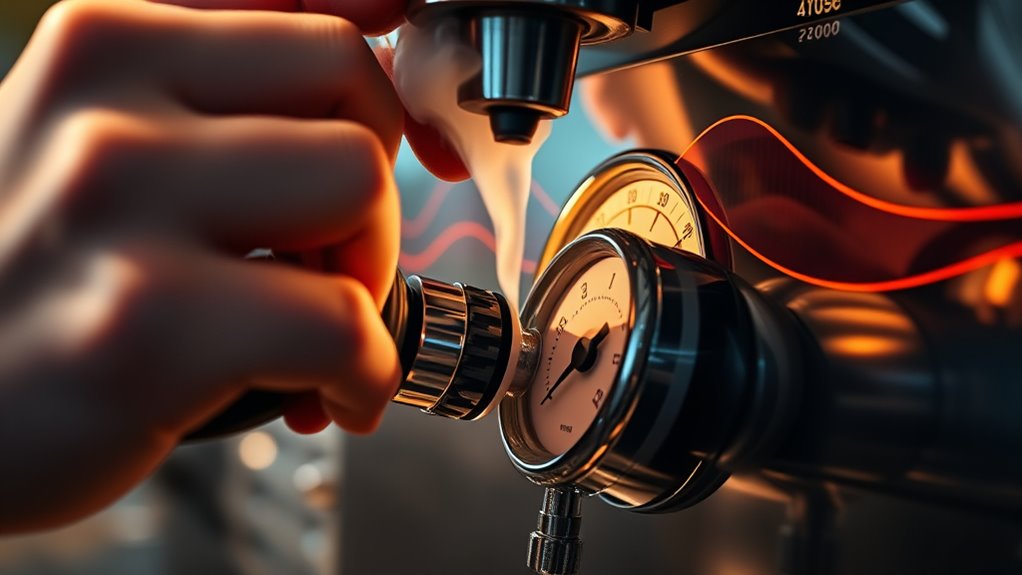
Have you ever wondered how baristas achieve that perfect espresso shot with rich, balanced flavor? The secret often lies in mastering brew techniques and ensuring precise machine calibration. When you focus on these aspects, you gain greater control over the extraction process, which is essential for developing complex flavors and achieving consistency. Brew techniques involve the careful manipulation of variables like grind size, tamping pressure, and water temperature, but one of the most impactful methods is pressure profiling. This technique allows you to adjust the pressure applied during extraction, enabling you to influence the flow rate and extraction dynamics. By experimenting with different pressure profiles, you can enhance sweetness, reduce bitterness, and reveal deeper flavor nuances in your espresso.
To effectively utilize pressure profiling, you need to understand your espresso machine’s capabilities. Not all machines are equipped for variable pressure adjustments, so calibration becomes necessary. Machine calibration involves fine-tuning the pressure gauge and verifying that the machine delivers consistent pressure throughout the extraction. When your machine is accurately calibrated, you can confidently manipulate pressure profiles without worrying about fluctuations or inaccuracies. This consistency is essential because even small deviations can greatly impact flavor. By regularly calibrating your machine, you guarantee that your brew techniques are executed with precision, giving you reliable results every time.
Understanding your espresso machine’s capabilities through regular calibration ensures consistent, precise pressure for optimal flavor extraction.
Once you’re familiar with your machine’s calibration, you can begin experimenting with different pressure profiles. Start with a standard profile—applying higher pressure at the beginning to quickly saturate the coffee grounds, then lowering pressure to allow a slower, more controlled extraction. As you gain experience, you can adjust the pressure ramps, sometimes increasing pressure mid-extraction to enhance body or reducing it to emphasize clarity. The key is to observe how these changes influence the shot’s flavor, body, and mouthfeel. Over time, you’ll develop a sense of which profiles produce your preferred taste, and this knowledge will elevate your barista skills.
In essence, mastering brew techniques and maintaining proper machine calibration are foundational to successful pressure profiling. They give you the precision needed to manipulate extraction dynamics actively. When you combine consistent calibration with thoughtful pressure adjustments, you gain a powerful tool to craft espresso with depth and complexity. It’s about understanding your equipment, experimenting thoughtfully, and refining your approach until you can consistently produce shots that are not just good but extraordinary. This blend of technique and calibration transforms the process from a simple brew into an art form, allowing you to highlight the unique qualities of each coffee.
espresso machine with pressure profiling
As an affiliate, we earn on qualifying purchases.
As an affiliate, we earn on qualifying purchases.
Frequently Asked Questions
Can Pressure Profiling Improve My Espresso Flavor?
Yes, pressure profiling can improve your espresso flavor by enhancing flavor extraction and achieving more consistent taste. By adjusting the pressure during brewing, you can better control how flavors develop, resulting in a richer, more balanced shot. This technique helps you fine-tune your espresso to match your preferred taste profile, making each cup more satisfying and consistent. Ultimately, pressure profiling gives you more influence over the final flavor, elevating your espresso experience.
What Equipment Is Needed for Pressure Profiling?
About 85% of professional baristas use pressure profiling to enhance espresso flavor, so investing in the right equipment makes a big difference. You’ll need a machine with a pressure gauge and a piston system that allows control over extraction pressure. This setup lets you modify pressure during brewing, revealing richer flavors. With the right gear, you can experiment and perfect your espresso, making every shot uniquely tailored to your taste.
Is Pressure Profiling Suitable for Beginners?
Pressure profiling can be suitable for beginners if you’re willing to learn and experiment with different brew techniques. It allows you to customize your machine’s pressure settings, helping you improve your espresso quality over time. Start with simple adjustments, and as you gain confidence, explore more advanced machine customization options. With patience and practice, pressure profiling becomes a valuable tool to craft consistent, high-quality shots.
How Does Ambient Temperature Affect Pressure Profiling?
Ambient temperature can considerably impact your pressure profiling, as even a 2°C variation can alter extraction dynamics. You might notice that temperature fluctuations cause inconsistent results, making temperature stability essential for precise control. With ambient variation, your espresso’s flavor can change unexpectedly. To maintain ideal pressure profiling, keep your environment as stable as possible, ensuring consistent extraction and better-tasting espresso every time you brew.
Can Pressure Profiling Be Automated on Home Espresso Machines?
Yes, you can automate pressure profiling on home espresso machines. Many models now feature manual control options combined with software integration, allowing you to program specific pressure profiles. This means you can set and repeat consistent profiles without manual adjustments each time. By connecting your machine to compatible software, you gain precise control, making it easier to perfect your espresso shots with automated pressure profiling tailored to your preferences.
Conclusion
By understanding espresso pressure profiling, you can truly elevate your brewing game. Imagine starting with a gentle pressure to gently extract delicate flavors, then ramping up to a higher pressure for a richer body. For example, a barista experimenting with pressure profiling might notice a brighter shot with more complex aromas. When you master this technique, you control your brew’s flavor and texture, turning every cup into a personalized masterpiece.
NFL season / tailgating Picks
team gear
As an affiliate, we earn on qualifying purchases.