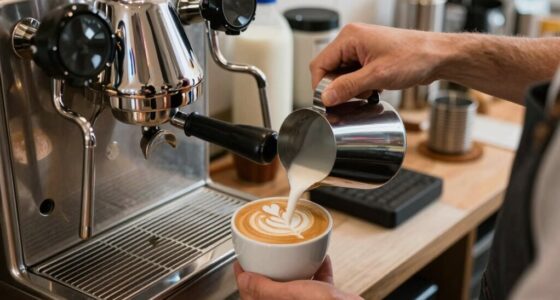
To master espresso, understanding temperature and PID basics is key. A PID controller helps keep your machine’s water temperature steady, ensuring consistent shots and ideal flavor extraction. It monitors and adjusts the heat quickly, preventing fluctuations that can cause sour or bitter tastes. Proper calibration fine-tunes this system, improving crema and overall quality. By maintaining precise temperature control, you’ll enjoy more predictable results; keep going to learn how to set it up for perfect brewing.
Open a free Amazon Business account
Business pricing, bulk buying and tax-exempt orders.
As an affiliate, we earn on qualifying purchases.
Key Takeaways
- PID controllers precisely monitor and adjust the espresso machine’s temperature to maintain a stable water temperature during brewing.
- Proper PID calibration involves measuring current temperature and fine-tuning settings for consistent extraction quality.
- Temperature stability reduces flavor variability, over-extraction, and bitterness, leading to more consistent espresso shots.
- Regular PID calibration enhances crema richness and flavor clarity by ensuring optimal brewing temperatures.
- Understanding and managing espresso temperature with PID helps both home and professional baristas achieve reliable, high-quality results.
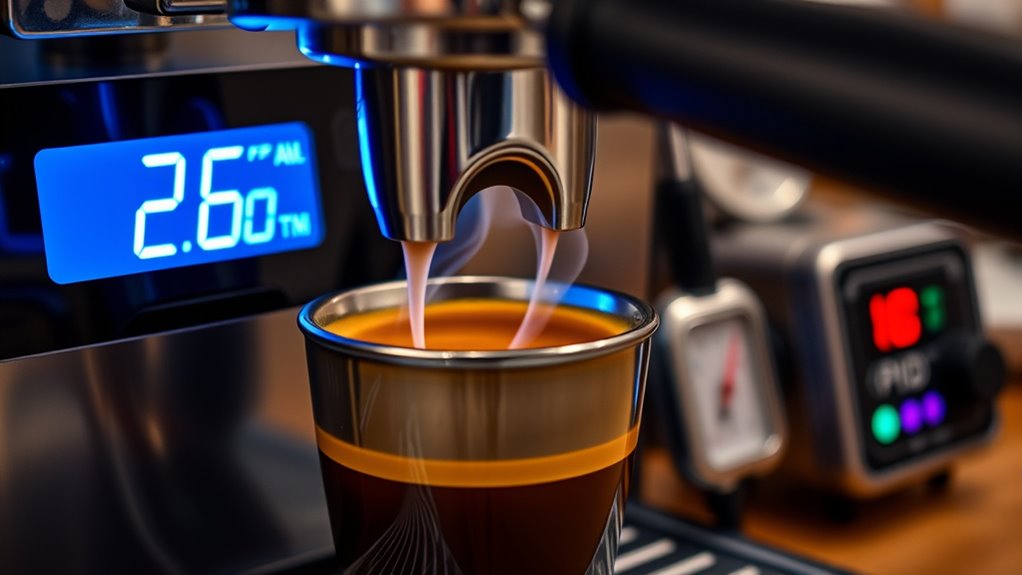
Achieving the perfect espresso hinges on controlling its temperature, which directly influences flavor and extraction quality. If your machine’s temperature fluctuates, your shot can become over-extracted, bitter, or under-extracted, resulting in a flat or sour taste. That’s why temperature stability is crucial for consistent espresso. When your machine maintains a steady temperature, each shot will have predictable extraction times and flavor profiles, making your brewing process more reliable. A significant way to guarantee this stability is through proper PID calibration. A PID controller monitors and adjusts the machine’s heating element, maintaining the water temperature with remarkable precision. Without proper calibration, even the best machines can experience temperature swings that compromise shot quality.
When you calibrate your PID, you’re fundamentally teaching it to keep the temperature within a narrow, ideal range. This process involves measuring the current temperature, then adjusting the PID settings to correct any deviations. Once calibrated correctly, your espresso machine can respond swiftly to temperature changes, minimizing fluctuations during extraction. This consistency allows you to dial in your grind size, dose, and tamp with confidence, knowing the temperature won’t drift unexpectedly. It’s a game changer for baristas and home enthusiasts alike, as it turns guesswork into precision.
You don’t need to be an engineer to perform a basic PID calibration; many machines come with user-friendly interfaces that guide you through the process. It’s worth investing time into calibration because it directly impacts the quality of your espresso. When your PID is properly calibrated, it maintains a stable temperature throughout the extraction, ensuring your brew is neither too hot nor too cold. This stability means the flavors are expressed more clearly, and the crema remains rich and velvety. Over time, you’ll notice that your shots become more consistent, allowing you to fine-tune other variables with greater confidence. Additionally, understanding the importance of temperature control can help you select the right equipment for your needs.
In principle, controlling temperature stability through proper PID calibration is a crucial step toward espresso perfection. It’s a simple yet powerful adjustment that ensures your machine responds accurately to temperature demands. Whether you’re a professional barista or a home enthusiast, dedicating time to optimize your PID settings pays off with better-tasting espresso and a more predictable brewing process. Once you’ve achieved steady temperature control, you’ll find that the nuances of your beans shine through, and your shots become consistently outstanding.
As an affiliate, we earn on qualifying purchases.
Frequently Asked Questions
How Does Ambient Temperature Affect Espresso Brewing Temperature?
Ambient heat can markedly impact your espresso brewing temperature by reducing thermal stability. When the surrounding environment is warmer, your machine may struggle to maintain consistent water temperature, leading to over-extraction or under-extraction. To counteract this, you should monitor ambient conditions and adjust your machine’s settings accordingly. Ensuring proper insulation and using a PID controller helps maintain stable brewing temperatures, regardless of ambient heat fluctuations.
Can PID Controllers Be Used for Other Brewing Methods?
Imagine your coffee journey as a symphony where perfect notes depend on precise temperature regulation. Yes, PID controllers can be used for other brewing methods like pour-over or sous vide, ensuring brewing consistency and ideal extraction. They help maintain stable temperatures, much like a conductor keeps an orchestra in harmony. By integrating PID, you can elevate your brewing game, achieving reliable, delicious results every time, regardless of the method.
What Are the Signs of Incorrect Espresso Temperature?
You’ll notice incorrect espresso temperature if your shots taste sour or under-extracted, indicating insufficient heat, or bitter and burnt, which suggests excessive temperature. Temperature instability often leads to inconsistent brewing, affecting flavor clarity and body. By maintaining proper temperature stability, you guarantee consistent extraction and better flavor. Keep an eye on your machine’s temperature control, as fluctuations directly impact shot quality, making precise temperature management essential for ideal brewing results.
How Often Should I Calibrate My PID Settings?
You should calibrate your PID settings whenever you notice temperature fluctuations or inconsistency in your espresso shots. Typically, doing this every few months keeps your machine running smoothly. Regular PID calibration ensures temperature stability, preventing surprises like under- or over-extraction. Think of it as tuning a musical instrument; consistent calibration maintains harmony, so your espresso always hits the right note. Keep an eye on your machine’s performance and calibrate as needed.
Are There Safety Risks With Modifying Espresso Machine Temperature?
Modifying your espresso machine temperature can pose safety risks if not done correctly, especially affecting machine safety and temperature regulation. If you increase the temperature beyond recommended levels, you might risk overheating components or causing burns. Always guarantee you follow manufacturer guidelines and make adjustments carefully. Proper calibration and understanding of your machine’s limits help maintain safe operation and ideal coffee quality, preventing potential hazards.
Conclusion
Mastering espresso temperature and PID control isn’t just about precision; it’s about revealing the perfect harmony in every shot. Think of your machine as a musical instrument—when tuned just right, it produces a symphony of rich flavors and balanced crema. Remember, small adjustments can make all the difference. So, embrace the dance of temperature and control, and let your passion for coffee elevate each cup to artistry—because in this craft, perfection is always within reach.
NFL season / tailgating Picks
team gear
As an affiliate, we earn on qualifying purchases.