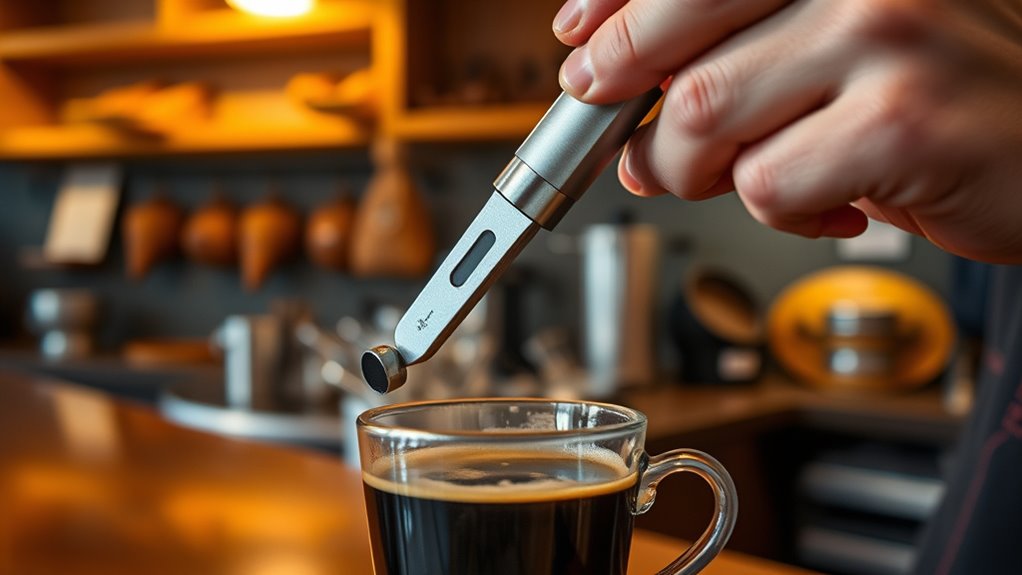
Using a refractometer in cafes helps you precisely measure coffee extraction, ensuring each brew is consistent and high quality. It allows you to objectively assess TDS levels, fine-tune grind size, brew time, and water temperature, and eliminate guesswork. This leads to better flavor, aroma, and customer satisfaction. By controlling extraction, you reduce waste and improve efficiency. Keep exploring to discover more ways a refractometer can elevate your coffee game and boost your reputation.
Key Takeaways
- Measures coffee TDS accurately, ensuring consistent extraction and flavor quality.
- Facilitates data-driven adjustments to brewing parameters like grind size and brew time.
- Helps compare bean and roast variations for tailored, high-quality coffee offerings.
- Reduces waste and saves time by minimizing trial-and-error in brewing adjustments.
- Enhances visual appeal and perceived freshness through proper calibration and contrast ratio control.

If you want to serve consistently great coffee, using a refractometer in your cafe is a smart move. This device allows you to measure the total dissolved solids (TDS) in your brewed coffee, giving you a precise way to assess coffee quality. When you understand the extraction levels, you can adjust your brewing process accordingly, ensuring each cup hits the ideal range. Consistent extraction results in better flavor, aroma, and overall coffee quality, which directly impacts customer satisfaction. Customers notice when their coffee tastes better, and that positive experience keeps them coming back.
Using a refractometer ensures consistent, high-quality coffee that delights customers and builds loyalty.
With a refractometer, you’re no longer relying solely on trial and error or subjective taste tests. Instead, you get objective data that helps you fine-tune your grind size, brew time, water temperature, and coffee-to-water ratio. This systematic approach reduces variability and ensures every batch of coffee meets your standards. As a result, your staff can maintain high-quality coffee even during busy hours or when new beans are introduced. Over time, this consistency becomes part of your cafe’s reputation for excellence, making your establishment stand out among competitors.
Another advantage is that measuring TDS with a refractometer provides insight into how different beans and roast levels influence extraction. You can compare results across various coffee origins and adjust your techniques accordingly. This knowledge helps you optimize the flavor profile of each batch, enhancing the uniqueness of your offerings. When your customers experience consistently well-extracted coffee, their perception of quality improves, leading to increased satisfaction and loyalty.
Furthermore, using a refractometer helps you reduce waste and improve efficiency. Instead of discarding under- or over-extracted brews, you can make precise adjustments to achieve the perfect extraction every time. This saves both time and resources, allowing you to serve better coffee without increasing costs. When your customers receive high-quality coffee consistently, it elevates their overall experience, increasing the likelihood they’ll recommend your cafe to others.
In addition, understanding the importance of contrast ratio in your brewing process can help you fine-tune your equipment settings to produce more vibrant and detailed coffee. When your equipment is calibrated correctly, your coffee will display deeper blacks and brighter whites, which enhances visual appeal and perceived freshness. When every cup meets these standards, your customers are more likely to notice and appreciate the high quality of your brew.
In essence, incorporating a refractometer into your workflow is a proactive step toward elevating your coffee quality and customer satisfaction. It empowers you to deliver a consistently excellent product, which is the cornerstone of any successful cafe. When every cup meets your standards, you foster trust and loyalty among your patrons, turning first-time visitors into regulars. Ultimately, a refractometer isn’t just a tool for measurement—it’s a strategic investment in your cafe’s reputation and long-term success.

R2 Extract Coffee TDS Refractometer, 0-30% Range, ±0.02% Precision, Portable, Waterproof, Rechargeable, Ideal for Pour Over, Espresso, and Coffee Enthusiasts
Precise TDS Measurement for Better Brews: Achieve perfect extraction with 0-30% TDS range, ±0.02% precision, 0.01% resolution, and…
As an affiliate, we earn on qualifying purchases.
As an affiliate, we earn on qualifying purchases.
Frequently Asked Questions
How Often Should I Calibrate My Refractometer?
You should calibrate your refractometer daily or before each use to guarantee accurate readings, especially in a busy cafe. Regular calibration is essential for maintaining precision and consistent quality. Follow maintenance tips like cleaning the lens after each use and storing it properly. If you notice inconsistent results, recalibrate immediately. Keeping a calibration log can help you track frequency and ensure your refractometer stays reliable over time.
Can a Refractometer Measure Milk or Other Beverages?
Yes, a refractometer can measure milk and other beverages. For milk measurement, it helps determine the actual solids content, guaranteeing consistency. During beverage analysis, it assesses sugar concentration, which impacts flavor and quality. Just make sure to calibrate your refractometer accurately before use and clean it properly between samples. This guarantees precise readings, whether you’re analyzing milk, juice, or other beverages in your cafe.
What Is the Ideal Brix Level for Espresso Extraction?
For ideal espresso extraction, aim for a Brix level around 9-11%. For example, a barista found that adjusting the grind to reach a Brix of 10 improved coffee strength and extraction efficiency, resulting in a richer flavor. Monitoring Brix helps you fine-tune your brew, ensuring consistent quality. Keep in mind, slight variations may be necessary based on bean type and roast, but staying within this range generally yields ideal results.
Are Digital Refractometers More Accurate Than Analog Ones?
Digital refractometers generally offer more measurement precision than analog ones. You get quicker readings, easier calibration, and clearer displays, which help you track your espresso’s extraction more accurately. While analog models can be reliable, they often require more careful handling and interpretation. If you’re aiming for consistent quality, investing in a digital refractometer makes it easier to monitor and adjust your brew parameters effectively.
How Do Temperature Variations Affect Refractometer Readings?
Temperature can throw a wrench in your readings if you’re not careful. When temperature varies, it affects the refractive index, leading to inaccurate results. To keep measurements spot on, guarantee temperature stability by calibrating your refractometer regularly, especially if there’s a change in environment. This way, you avoid getting “cold feet” when it comes to coffee quality, and your readings stay reliable no matter the weather.

HM Digital TDS-3 Handheld TDS Meter With Carrying Case, 0 – 9990 ppm TDS Measurement Range, 1 ppm Resolution, +/- 2% Readout Accuracy
Ideal for commercial use. Includes a carrying case with belt clip.
As an affiliate, we earn on qualifying purchases.
As an affiliate, we earn on qualifying purchases.
Conclusion
So, next time you use a refractometer in your cafe, remember it’s not just about perfecting your brew—it’s about embracing the science behind every sip. Ironically, while this tool promises precision, it might just remind you that even the best baristas need a little help to keep things consistently stellar. After all, in the world of coffee, a tiny drop of data can make all the difference—yet nothing beats a good taste test, right?
R2 Extract Coffee TDS Refractometer, 0-30% Range, ±0.02% Precision, Portable, Waterproof, Rechargeable, Ideal for Pour Over, Espresso, and Coffee Enthusiasts
Precise TDS Measurement for Better Brews: Achieve perfect extraction with 0-30% TDS range, ±0.02% precision, 0.01% resolution, and…
As an affiliate, we earn on qualifying purchases.
As an affiliate, we earn on qualifying purchases.
R2 Extract Coffee TDS Refractometer, 0-30% Range, ±0.02% Precision, Portable, Waterproof, Rechargeable, Ideal for Pour Over, Espresso, and Coffee Enthusiasts
Precise TDS Measurement for Better Brews: Achieve perfect extraction with 0-30% TDS range, ±0.02% precision, 0.01% resolution, and…
As an affiliate, we earn on qualifying purchases.
As an affiliate, we earn on qualifying purchases.