To keep your espresso machine in top shape, follow a regular PM checklist that includes cleaning the brew group, filters, and portafilter weekly, descaling monthly, and checking calibration every few months. Wipe down surfaces after each use, remove used coffee grounds, and inspect internal parts for issues. Using quality water and tracking your maintenance tasks helps prevent build-up and extends your machine’s lifespan. Continue exploring for detailed steps and tips to optimize your routine.
Key Takeaways
- Regularly clean brew group, filters, and portafilter to prevent residue buildup and ensure optimal extraction.
- Perform deep cleaning with descaling solution monthly to remove mineral deposits and maintain machine performance.
- Check and calibrate temperature and pressure settings every few months for consistent brew quality.
- Use quality water and keep a maintenance log to track cleaning, calibration, and inspection tasks.
- Inspect internal parts regularly to identify and address potential issues early, extending machine lifespan.
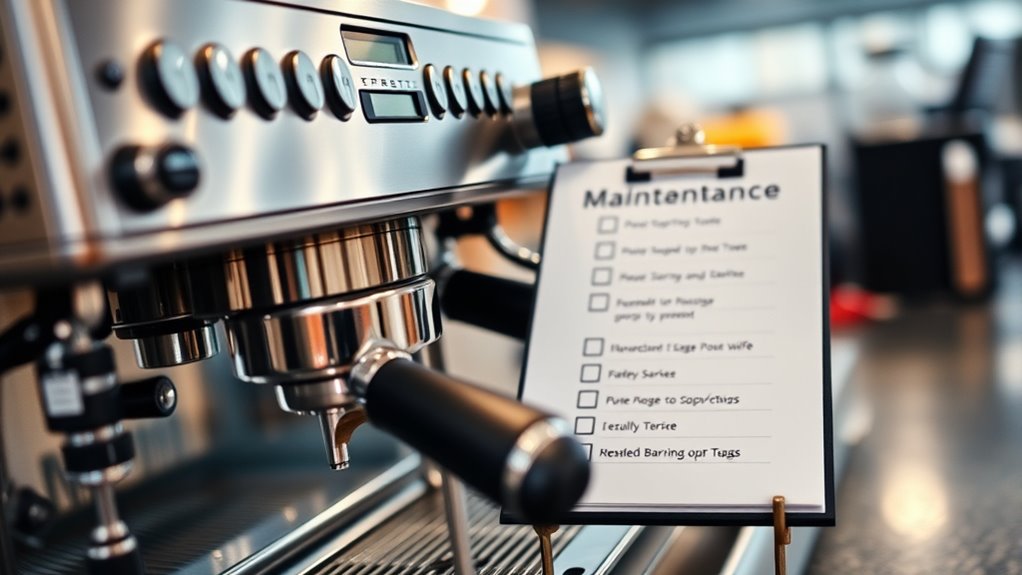
Regular maintenance is fundamental to keep your espresso machine performing at its best and to prevent costly repairs. One of the most critical aspects of maintenance is ensuring your brew system remains clean and properly calibrated. Brew maintenance involves regularly cleaning the brew group, filters, and portafilter to prevent residue buildup that can affect the taste and consistency of your espresso. Over time, coffee oils and mineral deposits can clog components, leading to uneven extraction or a weaker shot. By establishing a routine cleaning schedule, you help preserve the integrity of your machine’s brewing process and extend its lifespan.
Regular cleaning and calibration are essential for optimal espresso machine performance and longevity.
Additionally, equipment calibration plays a crucial role in maintaining peak performance. Calibration ensures that your machine consistently produces the right temperature and pressure during extraction. If your machine is off-calibration, you might notice variations in flavor, shot volume, or crema quality. Regularly checking and adjusting the calibration settings guarantees that each shot meets your standards. It’s vital to use a reliable thermometer and pressure gauge during this process to verify that your machine operates within the manufacturer’s recommended parameters. Proper calibration not only improves the quality of your coffee but also prevents unnecessary strain on the machine’s components, reducing the risk of future breakdowns.
Incorporating brew maintenance and calibration into your routine is straightforward but requires discipline. After each use, wipe down the brew group and remove any used coffee grounds from filters and baskets. Weekly, perform a deep cleaning by running a descaling solution through the brew system to eliminate mineral buildup. This step is especially vital if you have hard water, as mineral deposits can impair performance and damage internal parts. Every few months, check the calibration settings and adjust if necessary, especially if you notice inconsistencies in shot quality or temperature. Regularly inspecting and maintaining your espresso machine helps catch issues early, saving you time and money down the line.
Another important consideration is using quality water in your machine, as hard water can lead to mineral deposits and reduce longevity. It’s also wise to keep a maintenance log, noting when you perform each task. This record keeps you on schedule and helps identify patterns or recurring problems. Remember, a well-maintained espresso machine not only produces better coffee but also runs more efficiently, consumes less energy, and lasts longer. Prioritizing brew maintenance and equipment calibration as part of your routine ensures your machine remains reliable and delivers top-quality espresso every time.

Espresso Machine Cleaning Brush Set – CAFEMASY 5 Pieces Coffee Cleaning Brush Natural Bristles Wooden Brush for Coffee Grinder and Nylon Brush for Espresso Machine Cleaning
- Complete Cleaning Brush Set: Includes 5 brushes for various coffee cleaning needs
- Steam Wand & Portafilter Brush: Designed for espresso steam wands and spouts, heat resistant
- Coffee Grinder & Portafilter Brush: Wooden handle with soft bristles for grinder cleaning
As an affiliate, we earn on qualifying purchases.
As an affiliate, we earn on qualifying purchases.
Frequently Asked Questions
How Often Should I Replace the Water Filter in My Espresso Machine?
You should replace the water filter in your espresso machine every two to three months, depending on the water filter lifespan and your usage. Check the manufacturer’s replacement schedule for specific recommendations. Regularly replacing the filter guarantees clean water, better-tasting espresso, and prevents mineral buildup. If you notice a decline in water flow or taste, it’s a good sign to replace the filter sooner. Stay consistent for peak machine performance.
What Are Signs That My Espresso Machine Needs Professional Servicing?
You’ll know your espresso machine needs professional servicing if you notice inconsistent brewing, poor pressure, or strange noises. Keep an eye on machine calibration issues and signs of mineral buildup, which indicate descaling is overdue. If the machine takes longer to heat or your coffee’s flavor changes unexpectedly, it’s time to call in a professional. Regular maintenance helps prevent bigger problems and guarantees peak performance.
Can I Use Regular Cleaning Agents on All Parts of My Espresso Machine?
You shouldn’t use regular cleaning agents on all parts of your espresso machine without verifying machine compatibility. Some cleaning agents can damage sensitive components or leave residues that affect taste. Always read the manufacturer’s instructions to guarantee the cleaning agents are safe for your machine’s parts. Using the right cleaning products helps maintain your espresso machine’s performance and longevity, preventing costly repairs down the line.
How Do I Troubleshoot Inconsistent Espresso Extraction?
To troubleshoot inconsistent espresso extraction, first check your brew pressure to guarantee it’s within the ideal range, typically around 9 bars. Next, examine your grind consistency; if your grind is too fine or uneven, it can cause issues. Adjust your grinder accordingly and test again. Also, verify your tamping pressure remains steady. Regularly cleaning your machine helps maintain consistent pressure and grind performance, leading to better espresso quality.
What Safety Precautions Should I Take During Maintenance?
Thinking of maintaining your espresso machine? Remember, safety is your shield. Always unplug the machine before starting, ensuring electrical safety. Wear heat-resistant gloves when handling hot surfaces, because those components stay hot enough to burn. Keep the area dry to prevent electrical shocks, and never bypass safety features. By following these precautions, you’ll protect yourself and keep your machine running smoothly—safety isn’t just a rule; it’s your best brew buddy.
Conclusion
And there you have it—your trusty espresso machine’s ultimate PM checklist. Follow these steps, and you’ll keep your favorite brew flowing smoothly. Ironically, the more you care for it, the less you’ll need to troubleshoot. So, go ahead—treat your machine well, and it’ll reward you with perfect shots every time. After all, a little maintenance now saves a lot of disappointment later. Cheers to your consistently great coffee!