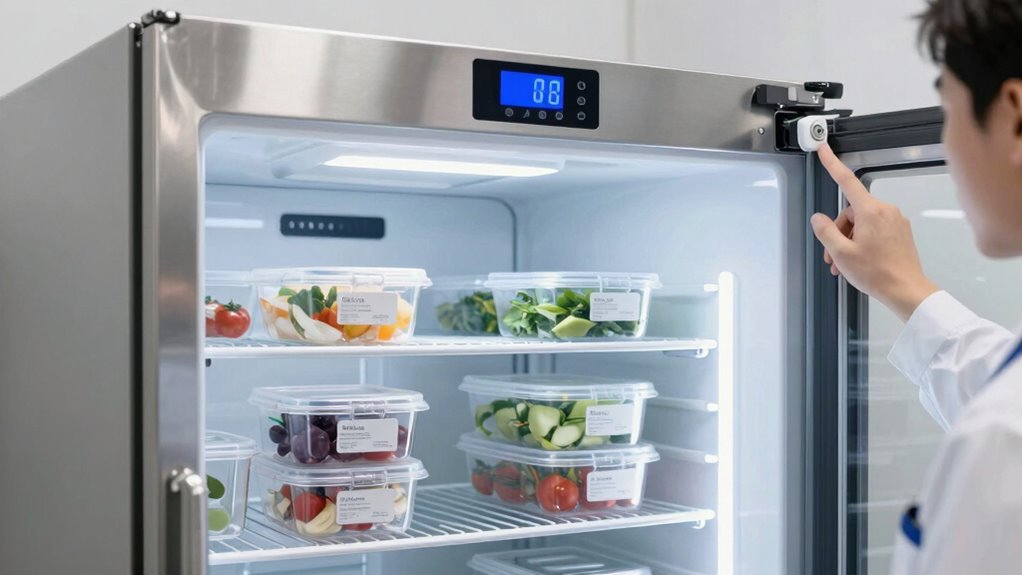
To catch walk-in temperature failures early, regularly calibrate your sensors to verify accurate readings, and choose reliable sensors suited for your environment. Use continuous data logging to monitor temperature trends over time, making it easier to spot deviations quickly. Set up automated alerts to notify you immediately when temperatures go out of range, so you can act swiftly before food is compromised. Keep system maintenance up-to-date—details that can make the difference in safeguarding your inventory.
Key Takeaways
- Regularly calibrate temperature sensors to ensure accurate readings and early detection of deviations.
- Use reliable, environment-specific sensors combined with data logging to monitor temperature trends continuously.
- Implement automated alerts for temperature excursions to enable immediate corrective actions.
- Maintain routine system checks and review historical data to identify recurring issues before food safety is compromised.
- Schedule preventive maintenance and verify system integrity to prevent sensor failures and safeguard food quality.
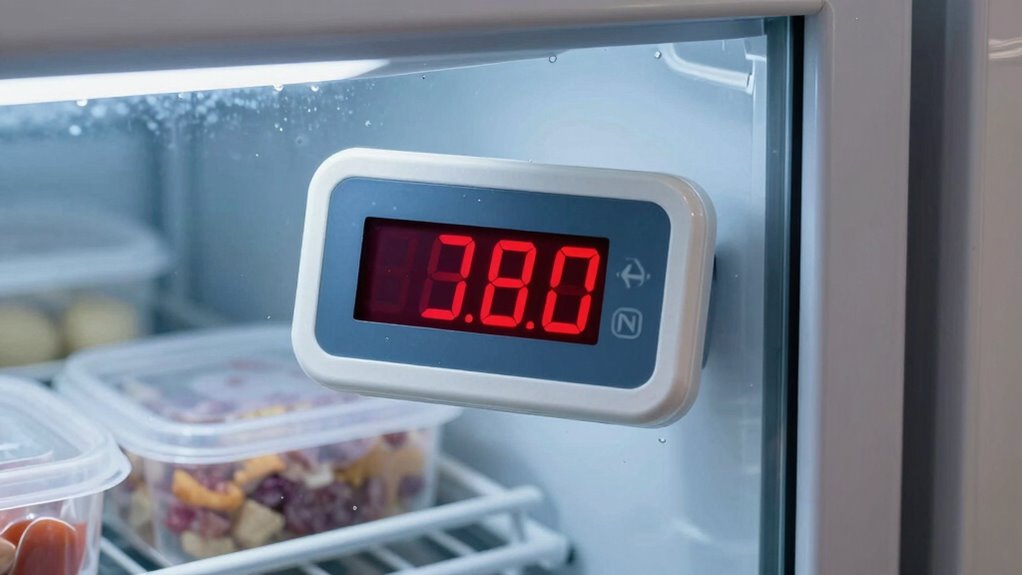
Ever wondered how facilities guarantee their storage environments stay within safe temperature ranges? The key lies in effective walk-in temperature monitoring systems that constantly track and record conditions, ensuring food safety and compliance. To achieve this, you need to pay close attention to sensor calibration. Proper calibration of temperature sensors is essential because even slight inaccuracies can lead to false readings, risking spoilage or regulatory violations. Regular sensor calibration ensures that your devices provide precise measurements, giving you confidence that your storage environment remains stable. When sensors are correctly calibrated, they reflect true temperature conditions, allowing you to detect deviations early before they lead to food loss. Additionally, selecting appropriate sensors that are suitable for your environment can significantly improve measurement accuracy and system reliability.
Alongside calibration, data logging techniques play a critical role in maintaining a reliable temperature monitoring system. Data loggers continuously record temperature readings over time, creating a detailed history of environmental conditions inside your walk-in units. This historical data not only helps you identify patterns or recurring issues but also serves as documentation to demonstrate compliance during inspections. Using advanced data logging techniques, such as wireless or cloud-based systems, can streamline this process, making it easier to access and analyze data remotely. Automated alerts can be set up to notify you immediately if temperatures drift outside acceptable ranges, enabling swift corrective actions.
Implementing a robust system involves regular checks and maintenance. You should schedule routine sensor calibration sessions, following manufacturer guidelines, to keep your measurements accurate. Additionally, invest in high-quality data loggers capable of capturing precise readings and storing sufficient historical data. This way, you can review temperature trends and respond proactively to potential failures before they impact your stored products. Remember, the goal is to catch issues early, preventing costly spoilage and maintaining food safety standards.

Fridge-tag 2 L (Freezer Version), Temperature Data Logger, Monitor with Sensor and Alarm
- High-precision temperature measurement: Accurate temperature and time tracking
- Traceable calibration standards: Calibrated to ILAC standards upon request
- Violation detection and reporting: Records exact violation times and durations
As an affiliate, we earn on qualifying purchases.
As an affiliate, we earn on qualifying purchases.
Frequently Asked Questions
How Often Should Walk-In Temperature Checks Be Performed?
You should check walk-in temperatures at least twice daily, ideally during opening and closing. Make sure sensors are properly placed in the warmest part of the unit for accurate readings, and calibrate them regularly—at least monthly—to maintain accuracy. Consistent checks help catch failures early, preventing food loss. Always record readings and calibration dates to maintain compliance and quickly identify any temperature fluctuations.
What Are the Best Locations for Temperature Sensors?
You should place temperature sensors in key locations within your walk-in, focusing on different temperature zones. Position sensors near the door to monitor frequent opening areas, and at the back or corners where air circulation may be uneven. Make certain sensors are not near vents or fans, as these can skew readings. Proper sensor placement ensures accurate monitoring, helping you catch failures early and keep food safe.
How Do I Calibrate My Temperature Monitoring Devices?
You can’t manage what you don’t measure, so calibrate your temperature monitoring devices regularly. To guarantee sensor accuracy, start by comparing your device’s readings with a certified thermometer. Adjust the sensor as needed, then document the calibration. Repeat this process at a consistent calibration frequency, like monthly or quarterly, depending on usage. This way, you’ll catch failures early and prevent food loss.
What Temperature Range Is Considered Safe for Stored Food?
You should keep stored food at temperatures between 32°F and 41°F (0°C to 5°C) to guarantee food safety. Maintaining this temperature range helps prevent bacterial growth and ensures temperature stability, reducing the risk of foodborne illnesses. Regularly monitoring your walk-in fridge or freezer with calibrated devices is essential. Promptly addressing any temperature fluctuations keeps your food safe and preserves quality, preventing costly spoilage or health hazards.
How Should I Respond to a Temperature Failure Warning?
Did you know that 90% of foodborne illnesses stem from improper temperature control? When a temperature failure warning occurs, you should promptly check your sensor placement—ensure it’s in the correct spot—and verify the alarm settings to confirm they’re functioning properly. Respond by adjusting the temperature if needed, recording the incident, and inspecting food safety. This quick action helps prevent food loss and keeps your operation compliant.
Conclusion
By regularly checking your walk-in temperatures, you catch potential failures before they turn into spoiled food. Imagine a thermometer as your watchdog, standing guard over your inventory, alert to even the slightest shift in temperature. When you stay vigilant, you keep your shelves safe and your customers happy. Don’t let unseen changes sneak up on you—keep that thermometer close and your food safe, ensuring freshness stays locked in like a fortress protecting its treasures.