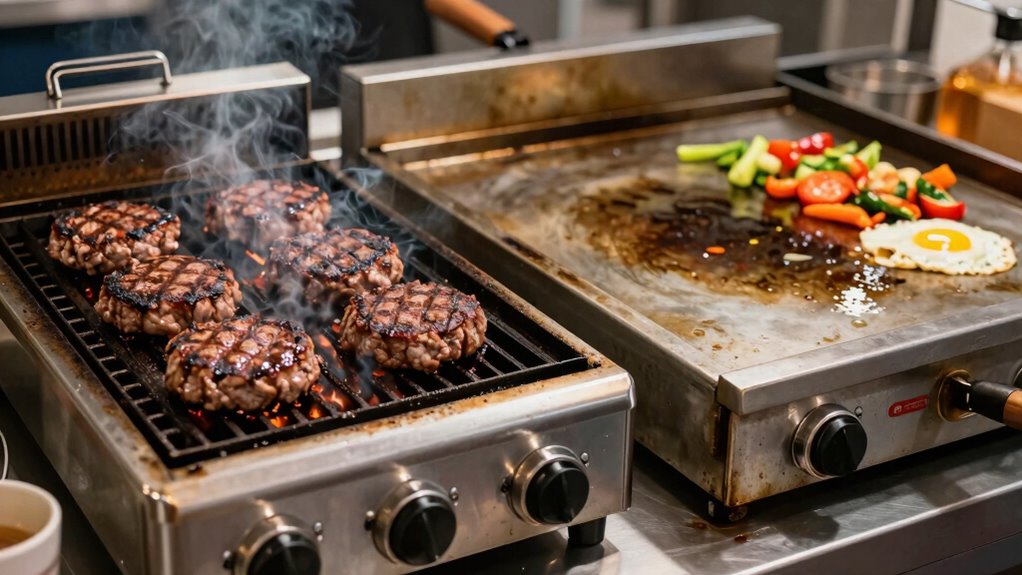

Choosing the wrong equipment can slow your service and increase ticket times. If you pick a charbroiler, you’ll get smoky flavor but risk flare-ups and uneven cooking, which can delay orders. On the other hand, a griddle offers consistent heat and faster cleanup but might lack the flavor appeal. Making the right choice depends on your menu focus. Keep going to discover how to select the best equipment for your kitchen’s efficiency.
Key Takeaways
- Choosing a charbroiler for high-volume, smoky-flavor dishes speeds up grilling but requires frequent cleaning to prevent flare-ups.
- Selecting a griddle offers even heat and versatile cooking, reducing ticket times for diverse menu items.
- Improper equipment choice can cause uneven cooking or flare-ups, leading to delays and slower service.
- Neglecting maintenance routines on either unit increases downtime, impacting kitchen efficiency and ticket times.
- Matching equipment to menu focus and workflow ensures faster order completion and improved customer satisfaction.

Have you ever wondered whether a charbroiler or a griddle is better for your cooking needs? The choice can considerably impact your kitchen’s efficiency, especially when it comes to cooking techniques and maintenance requirements. Understanding the differences helps you make an informed decision, ensuring your ticket times stay tight and your dishes come out perfectly.
Choosing between a charbroiler and a griddle impacts your kitchen’s efficiency and food quality.
A charbroiler excels at imparting that smoky, grilled flavor that many customers crave. It uses open flames or heated rods, allowing you to sear meats and vegetables with those signature grill marks. When you’re focused on grilling techniques, a charbroiler gives you control over flare-ups and direct heat, which can produce a caramelized exterior and juicy interior. However, these benefits come with specific maintenance needs. Regular cleaning is essential to prevent grease buildup, which can cause flare-ups or uneven heating. The grates need frequent scrubbing, and the grease traps should be emptied often to keep everything running smoothly. Failing to maintain your charbroiler can lead to uneven cooking and increased downtime, hampering your efficiency.
On the other hand, a griddle offers a flat, versatile cooking surface ideal for breakfast dishes, sandwiches, and stir-fries. Its even heat distribution allows you to cook multiple items simultaneously without worrying about hotspots. When considering cooking techniques, a griddle provides flexibility—whether you’re searing, sautéing, or frying. Its surface is perfect for delicate foods that might slip through grill grates or for dishes that require a consistent temperature. Maintenance for a griddle involves regular scraping and occasional deep cleaning to remove grease and food residue, but it generally requires less intense upkeep than a charbroiler. Its flat surface makes cleaning straightforward, especially if you keep a consistent schedule.
Choosing between the two depends on your menu and workflow. If your focus is on grilling meats and achieving authentic smoky flavors, a charbroiler is a natural fit. But if your kitchen handles a variety of dishes that benefit from even heat and a flat surface, a griddle might be more practical. Remember, your choice will influence not just the quality of your food but also how you manage your cooking techniques and maintenance routines. Picking the wrong one can slow down service and increase downtime, which directly impacts your ticket times and customer satisfaction. So, think about your menu priorities and available space before making the decision. The right equipment will streamline your operations, boost efficiency, and keep your customers coming back for more.
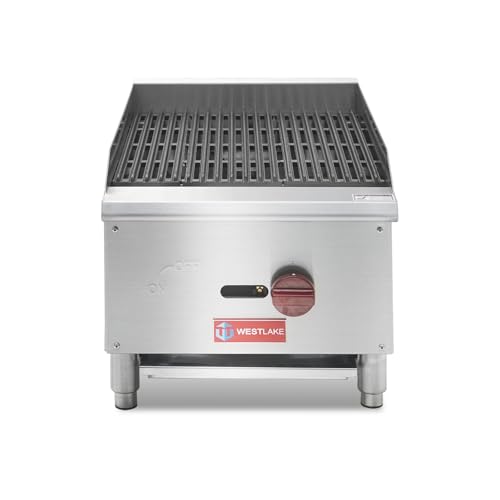
WESTLAKE 16"W Commercial Charbroiler Gas Countertop Single Burner
- Certification: ETL certified for safety and sanitation
- Heat Output: High heat with even distribution
- Construction: Durable stainless steel build
As an affiliate, we earn on qualifying purchases.
As an affiliate, we earn on qualifying purchases.
Frequently Asked Questions
Which Appliance Is Easier to Clean and Maintain?
You’ll find the griddle easier to clean and maintain because of its smooth surface and fewer crevices, making cleaning ease straightforward. Maintenance simplicity is also higher, with less need for frequent deep cleaning or parts replacement. Charbroilers, on the other hand, require more effort to clean grease and char buildup from grill grates. So, if you prioritize easy upkeep, a griddle’s your best choice for hassle-free cleaning and maintenance.
Can a Griddle Handle High-Temperature Cooking Like a Charbroiler?
A griddle can handle high-temperature cooking, but it doesn’t distribute heat as evenly as a charbroiler. Remarkably, charbroilers reach temperatures of around 700°F, ideal for searing, while griddles typically max out at 500-550°F. This means if you’re aiming for perfect grill marks and smoky flavor, a charbroiler’s superior heat distribution makes it the better choice. For high-temp searing, a griddle can work, but it’s not quite as effective.
Are There Specific Foods Better Suited for Each Grill Type?
You’ll find that certain foods shine on each grill type due to their versatility and cuisine compatibility. Charbroilers excel with burgers, steaks, and smoky-flavored dishes, offering grill marks and smoky taste. Griddles are perfect for breakfast items like pancakes, eggs, and sautéed veggies, providing an even cooking surface. By understanding each grill’s strengths, you can optimize your menu and improve efficiency without sacrificing quality or customer satisfaction.
How Do Installation Costs Compare Between a Charbroiler and a Griddle?
Installation costs for a charbroiler tend to be higher due to its setup complexity, requiring specialized venting and durable flooring. In contrast, a griddle usually has lower installation costs because it’s simpler to install with minimal ventilation needs. You’ll find that choosing the right equipment impacts your budget upfront, so consider setup complexity carefully. Planning ahead helps avoid unexpected expenses and ensures smooth kitchen operations from day one.
Which Equipment Offers More Energy Efficiency for a Busy Kitchen?
You’ll find that a griddle offers more energy efficiency for a busy kitchen because it distributes heat evenly, reducing energy consumption. This means lower operational costs over time. Charbroilers can use more energy due to their high heat output and uneven heating, which increases operational costs. So, if you want to cut costs and optimize energy use, a griddle is the smarter choice for your high-volume kitchen.
Conclusion
Choosing between a charbroiler and a griddle can make or break your kitchen’s efficiency. Did you know that restaurants using charbroilers see up to 20% faster ticket times during peak hours? It’s clear that selecting the right equipment impacts not just flavor but your service speed. So, weigh your menu needs carefully, and pick the tool that keeps your kitchen running smoothly and your customers happy. Don’t let the wrong choice slow you down!