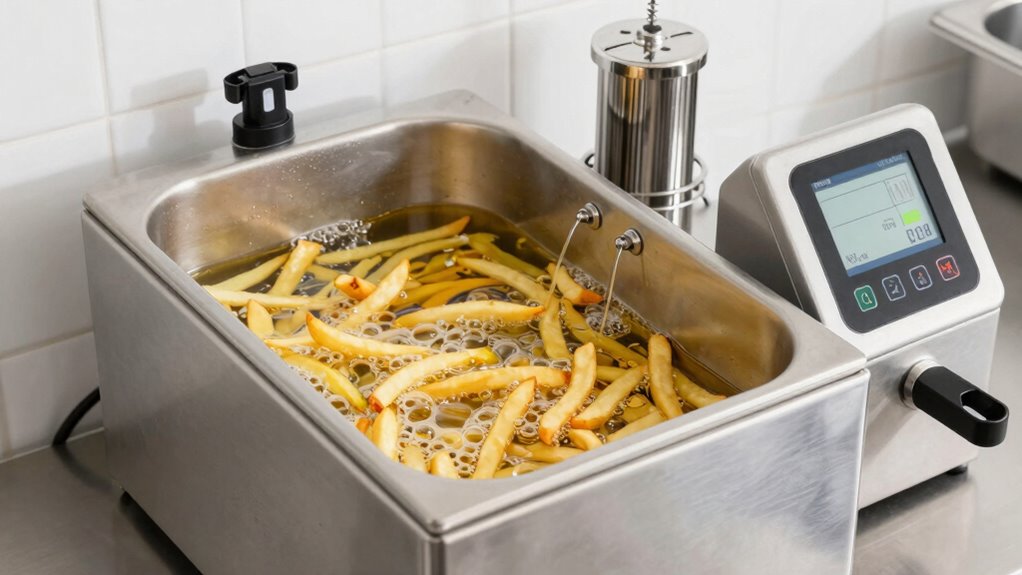

Effective fryer oil management helps you keep food crispy and delicious while cutting costs. By regularly filtering your oil, you remove debris and prevent breakdown, extending its lifespan. Proper disposal techniques safeguard the environment and ensure safety compliance, saving money and reducing waste. Combining filtration and responsible disposal promotes sustainable practices that improve food quality and operational efficiency. If you’re curious about how to master these methods, there’s more useful tips ahead.

Get kitchen staples and gadgets delivered free with Prime
- Fast, free delivery on millions of items
- Prime Video, Amazon Music and more included
- Member-only deals all year
Key Takeaways
- Regular oil filtration removes debris, preventing off-flavors and smoke, which keeps fried foods crisp and high quality.
- Proper oil management extends oil lifespan, reducing replacement costs and lowering overall operational expenses.
- Consistent filtration and monitoring help identify oil degradation early, maintaining safety and food consistency.
- Responsible disposal and recycling minimize environmental impact and ensure compliance with regulations.
- Implementing an efficient oil system enhances food quality, operational efficiency, and customer satisfaction while controlling costs.
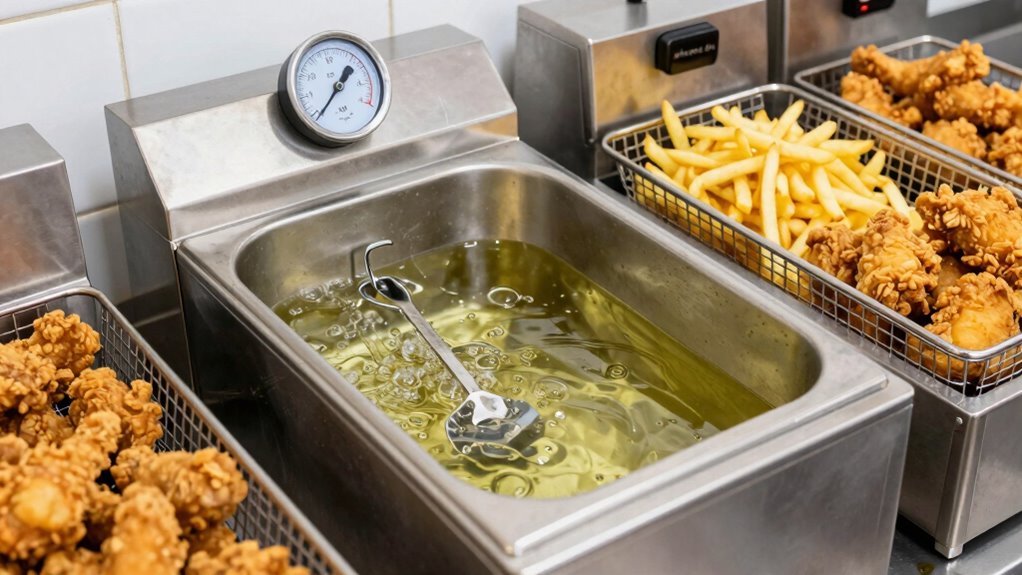
Proper fryer oil management is essential for maintaining food quality, ensuring safety, and reducing environmental impact. When you handle your fryer oil correctly, you not only improve the taste and texture of your fried foods but also extend the lifespan of your oil, saving you money in the long run. One of the most effective ways to do this is through regular oil filtration. Oil filtration involves removing food particles, debris, and degraded oil to keep the oil clean and fresh. By filtering your oil frequently, you prevent the buildup of residues that can cause off-flavors, uneven cooking, and excessive smoke. This process also helps maintain the oil’s stability, which means it stays usable for longer periods. Using a good filtration system regularly ensures that your fryer operates efficiently, reduces the need for frequent oil replacements, and maintains consistent product quality. Regular filtration also supports media literacy by helping operators recognize signs of oil degradation and quality issues early. In addition to filtering, knowing proper disposal techniques is vital for responsible fryer oil management. Used cooking oil, if not disposed of correctly, can pose serious environmental hazards. You should never pour used oil down the drain or onto the ground, as it can clog pipes and contaminate water sources. Instead, opt for eco-friendly disposal methods. Many communities have recycling programs that accept used cooking oil, transforming it into biodiesel or other renewable energy sources. To prepare your oil for recycling, strain out any remaining debris and store it in a sealed container. Some restaurants or facilities partner with waste disposal services that specialize in safely collecting and processing used oil. Alternatively, if recycling isn’t an option, check local regulations for disposal options, which often include taking used oil to designated collection sites. Proper disposal techniques not only protect the environment but also guarantee compliance with legal requirements, avoiding potential fines or penalties. Implementing a routine that combines oil filtration and responsible disposal techniques makes managing fryer oil more straightforward and sustainable. Regular filtration keeps your oil cleaner, extends its usability, and ensures your fried foods stay crispy and delicious. Meanwhile, correct disposal methods prevent environmental contamination and support your business’s commitment to sustainability. Together, these practices help you control costs, improve food quality, and uphold safety standards. By staying diligent about oil filtration and disposal, you create a safer, more efficient operation that benefits your customers and the planet. Proper fryer oil management isn’t just about compliance—it’s about making smarter choices that enhance your business’s reputation and bottom line.
commercial fryer oil filtration system
As an affiliate, we earn on qualifying purchases.
As an affiliate, we earn on qualifying purchases.
Frequently Asked Questions
How Often Should Fryer Oil Be Replaced for Optimal Quality?
You should replace your fryer oil every 8 to 10 hours of use, but it depends on factors like food type and fryer maintenance. Regular oil filtration helps extend its life, keeping it fresh and preventing off-flavors. Always monitor oil color, smell, and filtration performance. When the oil becomes dark, foamy, or develops a bad odor despite filtration, it’s time to change it for peak quality and safety.
What Are the Signs That Fryer Oil Needs Changing?
Did you know that frying with oil past its prime can increase smoke production by 50%? You’ll notice signs like a rancid smell, excessive smoke, or food absorbing more oil. Also, if the oil turns dark or feels sticky, it’s time for a change. Regular oil filtration and stabilization help extend oil life, but these signs clearly indicate when it’s time to replace the oil for quality and safety.
How Does Oil Temperature Affect Food Crispness and Safety?
You’ll notice that oil temperature directly impacts food crispness and safety. When the temperature is stable and ideal, oil maintains the right viscosity, ensuring crispy, well-cooked food and reducing the risk of undercooking or oil absorption. If oil is too cold or unstable, food may be greasy or soggy, and safety risks increase. Keeping a consistent, proper temperature helps you achieve perfect texture and safe frying results.
Are There Eco-Friendly Options for Disposing of Used Fryer Oil?
Yes, you can opt for eco-friendly disposal methods like biodegradable alternatives and recycling programs. Instead of dumping used fryer oil, you can participate in local recycling initiatives that convert oil into biodiesel or other sustainable products. Some companies provide biodegradable containers for oil collection, making disposal safer for the environment. Always check your community’s guidelines to guarantee you’re following proper procedures and supporting eco-friendly practices.
Can Fryer Oil Management Systems Reduce Overall Energy Consumption?
Yes, fryer oil management systems massively boost energy efficiency and cut operational costs! They optimize oil temperature and reduce heat loss, making your fryer run smoother and faster. This means you save more energy, lower electricity bills, and keep your kitchen running efficiently. With such a system, you’ll notice your energy consumption shrink dramatically, transforming your operation into a lean, cost-effective powerhouse that outperforms the competition every time!
Conclusion
By managing fryer oil effectively, you not only keep your food consistently crispy but also save money—up to 50% on oil costs with proper filtration and replacement. Did you know that improper oil management can lead to a 20% increase in food waste and higher energy bills? Taking control of your fryer oil guarantees better quality, reduces waste, and keeps your costs down. Start implementing these strategies today for a more efficient and profitable kitchen.
Fall Picks
fall essentials
As an affiliate, we earn on qualifying purchases.