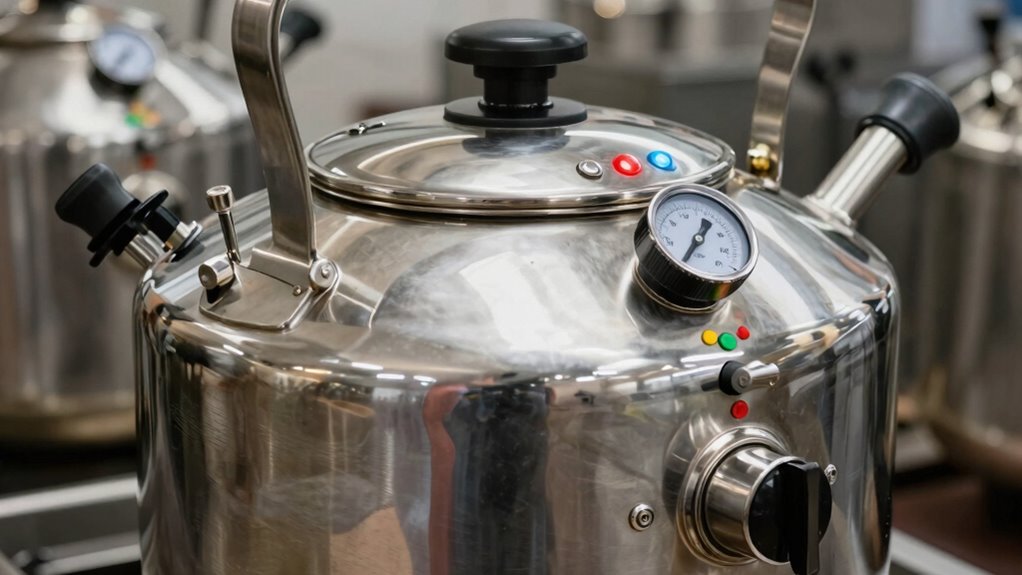

To keep steam-jacketed kettles safe, you must understand their safety controls. Regularly monitor the pressure gauges and listen for leaks or unusual noises. Make certain the pressure control valves and safety valves are functioning correctly and tested regularly. Properly managing these systems prevents dangerous over-pressurization and equipment failure. Staying vigilant about safety procedures protects everyone and ensures high-quality production—if you continue exploring, you’ll discover more essential safety tips to keep everything running smoothly.

Get kitchen staples and gadgets delivered free — and shop member deals
- Fast, free delivery on millions of items
- Access to Prime Big Deal Days deals on October 6–7
- Prime Video, Amazon Music and more included
Key Takeaways
- Pressure regulation via a control valve maintains consistent internal steam pressure for safe and efficient operation.
- Safety valves act as a fail-safe, releasing excess steam to prevent dangerous over-pressurization.
- Regular inspection and testing of safety valves ensure reliable performance and safety compliance.
- Continuous monitoring of pressure gauges and system sounds helps detect safety control issues early.
- Proper crew training on safety controls ensures quick troubleshooting and maintains safe kettle operations.
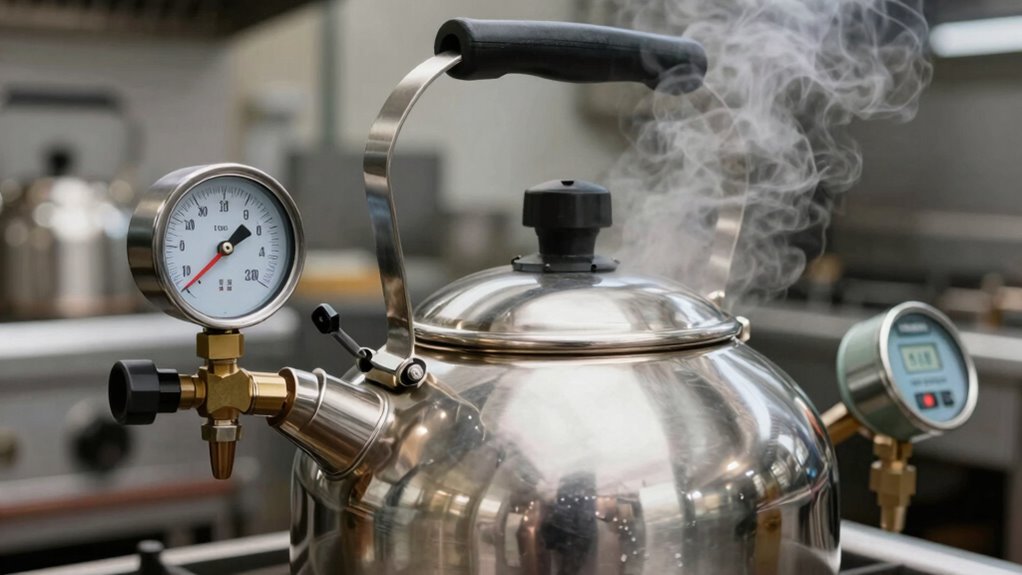
Have you ever wondered how large-scale food production achieves consistent quality and efficiency? One key component is the use of steam-jacketed kettles, which rely heavily on effective safety controls to operate smoothly. Among these controls, pressure regulation and safety valve operation are critical. Proper pressure regulation ensures that the kettle maintains the right internal pressure, preventing dangerous fluctuations that could compromise safety or product quality. You need to understand how these systems work together to keep the operation safe and efficient.
Pressure regulation involves controlling the pressure of steam within the jacket surrounding the kettle. It’s typically managed by a pressure control valve that automatically adjusts steam input to maintain a set pressure level. When the pressure rises too high, the valve releases excess steam, preventing over-pressurization. Conversely, if pressure drops below the desired level, the valve allows more steam in to restore ideal conditions. This balance is essential because inconsistent pressure can lead to uneven cooking, potential equipment damage, or safety hazards. By keeping the pressure steady, you ensure your product cooks uniformly, saving time and reducing waste.
The safety valve operation is another essential aspect of safe kettle management. Safety valves act as a fail-safe, designed to release steam if pressure regulation fails or if the pressure exceeds safe limits. These valves are usually spring-loaded and set to open at a predetermined pressure, providing a quick escape route for excess steam. When the valve opens, it prevents dangerous pressure build-up that could cause the kettle to rupture or explode. You need to regularly inspect and test safety valves to confirm they function correctly. A faulty safety valve might fail to open when needed, risking serious safety incidents, or it could leak or become stuck, reducing its effectiveness.
Understanding how pressure regulation and safety valve operation work together will help you respond promptly to any abnormal pressure changes. Always monitor pressure gauges and listen for unusual noises or leaks, which can indicate issues with safety controls. Proper training on these safety systems ensures you can quickly identify and troubleshoot problems before they escalate. Regular maintenance and testing are crucial to ensure all safety components are functioning as intended. Remember, safety controls aren’t just about preventing accidents—they also ensure the consistent quality of your final product. When you keep these systems well-maintained and understand their operation, you’re not only protecting yourself and your team but also guaranteeing the high standards your customers expect.
In essence, mastering pressure regulation and safety valve operation makes your work with steam-jacketed kettles safer and more reliable. By paying close attention to these controls, you play a crucial role in maintaining a safe work environment while producing quality food efficiently. Additionally, incorporating European cloud innovation into your safety management processes can enhance monitoring and response capabilities through advanced data integration.
steam-jacketed kettle safety control valves
As an affiliate, we earn on qualifying purchases.
As an affiliate, we earn on qualifying purchases.
Frequently Asked Questions
How Often Should Safety Controls Be Inspected and Maintained?
You should follow a strict maintenance schedule, inspecting safety controls at least monthly. Regular inspection frequency guarantees you catch any issues early, preventing accidents. Make sure to check for proper operation, signs of wear, and any leaks. Keep detailed records of each inspection and maintenance session. Consistently maintaining and inspecting safety controls helps keep everyone safe and the equipment running smoothly, reducing the risk of malfunctions or emergencies.
What Are Common Signs of Safety Control Failure?
You’ll notice safety control failure through signs like inconsistent pressure relief, inaccurate sensor calibration, or unexpected pressure drops. These issues can cause the kettle to operate unsafely, risking spills or explosions. Always stay alert for warning signs such as erratic gauge readings, unusual noises, or failure to respond to safety controls. Regular inspections help catch these problems early, ensuring your equipment remains safe and reliable during operation.
Can Safety Controls Be Adjusted or Calibrated by the Crew?
Yes, safety controls can be adjusted or calibrated by you, but only following proper crew adjustment procedures. You should perform safety control calibration carefully, adhering to manufacturer guidelines to guarantee accurate functioning. Always ensure you’re trained and authorized before making adjustments, and double-check settings after calibration. Regular maintenance and calibration are essential for safe operation, preventing malfunctions that could lead to accidents or equipment damage.
What Training Is Required for Proper Safety Control Operation?
Aren’t your safety and the crew’s at stake? You need extensive training on safety control testing and operator safety procedures to ensure proper operation. This training covers understanding safety controls, recognizing malfunctions, and following emergency protocols. By mastering these skills, you reduce risks and prevent accidents. Are you confident your team is fully trained? Proper education empowers you to operate safely and respond effectively in emergencies.
Are There Industry Standards for Safety Control Installation?
Yes, industry standards for safety control installation exist. You need to follow installation guidelines that guarantee proper setup and operation. Adhering to compliance standards, such as those from OSHA or NFPA, is vital for safety and legal compliance. Proper installation includes correct placement, wiring, and testing of safety controls. By following these standards and guidelines, you help prevent accidents and ensure the kettle operates safely and efficiently.
Conclusion
By understanding and properly using the safety controls on steam-jacketed kettles, you’re like a captain steering a ship through calm waters—confident and in control. Always stay vigilant, follow safety protocols, and inspect equipment regularly. Think of these controls as your trusted navigation tools, guiding you away from hazards and ensuring smooth operation. With this knowledge, you’ll keep your crew safe and your kitchen running like a well-oiled machine. Safety isn’t just a rule; it’s your best tool.
NFL season / tailgating Picks
team gear
As an affiliate, we earn on qualifying purchases.