To prevent your commercial mixer’s motor from burning out, always follow the capacity rule: never run it beyond its recommended load limits. Overloading causes the motor to strain and overheat, leading to damage. Pay attention to the mixer’s specifications, including bowl size and maximum ingredients. Regularly check for signs of strain or overheating. Keep handling tips handy—you’ll discover more ways to protect your equipment and extend its lifespan.
Listen free for 30 days with Audible
Thousands of audiobooks and originals — cancel anytime.
As an affiliate, we earn on qualifying purchases.
Key Takeaways
- Overloading a mixer beyond its recommended capacity strains the motor, increasing risk of overheating and damage.
- Adhering to the manufacturer’s capacity guidelines helps prevent motor burnout during continuous operation.
- Properly matching bowl size and ingredient volume ensures the motor operates within safe load limits.
- Regularly inspecting motor sounds and vibrations can detect early signs of overloading or impending failure.
- Using the correct speed settings and avoiding sudden overloads protect the motor from excessive wear and potential burnout.
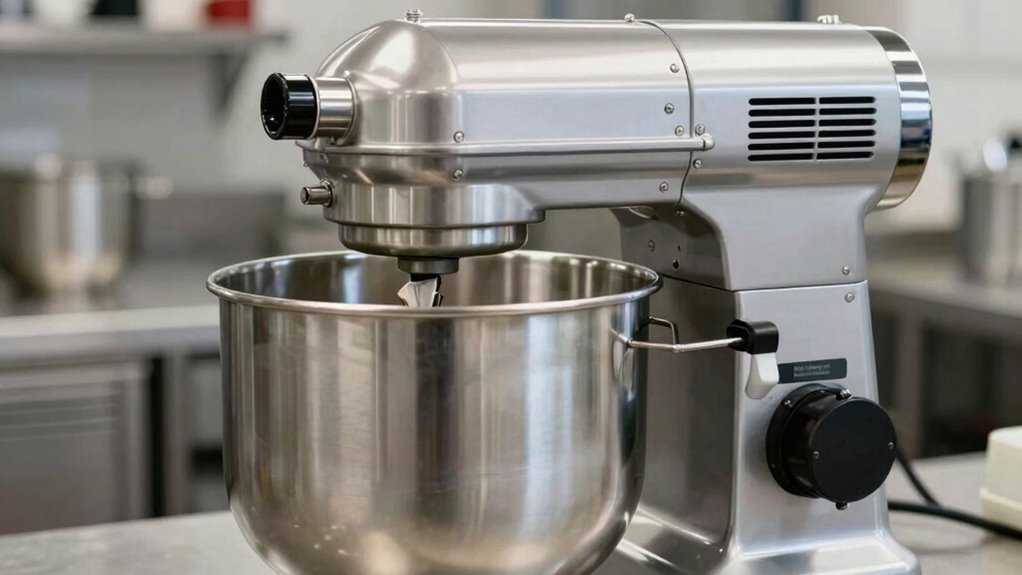
Commercial mixers are essential tools in professional kitchens and bakeries, designed to handle large-scale food preparation with ease. They’re powerful, durable, and built to save you time and effort. However, to keep your mixer running smoothly and prevent costly repairs, proper maintenance is key. Regular maintenance tips include cleaning the mixer’s exterior after each use to prevent buildup, checking the attachment hub for debris, and ensuring the cord and plug are in good condition. Lubricating moving parts, as specified in the manufacturer’s instructions, can extend the lifespan of your mixer. Additionally, paying attention to motor sounds and vibrations can alert you to potential issues early, allowing you to address them before they cause damage. Always follow the manufacturer’s recommended cleaning procedures and avoid overloading the mixer beyond its capacity, which is vital to prevent strain on the motor. Understanding water chemistry and its impact on equipment can also help prevent corrosion and buildup that may shorten the life of your mixer.
When selecting a commercial mixer, brand comparisons can help you make an informed decision. Some brands are renowned for their durability, while others excel in features or affordability. For example, KitchenAid, Hobart, and Globe are often compared in terms of build quality, power, and available attachments. KitchenAid mixers are popular for their versatility and user-friendly features, making them suitable for smaller batches or less intensive tasks. Hobart, on the other hand, is a go-to for heavy-duty, high-capacity needs, offering robust motors and longer-lasting components. Globe mixers tend to be more budget-friendly but still provide reliable performance for moderate use. When comparing brands, consider factors like motor horsepower, bowl size, warranty coverage, and available accessories. This way, you can choose a model that aligns with your volume requirements and long-term maintenance plans.
As an affiliate, we earn on qualifying purchases.
Frequently Asked Questions
How Do I Determine the Right Capacity for My Bakery?
To determine the right capacity for your bakery, start with capacity planning by evaluating your daily and peak production needs. Consider the types and quantities of dough or batter you’ll mix regularly. For motor selection, choose a commercial mixer with a motor rated for slightly above your maximum workload to prevent burnout. Proper capacity planning ensures efficient operation and longevity, helping you select the right mixer that meets your bakery’s demands without risking damage.
What Are Signs of a Motor Overheating in a Mixer?
You’ll notice signs of motor overheating in your mixer if it feels excessively warm to the touch or if you smell burning insulation. You might also see the motor speed slow down or hear unusual noises. Make certain proper motor cooling and use overload protection to prevent overheating. Regularly check these signs, as they help you catch issues early, avoiding damage and keeping your mixer running smoothly.
Can I Upgrade My Mixer’s Motor Capacity Later?
You can upgrade your mixer’s motor capacity later, but it’s essential to contemplate motor compatibility first. Visualize your equipment as a finely tuned instrument—expanding its capacity requires ensuring the new motor fits seamlessly. Capacity expansion is possible, yet it often involves modifications and professional guidance. Before proceeding, consult your manufacturer or a qualified technician to confirm that the new motor aligns with your mixer’s design and performance needs.
How Does Capacity Affect Mixing Speed and Efficiency?
Your mixer’s capacity directly impacts mixing speed and efficiency by influencing power transmission and mixing dynamics. A higher capacity allows the motor to handle larger loads more effectively, maintaining steady speed and thorough blending. Conversely, if capacity is too low, the motor struggles under heavy loads, slowing down and risking burnout. Proper capacity ensures ideal power transmission, enabling faster, more consistent mixing without overloading the system.
What Maintenance Prevents Motor Burnout in Commercial Mixers?
Imagine your mixer’s motor as a heartbeat that keeps your operation alive. To prevent burnout, you should follow regular lubrication routines to reduce friction and overheating. Additionally, vibration analysis helps detect early signs of imbalance or wear, acting like a health check-up. Staying proactive with these maintenance practices guarantees your motor runs smoothly, extending its lifespan and keeping your productivity steady without unexpected breakdowns.
Conclusion
Understanding the capacity rule is key to preventing burned motors in commercial mixers. Did you know that over 60% of motor failures are due to overloading? By selecting a mixer with the right capacity, you not only extend its lifespan but also save money on repairs. Don’t overlook this vital detail—making the right choice now guarantees smooth, efficient operation and keeps your business running without costly downtime. Stay informed, stay ahead.
Fall Picks
fall essentials
As an affiliate, we earn on qualifying purchases.