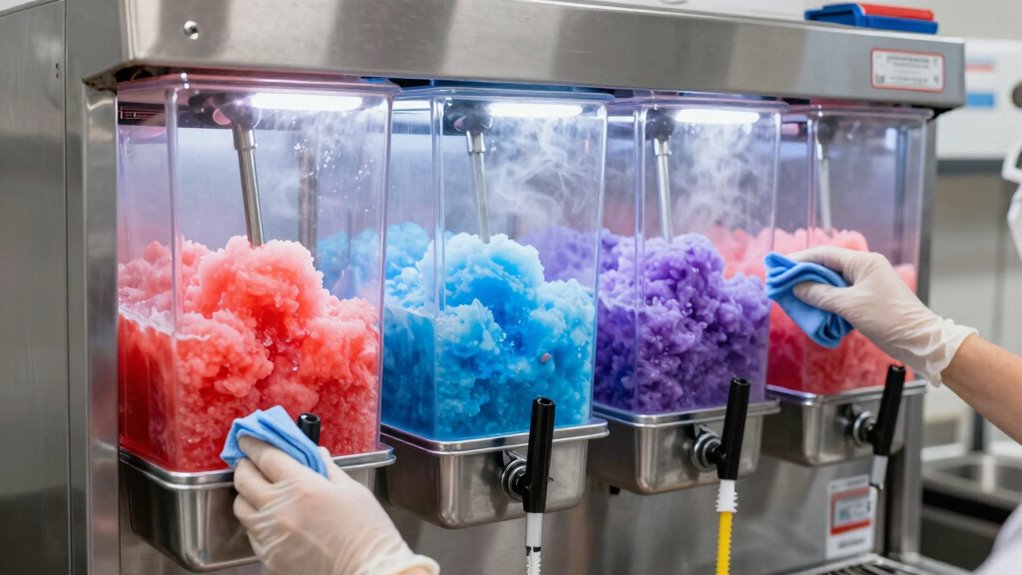

To prevent sour complaints, it’s essential to follow a strict sanitation routine for your frozen drink machine. After each use, thoroughly clean removable parts with warm, soapy water, and disinfect with food-safe sanitizers. Regularly sanitize internal components and perform deep cleaning as per manufacturer instructions to eliminate bacteria and mold buildup. Proper maintenance not only keeps your drinks fresh and safe but also extends your equipment’s lifespan. Keep going to learn more about maintaining a high-quality, contamination-free machine.
Key Takeaways
- Regularly clean and sanitize removable parts like jars, blades, and lids after each use to prevent residue buildup.
- Disassemble and deep clean the machine periodically, following manufacturer instructions for internal sanitation.
- Use food-safe cleaning solutions to eliminate bacteria, mold, and other microbial contaminants that cause sour flavors.
- Maintain proper refrigeration and inspect components regularly to prevent spoilage and bacterial growth.
- Implement a consistent sanitation routine to ensure fresh-tasting drinks and reduce customer complaints about sour flavors.
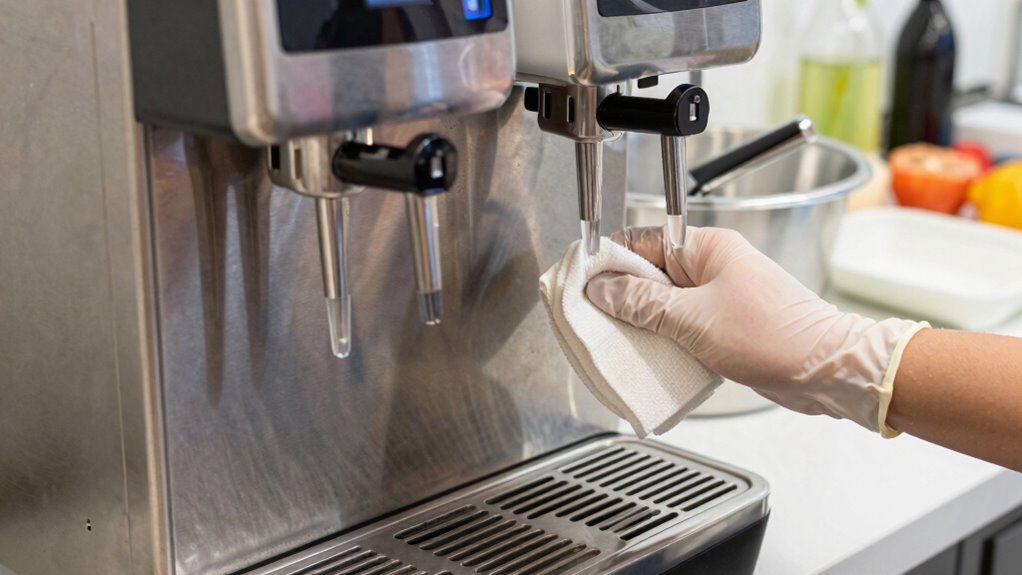
Have you ever wondered how bars and cafes quickly serve invigorating, perfectly blended frozen drinks? Behind the scenes, maintaining those machines is a crucial part of guaranteeing every beverage is delicious and free from off-putting flavors. The secret lies in diligent machine maintenance and strict cleaning protocols. When you pay close attention to these routines, you prevent issues like sour tastes, bacterial buildup, and mold, which can ruin a customer’s experience and damage your reputation.
Proper machine maintenance starts with regular inspections. You need to check the blades, motors, and refrigeration components regularly to assure they’re functioning correctly. Worn-out blades or malfunctioning motors can lead to uneven blending or inconsistent texture, but more importantly, they can cause the machine to operate inefficiently, increasing the risk of spoilage. Keeping refrigeration systems clean and at the proper temperature also prevents bacterial growth, which can cause sour flavors or spoilage. Consistent maintenance extends the life of your equipment and guarantees that every frozen drink meets quality standards. Additionally, maintaining proper hygiene practices reduces the likelihood of microbial contamination and keeps your equipment compliant with health standards.
Equally important are cleaning protocols, which should be part of your daily routine. After each use, you should thoroughly clean all removable parts, including blending jars, blades, and lids, with warm, soapy water. This prevents residue buildup that can harbor bacteria or mold. For the machine’s internal components, a deep cleaning at the end of each day is essential. This involves disassembling parts as recommended by the manufacturer and sanitizing them with food-safe cleaning solutions. Neglecting this step can lead to the accumulation of sugary deposits, which promote sour flavors and microbial growth.
In addition to daily cleaning, periodic sanitation of the entire machine is imperative. Some operators use specialized cleaning solutions designed to break down stubborn residue and sanitize the internal workings. Following manufacturer instructions assures safety and effectiveness. Remember, always rinse thoroughly after cleaning to remove any cleaning agents, which could alter flavor or cause health issues if ingested. Regularly scheduled maintenance and sanitation are key to preventing bacterial contamination, ensuring the safety and quality of your frozen drinks.
Maintaining a strict cleaning schedule and adhering to proper machine maintenance routines not only keeps your frozen drinks tasting fresh but also safeguards your customers’ health. It minimizes the risk of sour complaints, which often stem from bacteria, mold, or improper cleaning. By staying vigilant and proactive, you guarantee your frozen drink machine consistently produces high-quality beverages, delighting customers and keeping your operation running smoothly. Proper sanitation isn’t just a routine—it’s the foundation of a successful, trusted establishment.
frozen drink machine cleaning kit
As an affiliate, we earn on qualifying purchases.
As an affiliate, we earn on qualifying purchases.
Frequently Asked Questions
How Often Should Frozen Drink Machines Be Disinfected?
You should disinfect your frozen drink machine daily to maintain ingredient freshness and prevent sour tastes. Regular cleaning ensures proper machine calibration, avoiding flavor quality issues. After each use, wash all removable parts thoroughly, and perform a deep sanitation weekly. This routine helps eliminate bacteria buildup and mold, keeping your drinks fresh and safe for customers. Consistent maintenance is key to preventing sour complaints and guaranteeing peak machine performance.
What Cleaning Products Are Safest for Frozen Drink Machines?
You should use cleaning agents specifically designed for food equipment, such as food-grade sanitizers and mild detergents. Avoid harsh chemicals that can damage the machine or leave residues. Follow proper sanitization protocols by thoroughly cleaning all surfaces and components with these safe products. This guarantees your frozen drink machine stays hygienic, prevents sour taste issues, and maintains peak performance. Always read product labels and manufacturer instructions for safe, effective cleaning.
How Can I Prevent Mold Growth Inside the Machine?
Prevent mold problems by maintaining a meticulous cleaning routine and managing moisture levels. Regularly clean your machine at least weekly to eliminate mold-causing grime and mold prevention issues. Keep the interior dry and free from lingering liquids, and promptly address any spills. Consistent cleaning frequency and proper drying are key to stopping mold from growing, ensuring your frozen drink machine stays sanitary, safe, and sour-free.
What Signs Indicate a Machine Needs Maintenance?
You’ll know your machine needs maintenance if you notice inconsistent drink texture or flavor, which could signal issues with machine calibration. Also, if you observe lingering odors or mold, it’s a sign to check for hygiene problems. Regularly inspect for buildup and verify the machine is properly calibrated to maintain quality. Address these signs promptly to keep customer hygiene high and prevent sour taste complaints.
Are There Specific Storage Tips for Machine Parts?
While chaos can cause confusion, proper machine part storage keeps your equipment organized and ready. Store machine parts in labeled, airtight containers or designated drawers, avoiding moisture and dust. Regularly clean and dry parts before storage to prevent mold. Proper equipment organization ensures quick access, reduces wear, and extends lifespan. By maintaining a tidy storage system, you prevent issues before they start, keeping your frozen drink machine running smoothly and serving perfect beverages every time.
Conclusion
By regularly cleaning, thoroughly sanitizing, and consistently maintaining your frozen drink machine, you guarantee every sip is fresh, every flavor is vibrant, and every customer is satisfied. Keep your machine spotless, prevent sour complaints, and promote hygiene with simple routines. Stay diligent, stay consistent, and stay ahead—because a clean machine is the key to success. When you prioritize sanitation, you safeguard your reputation, delight your customers, and enjoy peace of mind every time you serve.