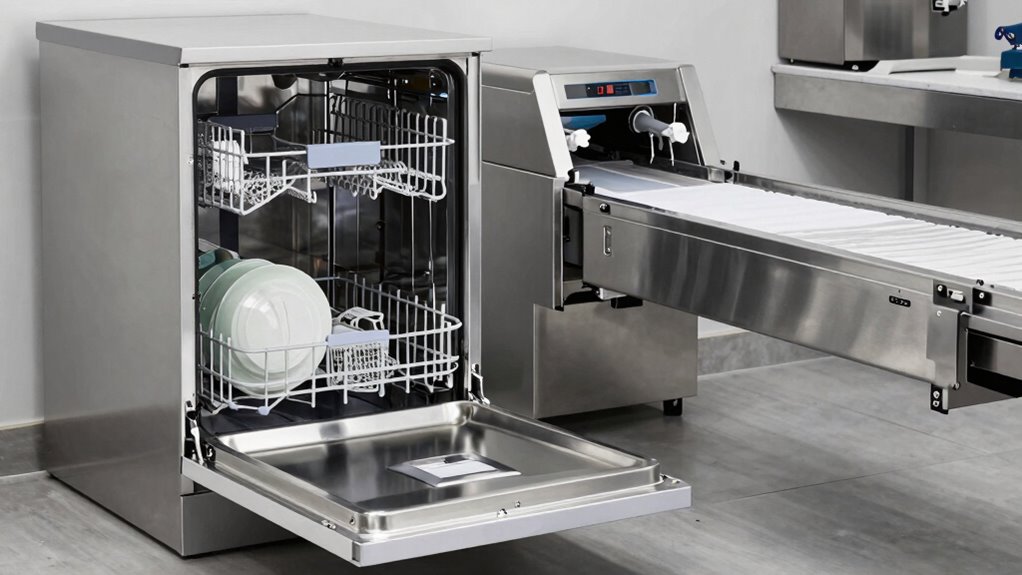

If your facility handles moderate volume and has limited space, a door-type dishwasher offers flexibility and easier installation, but it requires manual loading and unloading, which can slow staff during busy times. If you process high volumes regularly, a conveyor system automates tasks, boosts efficiency, and frees staff for other tasks. Your workflow needs, space, and volume determine the best fit. Keep exploring to find out more about how each option can meet your specific operations.
Listen free for 30 days with Audible
Thousands of audiobooks and originals — cancel anytime.
As an affiliate, we earn on qualifying purchases.
Key Takeaways
- Door-type dishwashers suit smaller establishments with moderate throughput; conveyor models are ideal for high-volume, continuous operation.
- Manual loading/unloading with door-type units may slow staff during busy periods, while conveyors automate workflow for increased efficiency.
- Conveyor systems streamline large-scale dishwashing, reducing staff workload and increasing processing speed.
- Door-type units offer flexibility for variable volume needs, whereas conveyors excel in consistent, high-volume environments.
- Workflow efficiency depends on operational volume, personnel capacity, and space constraints, guiding the best choice between the two.
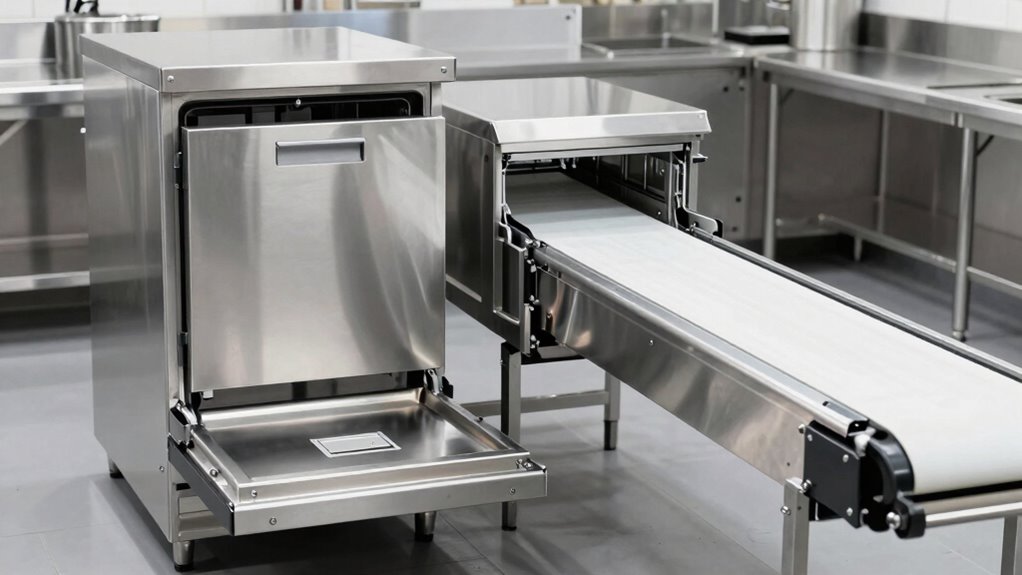
When choosing a commercial dishwasher, understanding the differences between door-type and conveyor models is essential to meet your specific needs. Both options have unique advantages and limitations, especially when it comes to energy efficiency and maintenance considerations. Your decision should align with your workflow, volume, and operational priorities. Door-type dishwashers are popular in smaller establishments or those with moderate dishwashing needs. They’re typically more compact and easier to install, making them a good fit if space is limited. These machines are often more energy-efficient on a small scale because they heat only the necessary water and heat cycles, reducing overall power consumption. Additionally, energy efficiency plays a critical role in reducing operational costs over time. In terms of maintenance, door-type units tend to be simpler. Since they have fewer moving parts, they generally need less frequent servicing and are easier to repair or replace components. Conveyor models, with their complex mechanisms, often require more routine maintenance and specialized service, which can add to operational costs over time. Incorporating technological advancements in conveyor systems has helped improve their efficiency and ease of maintenance, making them more competitive with door-type units. It’s also important to consider the initial investment involved, as conveyor systems usually have higher upfront costs but may offer greater long-term savings through increased productivity. A cost-benefit analysis can help determine if the higher initial expense is justified by operational efficiencies gained over time. Additionally, some facilities benefit from customized configurations that adapt to specific workflow requirements, which can influence your choice. Your workflow preferences also influence this decision. If your operation involves smaller, more frequent loads and you value flexibility, a door-type dishwasher might suit you better. Conversely, if your volume is high and efficiency in processing large quantities is a priority, a conveyor system offers a streamlined solution. Additionally, consider how each type impacts your staff’s daily routines. Door-type models require manual loading and unloading, which might slow down your team during peak hours, whereas conveyor machines automate much of that process, freeing up staff for other tasks. Ultimately, understanding these differences helps you select a dishwasher that aligns with your volume, budget, and maintenance capabilities, ensuring your kitchen runs smoothly and efficiently over the long term.
As an affiliate, we earn on qualifying purchases.
Frequently Asked Questions
What Is the Typical Lifespan of Each Dishwasher Type?
Door-type dishwashers typically last around 7-10 years, with shorter cycle durations and lower noise levels. Conveyor dishwashers tend to have a lifespan of about 10-15 years, although their longer cycle times and higher noise levels can wear parts faster. Regular maintenance helps extend either type’s lifespan, ensuring consistent performance. Consider your workflow needs and noise preferences when choosing, but expect both to serve well for several years.
How Much Space Does Each Dishwasher Require?
Space requirements vary considerably between door-type and conveyor dishwashers. Door-types typically take up less space, making them suitable for smaller setups and easier installation, favoring space optimization. Conveyor dishwashers demand more room due to their larger size and complex installation, but they excel in high-volume environments. Consider your kitchen’s size and workflow needs to choose the dishwasher that balances space and efficiency best.
Are There Specific Maintenance Requirements for Each?
You need to follow specific maintenance protocols for each dishwasher type. Door-type dishwashers require regular cleaning of filters and spray arms, with maintenance frequency often weekly. Conveyor dishwashers demand more intensive upkeep, including cleaning motors and conveyor belts, typically on a daily or weekly basis. Proper maintenance guarantees peak performance and hygiene, so adhere to manufacturer guidelines and schedule routine inspections to keep both systems running smoothly.
Which Dishwasher Type Is More Energy-Efficient?
Conveyor dishwashers are generally more energy-efficient than door-type models because they use less water and power per cycle, thanks to their continuous operation. You’ll find that their higher initial cost is offset by better cost efficiency over time, especially in high-volume settings. By choosing a conveyor dishwasher, you reduce energy consumption, lower operational costs, and improve overall efficiency, making it a smart investment for busy kitchens.
Can They Handle High-Volume Commercial Kitchens?
You’ll find conveyor dishwashers excel in high-volume kitchens, handling over 200 racks per hour with exceptional cleaning speed. They’re designed for efficiency, reducing water consumption while maintaining thorough cleanliness. Door-type dishwashers, on the other hand, suit smaller operations. If your kitchen needs rapid throughput and continuous operation, a conveyor model meets those demands, ensuring swift, consistent cleaning even during peak hours, making it ideal for large-scale commercial settings.
Conclusion
Choosing between door-type and conveyor dishwashers is like selecting the right rhythm for your kitchen’s dance. The door-type offers a quick, intimate step, perfect for smaller spaces and rapid turnovers. The conveyor moves smoothly like a well-rehearsed ballet, ideal for high-volume days. Imagine your workflow as a flowing river—pick the machine that guides your flow effortlessly, ensuring every dish is a step in harmony. Whichever you choose, let it lead your kitchen to seamless efficiency.
Flea & tick season Picks
flea and tick prevention
As an affiliate, we earn on qualifying purchases.