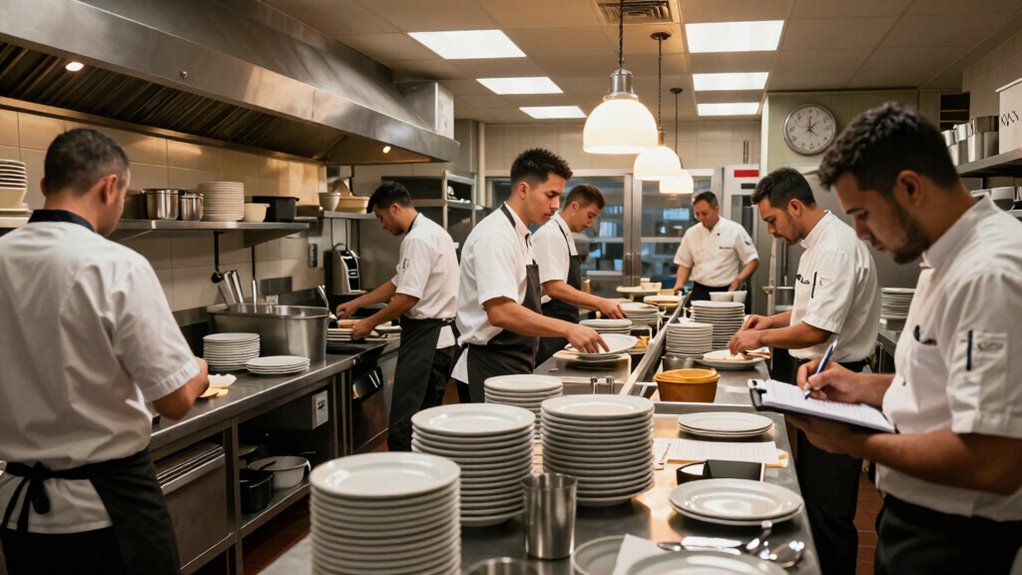

During shift changes, you often face issues like poor communication, which leaves staff unsure of order statuses or special requests. Inadequate equipment checks can cause unexpected delays, while uncoordinated handovers lead to chaos and mistakes. Without a structured process or clear timing, staff may forget essential details, disrupting service. If you want to prevent these common pitfalls and maintain smooth operations, continue exploring strategies to improve your restaurant’s workflow and shift handovers.
Open a free Amazon Business account
Business pricing, bulk buying and tax-exempt orders.
As an affiliate, we earn on qualifying purchases.
Key Takeaways
- Lack of clear communication and handover checklists leads to missed information and confusion during shift transitions.
- Failure to verify equipment functionality before shifts causes delays and operational disruptions.
- Disorganized or rushed shift changes result in poor coordination and overlooked responsibilities.
- Absence of a standardized handoff process reduces consistency and increases errors.
- Ignoring scheduled shift times and planning causes service delays and cascading mistakes.

Shift changes are critical moments in restaurant operations, yet they often become stumbling blocks when workflow mistakes occur. One of the most common issues is poor staff communication. When the outgoing team doesn’t clearly relay the status of ongoing orders, reservations, or special requests, the incoming staff can feel lost or unprepared. This breakdown in communication creates confusion, delays, and mistakes that ripple throughout the entire service. You might find yourself scrambling to correct errors or missing important details because the handoff wasn’t thorough. To prevent this, effective communication during shift change isn’t optional; it’s crucial. Make sure the outgoing team provides a concise yet thorough update, covering critical points like reservations, VIP guests, and any issues with equipment or ingredients. Use checklists or handover sheets to guarantee nothing gets overlooked, and encourage an open dialogue where the incoming team feels comfortable asking questions. Establishing a standardized handoff process can significantly enhance clarity and consistency during these transitions. Ensuring clear communication is essential for maintaining a smooth workflow during shift changes, especially when coordinating tasks and responsibilities. Additionally, implementing a communication protocol can help standardize how information is shared, reducing misunderstandings and errors during these critical moments.
Another common mistake is neglecting equipment readiness. When staff forget to verify that all essential equipment—such as ovens, refrigerators, or POS systems—is functioning properly before the shift begins, it can cause significant disruptions. Equipment failures during busy hours lead to delays, frustrated staff, and unhappy guests. You should prioritize a quick equipment check-in during shift change, confirming everything is operational and ready to use. If something isn’t working, report it immediately and document the issue for maintenance. Rushing through this step or assuming everything is fine can backfire, especially during peak hours. You need to establish a routine where the incoming team double-checks critical equipment, so they’re not caught off guard. This proactive approach saves time and reduces stress, keeping workflow smooth and guests satisfied.
Timing is another essential factor. Transition periods often become chaotic when staff members don’t coordinate their handover properly. If the outgoing team leaves abruptly or the incoming staff arrives late, essential information and preparations get missed. To combat this, set a designated time for shift change and stick to it strictly. Use a checklist to guide the handoff, covering not just staff updates but also cleaning tasks, station setups, and equipment checks. Clear, timely communication combined with a structured process allows the new team to step in confidently, minimizing downtime and mistakes. Proper planning and adherence to schedules help prevent disruptions that can cascade throughout the service. When staff are aware of the importance of these procedures, they are more likely to adhere consistently, reducing the risk of errors and improving overall efficiency.
restaurant shift handover checklists
As an affiliate, we earn on qualifying purchases.
As an affiliate, we earn on qualifying purchases.
Frequently Asked Questions
How Can Technology Improve Shift Change Efficiency?
Technology can boost shift change efficiency by streamlining communication and processes. You can use digital check-ins to quickly update staff on the current status, reducing confusion. Automated alerts notify team members of important updates or tasks needing immediate attention, ensuring nothing gets overlooked. These tools help your team shift seamlessly between shifts, saving time and minimizing errors, so you can focus more on delivering excellent customer experiences.
What Training Ensures Smooth Transition Between Shifts?
You can facilitate a smooth shift transition by providing thorough staff onboarding and effective training modules. Start with hands-on training that covers daily routines, POS systems, and safety protocols. Regularly update your training materials to reflect changes. Encourage open communication and mentorship between experienced and new staff. By investing in thorough onboarding and ongoing training, you help your team work seamlessly, reducing mistakes and increasing overall efficiency during shift changes.
How to Handle Unexpected Staff Absences During Shift Change?
When staff absences happen during shift change, you need to act quickly. Prioritize staff coverage by having a contingency plan in place, such as on-call staff or cross-trained team members who can fill in. Communicate clearly with your team, adjusting workflows as needed to maintain service quality. Staying flexible and prepared guarantees the shift runs smoothly despite unexpected absences, keeping your restaurant running efficiently.
What Role Does Communication Play in Minimizing Mistakes?
Imagine a mistake lurking just around the corner—communication is your secret weapon. You need clear handover clarity to guarantee everyone’s on the same page, preventing misunderstandings. Regular feedback loops act like checkpoints, catching errors early. When you foster open dialogue, you create a smooth handoff, reducing mistakes during shift change. Your team becomes a well-oiled machine, confident that essential details won’t slip through the cracks.
How to Measure Success After Implementing New Shift Protocols?
You measure success after implementing new shift protocols by tracking staff accountability and performance metrics. Observe how smoothly shifts shift, noting reductions in mistakes or delays. Regularly review these metrics to identify areas of improvement, and gather feedback from your team. When you see consistent positive trends, it indicates your protocols are working. Keep monitoring, adjusting, and reinforcing accountability to guarantee ongoing success and efficient workflow during shift changes.
Conclusion
So, next time you’re caught in the chaos of shift change, remember: a little organization and communication go a long way—unless you’re aiming for culinary chaos and disgruntled diners. Embrace the art of seamless handovers, or enjoy the spectacle of staff running in circles while your reputation takes a hit. After all, who needs efficiency when you can master the fine art of the restaurant shuffle? Cheers to keeping chaos at bay—dining experiences depend on it.
NFL season / tailgating Picks
team gear
As an affiliate, we earn on qualifying purchases.