If your restaurant relies on electricity to serve customers, handle food, and keep equipment running, a backup generator becomes essential during power outages. When outages threaten to disrupt service or spoil food, having a reliable generator guarantees you stay operational and maintain safety standards. Regular maintenance, proper sizing, and system integration are key to maximizing efficiency and reliability. To discover how to best protect your restaurant’s operations, keep exploring what it takes to make backup power truly effective.
Key Takeaways
- Power outages can severely disrupt service, spoil food, and damage reputation, making backup generators critical for continuous operation.
- Properly sized and integrated generators ensure essential equipment remains operational during outages, safeguarding revenue and safety.
- Regular maintenance and testing prevent unexpected failures, enhancing generator reliability and extending lifespan.
- Energy-efficient generators reduce operational costs and improve overall restaurant resilience.
- Investing in backup power demonstrates proactive risk management and commitment to high service standards.
Have you ever experienced a sudden power outage that disrupted your restaurant’s operations? It’s a stressful situation that can lead to unhappy customers, spoiled food, and lost revenue. In today’s fast-paced food industry, relying solely on the grid isn’t enough. That’s where backup generators come into play, transforming from a luxury into a necessity. Not only do they help guarantee your restaurant stays open during outages, but they also contribute to energy efficiency by providing reliable power when needed most. When choosing a backup generator, it’s essential to deliberate maintenance schedules. Regular upkeep keeps the generator running smoothly and prevents unexpected failures during critical moments. Creating a routine maintenance plan might seem like an added expense, but it’s an investment in your restaurant’s resilience. Well-maintained generators consume energy more efficiently, reducing operational costs and extending their lifespan. This way, you avoid the costly repairs and replacements that can arise from neglect. You need to think about the size and capacity of the generator as well. It should be capable of powering your essential equipment—like refrigerators, ovens, and lighting—without overloading. An undersized generator won’t meet your needs, while an oversized one might waste energy and increase costs. Proper sizing, combined with a focus on energy efficiency, guarantees you maximize your investment. Installing a backup generator also involves evaluating your energy loads and integrating it seamlessly into your existing electrical system. This integration minimizes downtime and ensures a quick transition when the power goes out. Additionally, it’s wise to work with professionals who understand your specific needs and can advise on the most efficient and reliable options. Having a backup generator in place not only prevents interruptions but also demonstrates to your customers and staff that you prioritize safety and service quality. It’s a sign of proactive management that can set your restaurant apart from competitors. Remember, the true value of a backup generator lies in its consistent performance when you need it most. Regular testing and routine maintenance are vital to keep it in top shape. This proactive approach helps identify potential issues early, ensuring your generator is ready for the next outage. Properly maintaining generators can also extend their lifespan and improve overall energy efficiency. Additionally, understanding energy consumption and how it impacts your operational costs can help you optimize your generator’s use and efficiency. Keeping detailed records of your generator’s performance history can further aid in troubleshooting and planning for future upgrades. Moreover, being aware of proper installation procedures ensures that your backup system is both safe and effective, reducing the risk of electrical hazards. Ultimately, investing in a backup generator with a focus on energy efficiency and proper maintenance schedules turns it from a mere backup into a strategic asset. It provides peace of mind, safeguards your business, and helps maintain a high standard of service, no matter what surprises the power grid throws your way. Additionally, understanding home security tips can help you safeguard your restaurant and equipment from potential threats during outages or emergencies.
restaurant backup generator
As an affiliate, we earn on qualifying purchases.
As an affiliate, we earn on qualifying purchases.
Frequently Asked Questions
How Long Can a Backup Generator Run Continuously?
You can typically run a backup generator continuously for 8 to 24 hours, depending on fuel capacity and efficiency. Fuel efficiency plays a key role, as it determines how long the generator can operate without refueling. Keep noise levels in mind; quieter models are better for prolonged use, especially in restaurant settings. Regular maintenance guarantees safe, reliable operation, so plan for refueling and noise management during extended outages.
What Is the Average Cost of Installing a Restaurant Backup Generator?
You’re about to face costs that range from $10,000 to $30,000 for installing a restaurant backup generator. Imagine the power flickering out just as your orders pour in—your generator kicks in, quietly humming with peak fuel efficiency and low noise levels. That investment safeguards your business, ensuring customer satisfaction and operational continuity, even in the darkest power outages. Don’t let unpredictable outages catch you unprepared.
Are There Specific Generator Models Best Suited for Restaurant Needs?
You should look for generator models with adequate capacity to handle your restaurant’s essential equipment and customer needs. Opt for generators with a capacity of at least 22-30 kW for most restaurants. Consider fuel options like natural gas or propane, which provide reliable, cost-effective power during outages. These models guarantee continuous service, prevent revenue loss, and keep your staff and customers safe, making them the best fit for restaurant needs.
How Often Should Backup Generators Be Maintained?
You should maintain your backup generator at least every 3 to 6 months, depending on usage and manufacturer recommendations. Regular maintenance guarantees maximum fuel efficiency and helps reduce noise levels during operation. Check oil levels, filters, and battery health, and schedule professional inspections annually. Proper upkeep ensures your generator is ready to provide reliable power protection when you need it most, minimizing disruptions and maintaining a safe, comfortable environment for your restaurant.
What Are the Legal Regulations for Backup Generators in Restaurants?
Nearly 80% of restaurants face fines for non-compliance with legal regulations on backup generators. You must guarantee legal compliance by adhering to local, state, and federal regulatory standards, which often require regular testing, maintenance, and proper installation of generators. Staying compliant not only avoids penalties but also guarantees your restaurant’s safety and uninterrupted service during power outages. Always check with your local authorities for specific requirements to meet all legal standards effectively.
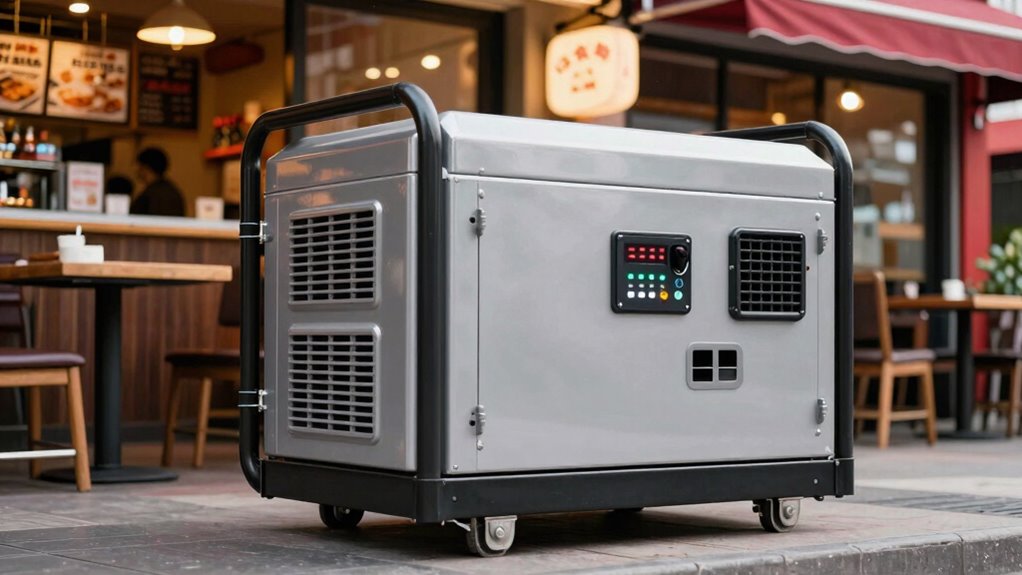
industrial portable generator for restaurant
As an affiliate, we earn on qualifying purchases.
As an affiliate, we earn on qualifying purchases.
Conclusion
So, next time the power’s out and you’re frantically scrambling to save your restaurant’s reputation, remember—backup generators aren’t just a luxury anymore. They’re your secret weapon, turning chaos into calm. Ironically, what once seemed like an extra expense now feels like a smart investment. After all, losing customers because of a blackout isn’t just bad luck; it’s bad business. Stay prepared, keep the lights on, and maybe, just maybe, enjoy that little bit of peace of mind.
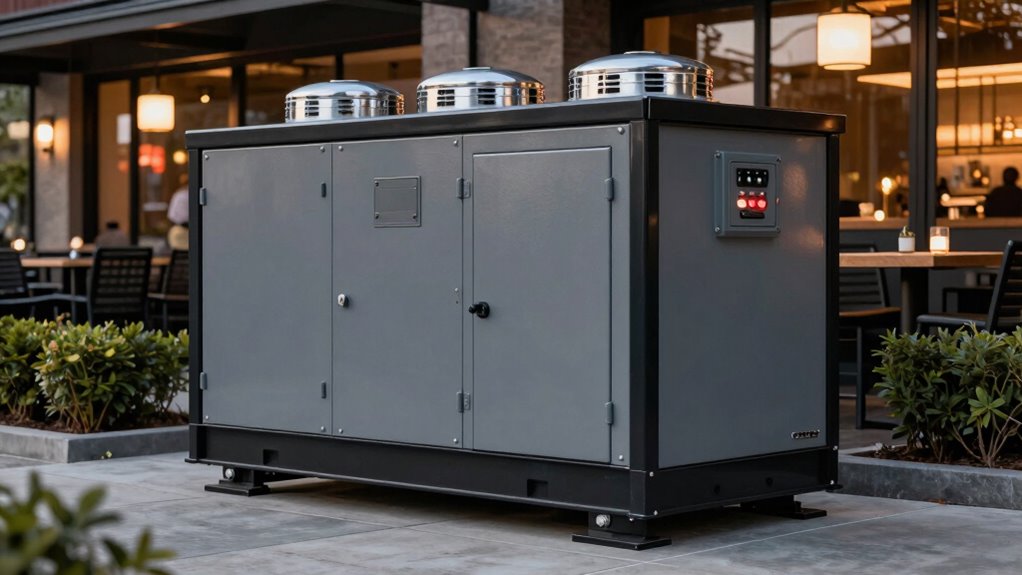
automatic standby generator for commercial use
As an affiliate, we earn on qualifying purchases.
As an affiliate, we earn on qualifying purchases.
energy-efficient backup generator
As an affiliate, we earn on qualifying purchases.
As an affiliate, we earn on qualifying purchases.