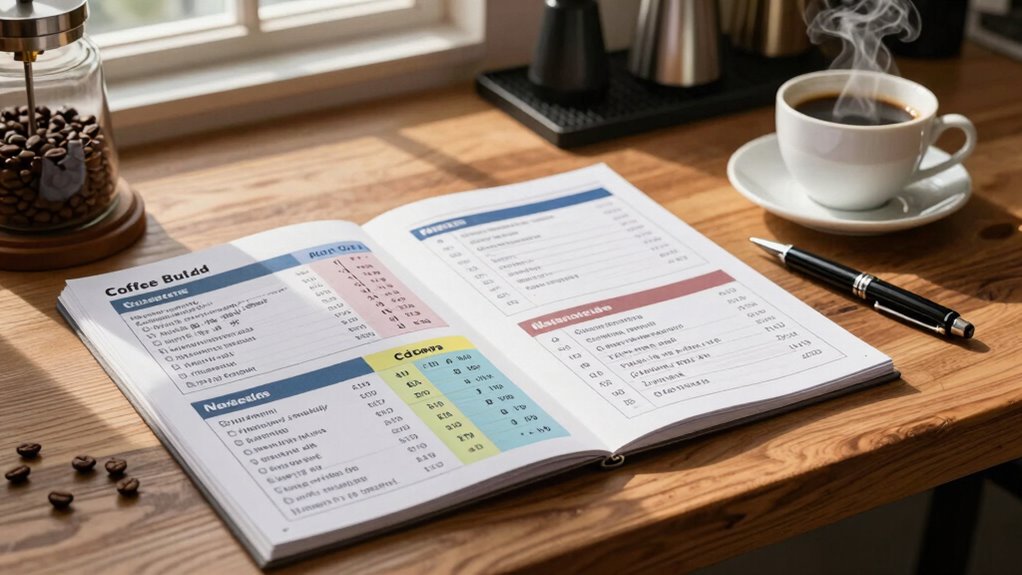

To create better drink build sheets for your coffee shop, focus on clarity, organization, and accuracy. Use simple language, visual cues, and precise measurements to guarantee consistency. Incorporate step-by-step brewing processes and highlight critical steps like temperature and timing. Include customer preferences and customization options to meet varied tastes. Regularly update your sheets with new trends and feedback, leveraging technology for automation and efficiency. Keep refining your approach to deliver perfect drinks every time—stay with us to discover how.
Key Takeaways
- Incorporate detailed, step-by-step brewing instructions with precise measurements and critical control points.
- Use clear visuals, diagrams, or icons to enhance understanding and reduce errors.
- Customize build sheets to include customer preferences, dietary options, and popular modifications.
- Regularly update sheets based on feedback, new techniques, and evolving menu offerings.
- Leverage digital tools and automation to streamline production, inventory, and communication.
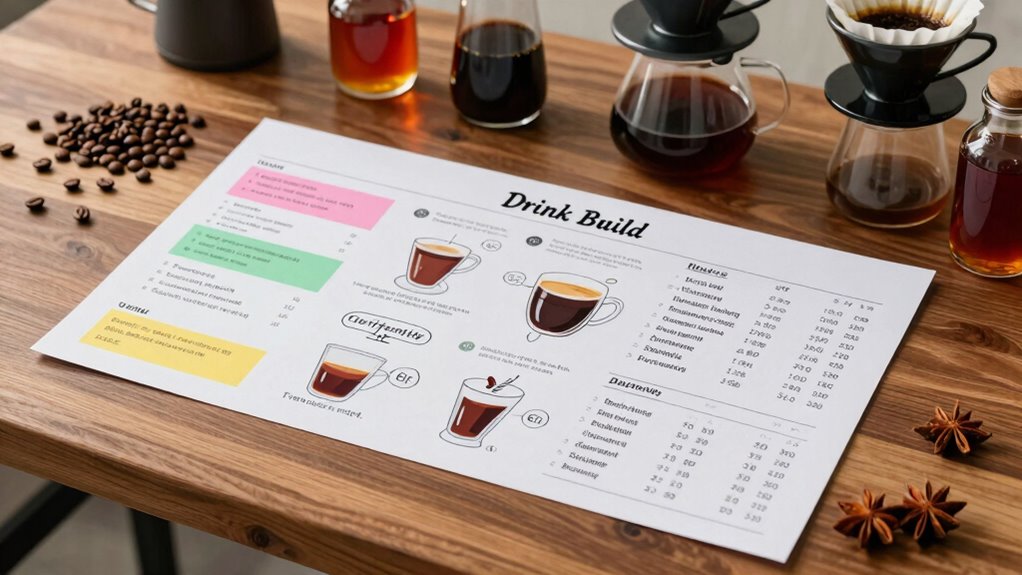
Creating drink build sheets for your coffee shop can streamline your operations and guarantee consistency in every cup served. These sheets act as a reference for your baristas, ensuring each drink matches customer expectations and maintains quality standards. To craft effective build sheets, start by understanding the core components of each beverage, including the specific brewing techniques involved. Different drinks require different methods, such as pour-over, French press, or espresso extraction. Detailing these techniques on your sheets helps your team execute each step correctly, avoiding mistakes that can compromise taste or presentation.
Creating detailed drink build sheets ensures consistency and quality in every cup served.
Next, consider your customer preferences, which are essential to designing build sheets that meet and exceed expectations. Some customers might prefer a stronger or milder flavor, specific milk alternatives, or unique flavor add-ins. Incorporate these preferences into your sheets by providing options or modifications. For example, if a customer requests a caramel latte with almond milk, your build sheet should specify the espresso shot, the amount of caramel syrup, and the type of milk to use. This ensures consistency regardless of who prepares the drink. Regularly gathering feedback from your customers can also guide updates to your build sheets, helping you adapt to evolving tastes and trends.
Clarity is crucial when creating build sheets. Use simple, straightforward language and include visual cues or diagrams if possible. For instance, specify the number of espresso shots, the volume of milk, and the syrup quantities with exact measurements. Precise instructions minimize guesswork and reduce training time for new staff. It’s also helpful to organize your sheets logically—from base ingredients to finishing touches—so your team can follow the process smoothly. Highlight any critical steps, such as the correct brewing time or milk temperature, to prevent errors that could affect flavor or texture. Incorporating standardized measurements can further enhance consistency across your team. Additionally, understanding automation techniques can help optimize the drink-making process and reduce manual errors.
Furthermore, integrating smart home technology insights can help automate some aspects of drink preparation or inventory management, further enhancing your consistency and efficiency. Using automation can also assist in maintaining precise brewing parameters and monitoring equipment performance, which contributes to quality control. Incorporating digital tools can streamline recipe adjustments and ensure that updates are easily communicated to your staff. Keep your build sheets flexible enough to accommodate seasonal or promotional drinks while still maintaining core consistency. As your menu evolves, regularly review and update the sheets to reflect new recipes or adjusted brewing techniques. Incorporate notes about customer preferences, such as customizations or popular modifications, to make the sheets more personalized. Training your staff on how to use these sheets effectively builds confidence and ensures every drink meets your standards. Ultimately, well-designed build sheets empower your team to deliver high-quality, consistent beverages, delighting your customers and streamlining your operations.

72 Pieces Coffee Decoration Stencils Latte Art Template Coffee Mold Tool with 2 Latte Art Pen 2 Dusting Jars Mesh Powder Shaker for Cake Cookie Decorating Oatmeal Cappuccino Hot Chocolate
- Complete Coffee Decoration Set: 72 stencils, 2 pens, 2 dusting jars
- Variety of Patterns: 36 different stencil designs
- Durable and Safe Material: Made of non-toxic PET plastic
As an affiliate, we earn on qualifying purchases.
As an affiliate, we earn on qualifying purchases.
Frequently Asked Questions
What Tools Are Best for Designing Drink Build Sheets?
You should use design tools like Canva or Adobe Illustrator to craft clear, visually appealing drink build sheets. These tools allow you to incorporate flavor combinations and detailed instructions easily. Make sure your sheets are easy to read, especially when noting equipment calibration needs. Using templates or custom graphics helps communicate complex info quickly, ensuring your baristas can prepare drinks accurately and consistently every time.
How Often Should Drink Build Sheets Be Updated?
You should update drink build sheets whenever you notice inconsistencies in drink consistency or when new ingredients or recipes are introduced. Regular updates guarantee sheet accuracy, helping staff prepare drinks precisely every time. Aim for a monthly review or after any menu changes. Staying proactive maintains high quality, minimizes errors, and keeps your team confident in following the most current, accurate instructions for consistent, delicious coffee.
Should Build Sheets Include Visual Illustrations?
Including visual illustrations on your build sheets can greatly improve ingredient accuracy and presentation consistency. Studies show that visual aids boost employee understanding by up to 85%. By adding clear images, you reduce errors, guarantee precise ingredient measurements, and maintain a consistent look for each drink. Visuals serve as quick, effective references, making training easier and helping your team deliver a better customer experience every time.
How Can I Customize Sheets for Seasonal Drinks?
You can customize sheets for seasonal drinks by adding sections for seasonal flavor integrations and highlighting customization options. Use clear labels for ingredients and possible modifications, like alternative syrups or milk choices. Incorporate visual cues or icons to indicate seasonal flavors, making it easy for staff to assemble drinks accurately. Regularly update the sheets with new seasonal options and customer favorites to keep them fresh and engaging.
What’s the Best Way to Train Staff on New Sheets?
You should conduct staff training sessions focused on effective communication, ensuring everyone understands the new sheets thoroughly. Use hands-on demonstrations and encourage questions to clarify any confusion. Provide clear, easy-to-follow guides and practice scenarios, so staff gain confidence in using the new sheets efficiently. Reinforce learning through regular check-ins, feedback, and ongoing support, making sure they’re comfortable and consistent in applying the updates during busy hours.
Conclusion
So, now that you’ve mastered the art of crafting perfect drink build sheets, you’re practically a beverage wizard—minus the robes, of course. With your newfound expertise, you’ll impress customers, boost efficiency, and maybe even fool a few baristas into thinking you have secret coffee alchemy skills. Just remember: the real magic lies in simplicity and clarity. Cheers to making your coffee shop the envy of caffeine connoisseurs everywhere—because, obviously, it’s all about the sheets.