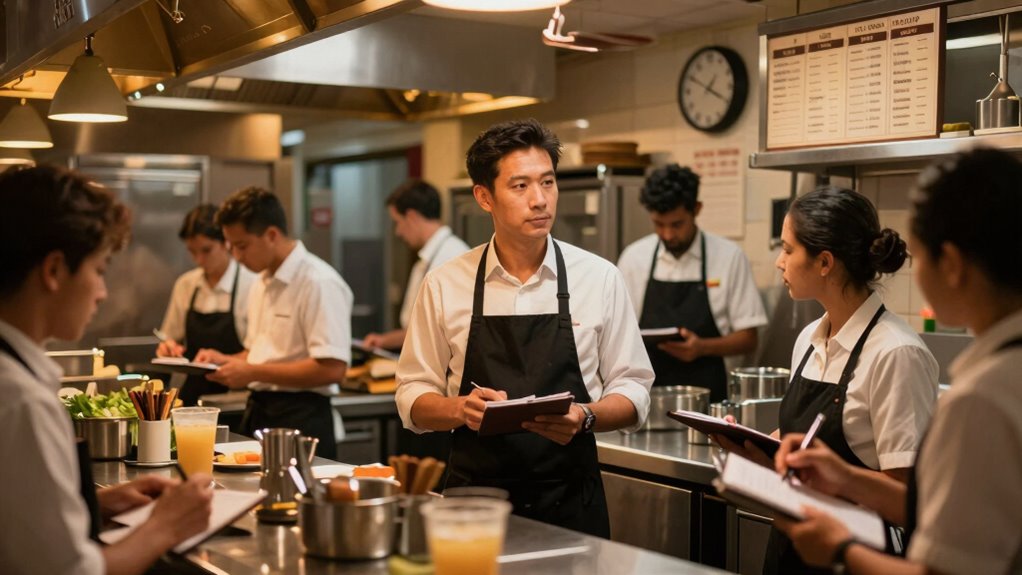

To run a better manager shift change in your restaurant, focus on a seamless handover by communicating clearly and using a standardized checklist. Review inventory, note any discrepancies, and guarantee all critical points are covered quickly but thoroughly. Recognize team achievements and address concerns to boost morale. Planning ahead helps avoid surprises, and fostering a positive attitude encourages teamwork. Keep your handoff efficient—more tips await to perfect your shift change process.
Key Takeaways
- Use a standardized checklist to ensure all critical information, including inventory, staff updates, and reservations, is covered thoroughly.
- Communicate clearly and concisely, encouraging questions to clarify any uncertainties about operations or staff.
- Review inventory levels and document discrepancies to maintain accurate records and prevent waste.
- Recognize staff achievements and address concerns to boost morale and motivation during the transition.
- Foster a positive, professional environment to reinforce teamwork and ensure a smooth, efficient handoff.
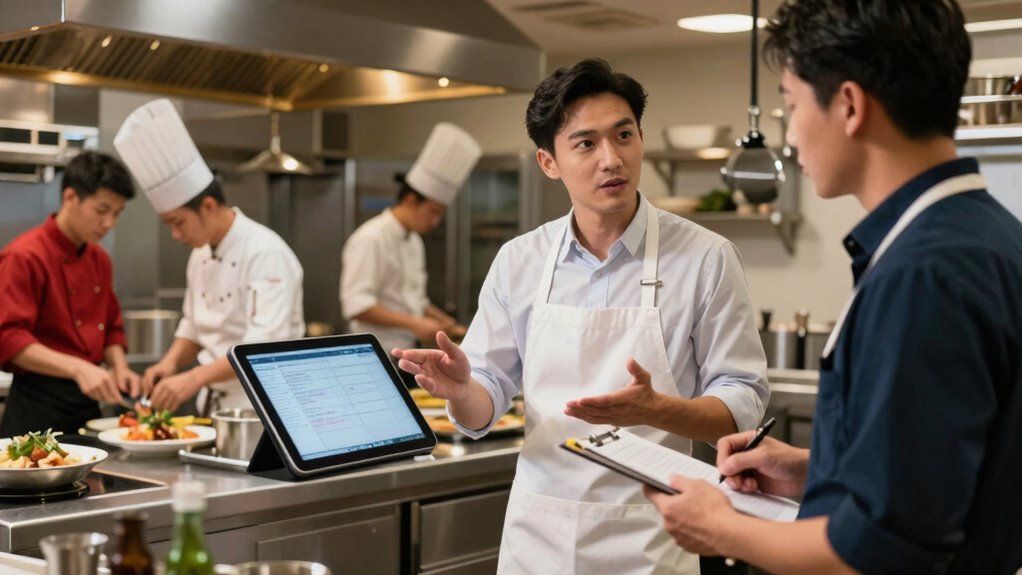
A smooth manager shift change is essential for maintaining restaurant operations and guaranteeing a positive staff and guest experience. When you shift seamlessly from one manager to the next, you set the tone for the entire shift, helping your team stay motivated and focused. One of your top priorities should be to clearly communicate key information about staff motivation—what’s working well and what needs attention. Recognize team members’ accomplishments and address any issues that could hinder morale. When staff feel valued and informed, they’re more likely to stay engaged and provide excellent service.
A smooth shift change boosts morale, maintains operations, and sets a positive tone for staff and guests.
Equally important is making certain that inventory management is up-to-date and accurate. During the shift change, review inventory levels with your successor, noting any shortages or overstocked items. This prevents delays and guarantees your team can operate smoothly throughout the shift. If you leave detailed notes about inventory discrepancies or upcoming orders, it minimizes confusion and keeps operations running efficiently. Proper inventory management also helps control costs and reduces waste, which benefits the restaurant’s profitability. Additionally, maintaining accurate inventory data ensures better decision-making and smoother transitions between shifts.
To run an effective changeover, your communication should be concise yet thorough. Before wrapping up your shift, spend a few minutes with your replacement to go over the critical points—staff updates, customer issues, reservations, and inventory status. This conversation should be direct, avoiding unnecessary details but including all relevant information. It’s a good idea to have a standardized checklist for shift handovers, so nothing gets overlooked. This guarantees consistency and makes the process quicker, especially during busy hours. Incorporating standardized procedures can further streamline the handoff process and reduce errors. Using effective communication techniques can also help ensure that your message is clear and understood. Incorporating clear documentation can further enhance the transition and ensure nothing is missed. Remember, utilizing structured handovers ensures a more organized and reliable process.
Encourage your team to ask questions during the shift change. This openness helps clarify any uncertainties about staff motivation strategies or inventory concerns. If your successor leaves with a clear understanding of ongoing issues, they can address them proactively, maintaining positive momentum. Also, don’t forget to review upcoming reservations or special events that could impact staffing or inventory needs. Planning ahead allows your successor to allocate resources efficiently and avoid surprises.
Finally, foster a positive attitude during the handoff. A friendly, confident exchange boosts team morale and sets a professional tone. When everyone feels informed and prepared, they’re more motivated to perform their best. By streamlining communication, emphasizing staff motivation, and thoroughly reviewing inventory management, you guarantee that your restaurant’s operations stay seamless. A well-executed shift change doesn’t just transfer responsibilities—it reinforces a culture of teamwork, efficiency, and excellence that benefits everyone, from staff to guests.
restaurant shift handover checklist
As an affiliate, we earn on qualifying purchases.
As an affiliate, we earn on qualifying purchases.
Frequently Asked Questions
How Early Should Managers Arrive Before Their Shift?
You should arrive at least 15 to 30 minutes early before your shift begins. This allows you to review the schedule, check for any updates, and guarantee effective scheduling. Arriving early also helps you address any last-minute issues and set clear expectations for staff accountability. By being punctual, you lead by example, promote professionalism, and facilitate a smooth handover between shifts, ultimately improving overall restaurant operations.
What if There’s a Last-Minute Staffing Issue During Shift Change?
Imagine the restaurant buzzing, but suddenly a staffing issue emerges like an unexpected storm. You quickly activate your staffing contingency plan, assigning the best available staff or reassigning roles. Clear crisis communication becomes your anchor, swiftly informing your team and managing customer expectations. Staying calm and adaptable guarantees the shift continues smoothly, turning a last-minute problem into an opportunity for your team to demonstrate resilience and teamwork.
How Do You Handle Disagreements Between Managers During Handovers?
When disagreements arise during handovers, you should prioritize conflict resolution through clear communication strategies. Approach the situation calmly, listen actively to each manager’s perspective, and find common ground. Encourage open dialogue to address concerns constructively, and focus on solutions rather than blame. By maintaining professionalism and fostering collaboration, you guarantee a smooth handover, minimize misunderstandings, and keep the restaurant running efficiently.
What Tools or Technology Can Streamline Shift Change Communication?
Did you know that teams using digital tools are 30% more efficient? To streamline shift change communication, leverage digital checklists and communication apps. These tools guarantee everyone stays updated in real-time, reducing misunderstandings. Digital checklists help managers document and transfer essential info seamlessly, while communication apps enable quick, direct messaging. Together, they make handovers smoother, faster, and more reliable, ultimately improving your restaurant’s overall operations.
How to Ensure Consistency in Shift Change Procedures Across Managers?
To guarantee consistency in shift change procedures, you should implement extensive staff training that emphasizes standard procedures. Clearly document these procedures and make them accessible to all managers. Conduct regular refresher trainings and audits to reinforce adherence. Encourage open communication and feedback from your managers to identify gaps. By standardizing processes and providing ongoing education, you help create a seamless, consistent shift change experience across your restaurant.
Conclusion
A smooth manager shift change keeps your restaurant running seamlessly and boosts team morale. Remember, 70% of restaurant staff say clear communication during handovers improves their confidence and performance. By implementing structured checklists and fostering open dialogue, you guarantee everyone’s on the same page. When you prioritize effective shift changes, you create a more efficient, positive environment that ultimately enhances guest satisfaction and drives your restaurant’s success.