
To build better backup plans for busy dining rooms, you should create flexible menus that can be quickly scaled or streamlined, and train staff to handle surge conditions with regular drills. Establish clear processes for prioritizing orders and designating backup stations. Incorporate contingency strategies like outdoor seating or shifting service styles, and communicate plans clearly to your team. Mastering these steps guarantees you can maintain service quality during peak times and stay ahead of any challenges—more helpful tips await if you continue.

Get kitchen staples and gadgets delivered free — and shop member deals
- Fast, free delivery on millions of items
- Access to Prime Big Deal Days deals on October 6–7
- Prime Video, Amazon Music and more included
Key Takeaways
- Develop clear, step-by-step contingency procedures tailored to various surge scenarios.
- Train staff regularly on backup plans and emergency protocols for quick implementation.
- Design flexible operational workflows and menu options to adapt swiftly during busy periods.
- Allocate designated backup stations and additional staff to handle overflow efficiently.
- Communicate backup strategies clearly to all team members and ensure accessibility for quick reference.

When your dining room gets busier than expected, having a solid backup plan can make all the difference. It’s essential to prepare for those sudden rushes when your usual flow can’t keep up. One of the best ways to do this is by focusing on menu customization. By designing a flexible menu that can be scaled up quickly or streamlined during peak times, you avoid bottlenecks. For example, offering a few quick-serve options or pre-prepared dishes can help your kitchen handle volume without sacrificing quality. This allows your staff to serve more guests efficiently, reducing wait times and maintaining the dining experience even when things get hectic.
Preparing a flexible menu helps your kitchen handle busy times efficiently and keeps guests satisfied.
Equally important is staff training. Your team needs to be ready to adapt on the fly, so investing in all-encompassing training ensures everyone knows their roles during busy periods. Proper training equips your staff with the skills to manage increased order volume, prioritize tasks, and communicate effectively. When your team understands how to execute the backup plan, they can stay calm and organized, which directly impacts service quality. Regular drills or simulations of busy scenarios can help staff become comfortable with the procedures, so they’re not caught off guard when rush hour hits unexpectedly. Incorporating training exercises that simulate busy conditions can further enhance their readiness. Emphasizing operational flexibility as part of your staff training can significantly improve responsiveness during peak times. Developing a contingency plan that outlines specific steps to take during unexpected surges can further solidify your preparedness.
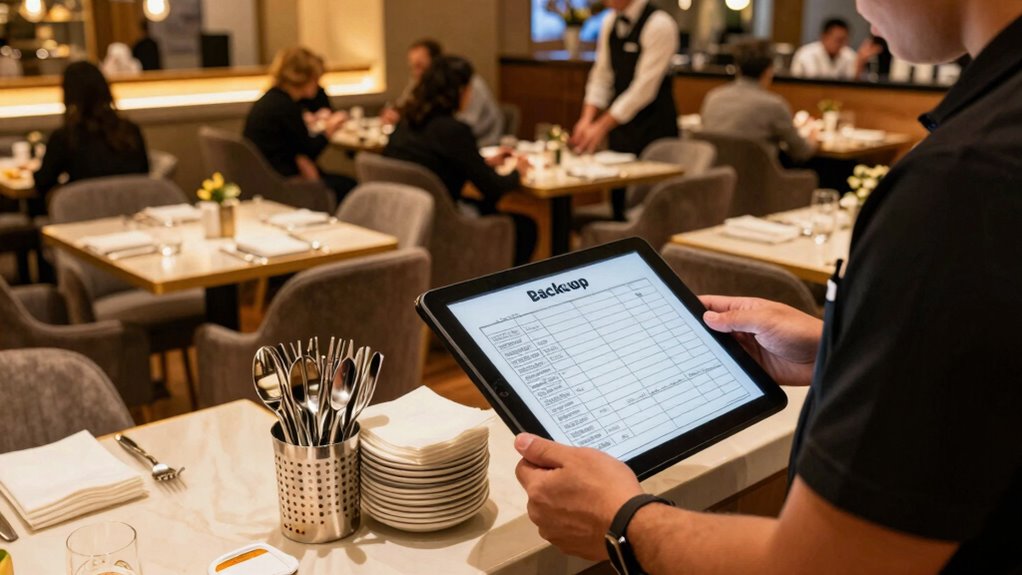
A well-thought-out backup plan also involves streamlining your operational processes. For instance, having a clear system for order prioritization and a backup station for taking extra orders can keep service moving smoothly. You might designate specific staff members to handle overflow orders or establish a simplified menu for peak times. This minimizes confusion and keeps the workflow steady. Additionally, effective communication tools—such as headsets or real-time messaging apps—ensure your team stays coordinated, regardless of how busy it gets. Incorporating technology solutions can further enhance your operational flexibility and responsiveness during peak periods.
Flexibility is key. Sometimes, you may need to adjust seating arrangements or modify service styles temporarily. Your backup plan should include predefined strategies, like offering outdoor seating or shifting to a more efficient, fast-casual service model during the busiest hours. These measures help you stay agile and responsive to fluctuating customer volume.
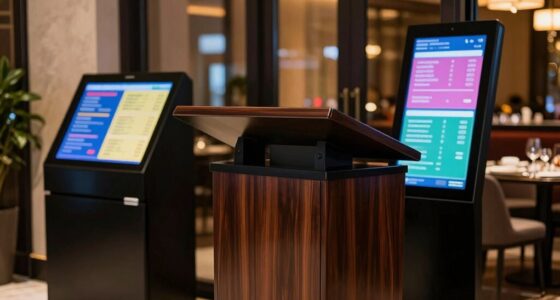
restaurant flexible menu display boards
As an affiliate, we earn on qualifying purchases.
As an affiliate, we earn on qualifying purchases.
Frequently Asked Questions
How Often Should Backup Plans Be Reviewed and Updated?
You should review and update your backup plans at least quarterly to keep your inventory management current and guarantee customer communication stays effective. Regular reviews help you identify gaps, adapt to seasonal changes, and address any new challenges. By staying proactive, you minimize disruptions during busy times and maintain a smooth dining experience. Consistent updates ensure your backup plans align with your evolving restaurant needs and customer expectations.
What Specific Staff Training Enhances Backup Plan Effectiveness?
Think of staff training like tuning a musical instrument—it guarantees everything plays harmoniously during chaos. You should focus on conducting regular staff drills that simulate real emergency scenarios, helping staff confidently follow emergency protocols. This practice sharpens their responses, reduces panic, and keeps the backup plan effective. Continuous training not only boosts preparedness but also builds a cohesive team ready to handle any unexpected busy dining room situation smoothly.
How to Handle Unexpected Equipment Failures During Peak Hours?
When equipment fails unexpectedly during peak hours, you should follow your emergency protocols promptly to minimize disruption. Make sure your staff knows how to troubleshoot basic issues and switch to backup equipment if available. Regular equipment maintenance helps prevent failures, but when they occur, quick action is essential. Communicate clearly with your team, keep customers informed, and prioritize safety. This approach maintains service flow and demonstrates your readiness to handle unforeseen challenges efficiently.
What Are Cost-Effective Backup Solutions for Small Dining Establishments?
Imagine a busy night, and suddenly, your main equipment fails. To stay prepared, focus on cost-effective backup solutions like smart inventory management—keeping essential supplies handy. Also, maintain clear customer communication, informing guests of delays proactively. These strategies minimize disruption without breaking the bank, ensuring your small dining establishment can handle unexpected hiccups smoothly. Staying adaptable keeps your guests happy and your business resilient during busy times.
How to Communicate Backup Procedures to New Staff Members?
You should establish clear staff communication and thorough training protocols to effectively convey backup procedures to new team members. Use simple, step-by-step instructions and hold hands-on training sessions to ensure understanding. Reinforce the importance of backup plans regularly during staff meetings. Providing written materials or quick-reference guides helps new staff quickly grasp emergency procedures, making sure everyone knows their roles and responds confidently during busy times or unexpected disruptions.
Conclusion
So, next time your busy dining room hits peak chaos, remember that even the best backup plans can’t predict everything—except maybe the ironic twist of how often the simplest solutions, like a well-trained team or flexible seating, save the day. After all, it’s funny how a little planning and a lot of adaptability can turn chaos into calm. Who knew that the secret to smooth service was just a backup plan you never thought you’d need?
Fall Picks
fall essentials
As an affiliate, we earn on qualifying purchases.