TL;DR

Get kitchen staples and gadgets delivered free — and shop member deals
- Fast, free delivery on millions of items
- Access to Prime Big Deal Days deals on October 6–7
- Prime Video, Amazon Music and more included
Search and media attention around a dietitian-framed list of the five best foods for colon health is currently spiking. The specific list and its origin are unconfirmed. What is long-established is the general role of fiber-rich, fermented and plant-based foods in supporting digestive health.
Interest in the topic “the five best foods for your colon, according to dietitians” is spiking across search and online food coverage, according to the trending-topic metadata that surfaced this item. The underlying article or list responsible for the surge has not been independently verified, and the specific five foods it names are not confirmed. What is well established, independently of any single list, is that diet plays a measurable role in colon and digestive health, and that certain food categories are consistently recommended by health professionals for that purpose.
The verified information at this stage is limited: a food-related article with the headline “These Are The Five Best Foods For Your Colon, According to Dietitians” is circulating via RSS feeds and generating elevated reader attention. No publication date, author, or originating outlet has been confirmed, and this report does not reproduce or endorse any specific five-item list.
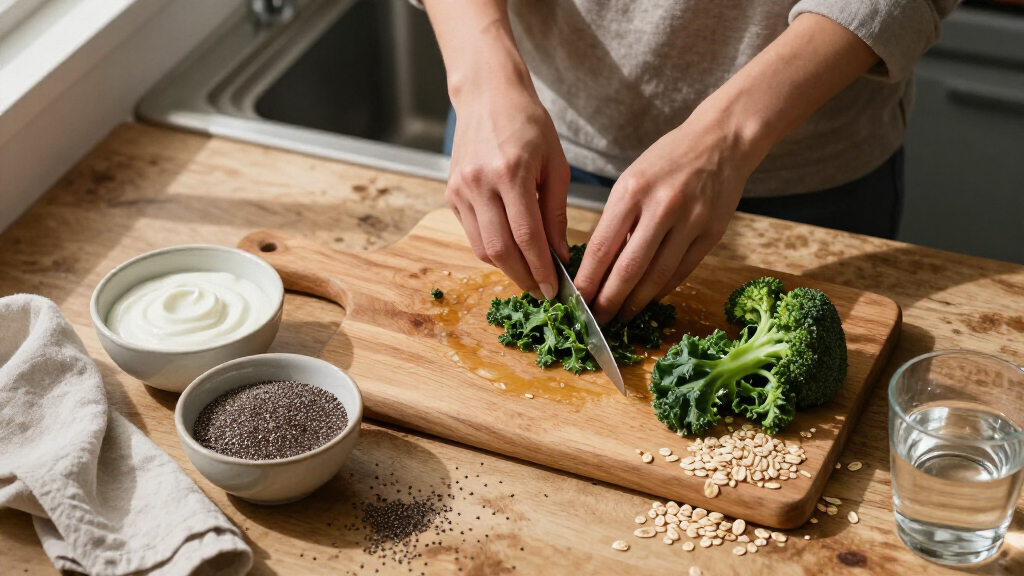
Separately from the unverified list, decades of dietary research and public-health guidance — including positions long held by bodies such as national dietary guidelines and gastrointestinal health organizations — support several general principles. Diets rich in fiber from vegetables, fruits, legumes and whole grains are associated with healthier bowel function and, in large observational studies, with lower risk of colorectal problems. Fermented foods such as yogurt and kefir are commonly cited for their potential contribution to gut microbiome balance. Adequate hydration and limited intake of processed and red meats are also recurring recommendations in mainstream dietary advice.
It bears repeating that these are general, long-standing findings, not the contents of the specific trending article. Any claim that exactly five foods are “best” for the colon reflects editorial framing, and the selection criteria behind such lists vary widely between outlets and dietitians.
Why Colon-Food Lists Attract Readers
Colorectal health has become a growing public concern, particularly as colorectal cancer screening rates and early-onset cases have drawn media attention in recent years. Readers searching for “best foods” lists are often looking for simple, actionable dietary guidance rather than clinical detail, which explains the enduring popularity of the format.
The stakes are real: diet is considered one of several modifiable factors — alongside physical activity, alcohol intake and screening — that influence colorectal cancer risk, according to long-standing public-health guidance. However, experts generally caution that no single food prevents disease, and that overall dietary pattern matters more than any short list of items. Lists like the one now trending can be a useful entry point, but readers should treat them as general guidance rather than medical advice.
Established Basics of Eating for Colon Health
Nutrition science on colon health is not new. High-fiber diets have been recommended by health authorities for decades, with common guidance pointing to roughly 25 to 35 grams of fiber per day for adults, most of whom in Western countries consume less. Fiber-rich foods frequently named in professional guidance include beans and lentils, whole grains such as oats, leafy vegetables, and fruits like berries and apples.
Fermented foods — yogurt, kefir, sauerkraut, kimchi — have gained prominence more recently in mainstream coverage as research on the gut microbiome has expanded. Public-health bodies also consistently advise limiting processed meat and alcohol, both of which have been linked to elevated colorectal cancer risk in large pooled studies. These points are standard, established guidance and should not be conflated with whatever specific claims the trending article makes.
“These Are The Five Best Foods For Your Colon, According to Dietitians”
— Trending-topic metadata accompanying the article
What Is Not Yet Verified
Several things remain unclear. The five foods named in the article are not confirmed, nor is the identity of the dietitians cited, the publication behind the list, or its publication date. It is also unclear whether the current spike in interest reflects a broader news event — such as new research, a health awareness campaign, or a high-profile commentary on colorectal cancer — or simply organic search behavior. This report will not speculate on the list’s contents, and readers should be wary of secondary sources that quote a specific five-item list without attribution to a verifiable original.
How to Verify the Trending List
Readers who want to act on this trend can take a few practical steps: trace the article to its original outlet and check whether named dietitians are credentialed (look for RD or RDN credentials); compare its recommendations against established guidance from national dietary guidelines or a gastrointestinal health organization; and consult a physician or registered dietitian for personal advice, especially if there is a family history of colorectal conditions. If the underlying article is later verified, follow-up coverage can address its specific claims. Anyone over the recommended screening age, or with symptoms such as persistent changes in bowel habits, should prioritize colorectal cancer screening over dietary lists.
Key Questions
Are the five foods in the trending list confirmed?
No. The existence and headline of the article are verified through trending metadata, but the specific five foods, the dietitians quoted, and the originating publication have not been confirmed.
What foods are generally recommended for colon health?
Long-standing guidance favors high-fiber foods such as legumes, whole grains, vegetables and fruits, along with fermented foods like yogurt. Limiting processed meat and alcohol is also consistently advised.
Can specific foods prevent colon cancer?
No single food is proven to prevent colorectal cancer. Public-health guidance emphasizes overall dietary pattern, physical activity, limited alcohol, and regular screening as the key factors.
How much fiber should adults aim for?
Common dietary guidance suggests roughly 25 to 35 grams of fiber per day for adults, ideally from varied plant foods rather than supplements.
Why is interest in this topic rising now?
The trigger is unconfirmed. Possible drivers include ongoing media coverage of colorectal cancer and gut health, but no specific event has been verified.
Source: rss
Fall Picks
fall essentials
As an affiliate, we earn on qualifying purchases.