

To negotiate effectively with food distributors, start by researching their products, prices, and reputation to build confidence and trust. Set clear goals for pricing, quality, and delivery, and understand your budget limits. Leverage competition by sharing that you’re considering multiple offers, and ask for discounts or added value. Use open, honest communication to foster collaboration and focus on building long-term relationships. Keep exploring these strategies to master your negotiation skills.

Get kitchen staples and gadgets delivered free — and shop member deals
- Fast, free delivery on millions of items
- Access to Prime Big Deal Days deals on October 6–7
- Prime Video, Amazon Music and more included
Key Takeaways
- Conduct thorough research on distributor offerings, pricing, and competitors to strengthen negotiation leverage.
- Clearly define your goals, budget constraints, and quality standards before discussions.
- Use competitive information to request discounts and better terms confidently.
- Build trust through transparent communication and consistent performance reviews.
- Finalize clear contracts, monitor supplier performance regularly, and maintain strong relationships for long-term benefits.
food distributor negotiation guide
As an affiliate, we earn on qualifying purchases.
As an affiliate, we earn on qualifying purchases.
Preparing for Negotiations: Research and Goal Setting

Have you ever wondered why some negotiations succeed while others falter? The key often lies in preparation. Before you sit down with a food distributor, do your homework. Research their product offerings, pricing trends, and reputation in the industry. Understand what competitors are offering and identify areas where you can negotiate better terms. Set clear goals—know your ideal price, delivery schedule, and quality standards. Establish your bottom line but remain flexible. Preparing thoroughly shows you’re serious and informed, making it easier to find common ground. Good preparation builds confidence, helping you stay focused during discussions. Remember, the more you know upfront, the better positioned you’ll be to negotiate favorable terms that benefit both parties. Incorporating insights into curiosity can also help you uncover new opportunities and innovative solutions during negotiations.
Understanding Your Purchasing Power and Budget Constraints
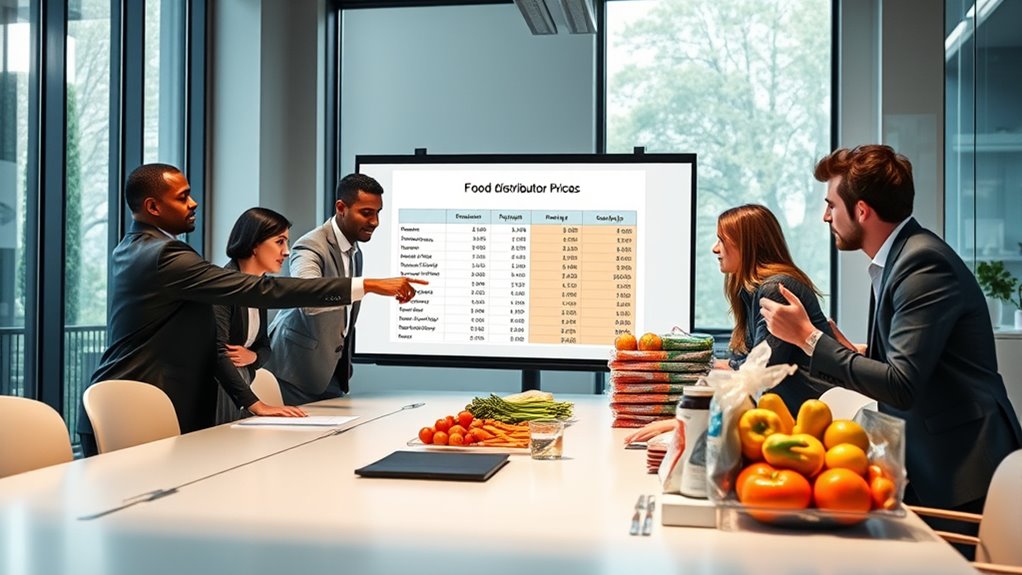
Understanding your purchasing power and budget constraints is essential before entering negotiations. You need to know exactly how much you can spend and what your priorities are. Review your current purchasing history to identify patterns and areas where you can cut costs or allocate more funds. Setting a clear budget helps you avoid agreeing to unfavorable terms or overspending. Be realistic about what you can afford and prepare for fluctuations in prices or unexpected expenses. Knowing your limits allows you to negotiate confidently and avoid making commitments that could strain your finances. It also helps you determine which suppliers are best suited to your budget and ensure you’re getting the best value for your money. Additionally, understanding how projector contrast ratio impacts image quality can guide you in prioritizing features that maximize your viewing experience within your budget. Ultimately, understanding your financial boundaries empowers you during negotiations.
Building and Maintaining Strong Supplier Relationships

Building and maintaining strong supplier relationships is essential for securing reliable, high-quality food products and favorable terms. When you develop trust and open communication, suppliers are more likely to prioritize your needs and offer better deals. Consistently meet your commitments and provide feedback to foster mutual respect. Regular check-ins help identify potential issues early and build rapport. Use the table below to visualize key strategies:
| Strategy | Benefit |
|---|---|
| Communicate openly | Builds trust and transparency |
| Pay on time | Reinforces reliability and credibility |
| Provide feedback | Encourages continuous improvement |
Additionally, understanding sound healing science can inform how sensory experiences impact relationships and overall well-being, emphasizing the importance of trust and harmony in business partnerships.
Identifying Opportunities for Cost Savings and Better Terms

To identify opportunities for cost savings and better terms, you need to analyze your current purchasing patterns and supplier agreements carefully. Review your order history to spot frequent or high-volume items that might qualify for discounts or bulk pricing. Look for any inconsistencies or overpayments in your invoices that could be renegotiated. Consider alternative suppliers or different delivery schedules that might reduce costs. Evaluate your contract terms—are there clauses that limit your flexibility or increase expenses? Also, assess your demand forecast to avoid overstocking or last-minute orders. By thoroughly understanding your purchasing habits and supplier agreements, you can pinpoint areas where negotiations could lead to savings and more favorable terms. Maintaining awareness of spiritual attacks and practicing strategies like prayer or meditation can strengthen your resilience during negotiations. This proactive approach helps strengthen your position at the negotiation table.
Effective Communication Strategies During Negotiations

Effective communication is key to successful negotiations with food distributors. You need to build mutual trust, convey your message clearly, and listen actively to understand their needs. Responding thoughtfully helps foster collaboration and reach better agreements. Incorporating clear messaging about your expectations can further improve the negotiation process.
Building Mutual Trust
Establishing mutual trust is essential for successful negotiations with food distributors, as it fosters open dialogue and reduces misunderstandings. To build this trust, be honest about your needs and limitations, and listen carefully to their concerns. Show consistency in your actions and follow through on commitments, demonstrating reliability. Avoid surprises by sharing relevant information early, which encourages transparency. Maintain a respectful tone, even during disagreements, to create a cooperative atmosphere. Recognize their expertise and experience, valuing their input to strengthen the relationship. By demonstrating integrity and respect, you lay a solid foundation for ongoing collaboration. Additionally, understanding the importance of forage can help you discuss sustainable and cost-effective options with your suppliers. Building mutual trust not only streamlines negotiations but also sets the stage for long-term, mutually beneficial partnerships.
Clear and Concise Messaging
How can you guarantee your message cuts through the noise during negotiations? Keep your communication clear and concise. Use simple language, focus on key points, and avoid jargon. Be direct about your needs, expectations, and limits. This helps prevent misunderstandings and keeps the discussion productive. To illustrate, consider the table below:
| Key Point | Example | Result |
|---|---|---|
| Be Specific | “We need a 10% discount” | Clear expectations, no ambiguity |
| Use Simple Language | “We prefer weekly deliveries” | Easy to understand, quick decisions |
| Focus on Priorities | “Pricing is our main concern” | Keeps negotiations on track |
| Avoid Jargon | “Let’s discuss MOQ and lead times” | Clear communication, fewer confusion |
Additionally, emphasizing the importance of effective communication strategies can significantly enhance your negotiation outcomes. Mastering clear messaging ensures your points are understood, making negotiations more effective.
Listening Actively and Responding
Listening actively and responding thoughtfully are essential skills that can profoundly improve your negotiation outcomes. When you focus on truly understanding the distributor’s perspective, you gather valuable information that can shape your approach. Pay close attention to their words, tone, and body language, and avoid interrupting. Show you’re engaged by nodding or providing small verbal acknowledgments. When it’s your turn to respond, reflect on what they’ve shared to demonstrate understanding, then address their points clearly. This shows respect and helps build trust. Asking open-ended questions encourages the distributor to share more details, which can reveal opportunities or concerns you hadn’t considered. Mastering active listening and thoughtful responses creates a collaborative environment, increasing the chances of reaching a mutually beneficial agreement. Additionally, understanding the vetted nature of your sources ensures that your negotiations are based on reliable information, fostering confidence and credibility.
Leveraging Competition to Your Advantage

When you understand that multiple food distributors are competing for your business, you gain a powerful advantage in negotiations. Use this leverage by openly comparing offers and highlighting better terms from competitors. Let distributors know you’re considering multiple options, which encourages them to present their best prices and conditions. Don’t be afraid to ask for discounts or added value, citing the competition as your motivation. This approach prompts distributors to work harder to win your business, often leading to better deals. Keep your awareness of alternative suppliers discreet but firm. Your confidence, backed by the knowledge of competition, signals that you’re a serious buyer who won’t settle for less. By leveraging this competition, you increase your chances of securing favorable terms and maximizing your purchasing power. Being informed about the Gold IRA rollover process can also give you an edge when negotiating large-scale procurement or investment deals.
Finalizing Agreements and Ensuring Ongoing Supplier Performance

Finalizing agreements with your food suppliers requires careful review of all terms to guarantee clarity and mutual understanding. Make sure contracts specify product quality, delivery schedules, pricing, and payment terms clearly. Once signed, establish a system to monitor supplier performance regularly, including on-time deliveries and product quality. Maintain open communication to address issues promptly and prevent misunderstandings. Set performance benchmarks and review them periodically, adjusting expectations as needed. Building strong relationships with your suppliers fosters trust and accountability. Keep detailed records of all transactions and correspondence to support ongoing evaluations. Consistent performance reviews help identify potential problems early and ensure your suppliers meet your standards over time. Additionally, integrating data-driven strategies can improve your ability to measure and enhance supplier performance effectively. This proactive approach helps secure reliable supply chains and long-term partnerships.
Frequently Asked Questions
How Do I Handle Disagreements During Negotiations?
When disagreements arise during negotiations, you should stay calm and listen carefully to the other person’s perspective. Express your points clearly and confidently, but remain open to compromise. Focus on common goals and find solutions that benefit both sides. If tensions escalate, suggest taking a break to cool down. Remember, maintaining professionalism and empathy helps build trust, making it easier to reach a mutually beneficial agreement.
What Legal Terms Should I Watch for in Contracts?
You might worry about missing vital legal details, but if you focus on key terms, you’ll stay protected. Look out for clauses like indemnity, cancellation, and force majeure, which define your responsibilities and risks. Make certain payment terms and delivery obligations are clear. Don’t skip legal review—it’s your safety net. By understanding these terms, you confidently negotiate, avoiding surprises and protecting your business interests.
How Often Should I Renegotiate Supplier Terms?
You should review your supplier terms at least once a year to guarantee they still meet your needs. Keep an eye on market conditions, price fluctuations, and your business growth. If you experience significant changes, like volume increases or supply issues, consider renegotiating sooner. Regular check-ins help you maintain favorable terms, avoid surprises, and strengthen your supplier relationship, assuring your business stays competitive and profitable.
What Are Signs of a Reliable Food Distributor?
Think of choosing a food distributor like selecting a steady ship for a voyage. You want one that’s reliable, with consistent delivery times and quality. Signs include transparent communication, positive reviews, and a history of meeting deadlines. If they’re proactive in solving issues and provide clear, accurate invoices, you’re likely in good hands. These indicators show they prioritize your needs, helping your business sail smoothly.
How Can Technology Improve Negotiation Efficiency?
Technology can considerably boost your negotiation efficiency by providing real-time data, automating routine tasks, and streamlining communication. With tools like analytics software, you get accurate insights into costs, inventory, and supplier performance, helping you make informed decisions quickly. Automated contract management and digital communication platforms save time, reduce errors, and keep all parties aligned. Embracing these technologies allows you to negotiate more effectively, securing better deals faster.
Conclusion
So, after all that prep, remember: the key to a great deal is just knowing exactly what you want—and pretending you don’t care too much. Ironically, your confidence and savvy can actually make suppliers more enthusiastic to give you better terms. Who knew that playing hard to get with your food distributor could turn into your secret weapon? Now go ahead, negotiate like a pro—who’s really in control here?
Halloween Picks
halloween
As an affiliate, we earn on qualifying purchases.