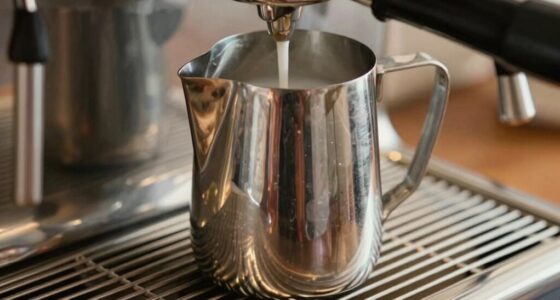
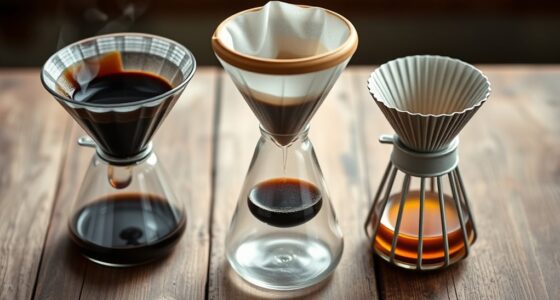
To keep your batch brew fresh, you should store beans properly in airtight containers away from light, heat, and moisture. Grind just before brewing, and avoid pre-grinding large quantities. Regularly clean your equipment to prevent flavor contamination. Serve the coffee promptly, ideally within an hour of brewing, and transfer it to a thermal carafe to maintain warmth without overcooking. Proper timing, storage, and maintenance are key—continue exploring to learn more tips for peak freshness.

Get kitchen staples and gadgets delivered free with Prime
- Fast, free delivery on millions of items
- Prime Video, Amazon Music and more included
- Member-only deals all year
Key Takeaways
- Brew in small, manageable batches to ensure freshness and reduce waste.
- Serve coffee within an hour of brewing to preserve flavor and aroma.
- Use thermal carafes to keep coffee hot without overcooking or bitterness.
- Regularly clean brewing equipment to prevent contamination and flavor degradation.
- Match batch size to demand, avoiding prolonged holding times that diminish quality.

When it comes to enjoying a great cup of coffee at a cafe, freshness matters more than you might realize. Whether you’re serving a single shot or a batch brew, maintaining freshness starts with how you handle your coffee beans and the quality of your brewing process. Coffee bean storage plays a crucial role here. If beans aren’t stored properly—away from light, heat, and moisture—they’ll quickly lose their flavor and aroma. Airtight containers kept in a cool, dark place help preserve the beans’ freshness longer, but it’s also vital to buy beans in quantities that match your consumption rate. Grinding just before brewing releases maximum flavor, so avoid pre-grinding large batches for future use. Freshly ground coffee beans are a key factor in ensuring your batch brew tastes vibrant and appealing. Proper small-space design can also help streamline your storage and brewing setup, ensuring everything stays organized and accessible. Additionally, maintaining a clean environment minimizes the risk of contamination that could affect your coffee’s quality. Regularly checking your equipment for signs of wear and tear can also prevent unexpected issues that might compromise freshness. Ensuring proper coffee handling practices can further extend the shelf life of your beans and brewed coffee. Proper temperature control during storage and brewing can also be instrumental in maintaining optimal flavor and aroma levels.
Equally important is brewing equipment maintenance. Dirty or poorly maintained equipment can negatively impact the flavor of your brew, even if your beans are top-quality. Regularly cleaning your coffee makers, filters, and carafes prevents the buildup of oils and residues that can turn stale and sour over time. Use proper cleaning agents designed for coffee equipment to avoid lingering flavors that might interfere with your batch brew’s freshness. Consistent maintenance also ensures your equipment functions at optimal temperature and pressure, which are essential for extracting the right flavors during brewing. When your equipment is in good shape, you’re more likely to produce a consistent, fresh-tasting coffee batch every time.
Batch brewing itself requires attention to timing. Coffee sitting on a warming plate for too long will start to taste flat and bitter. It’s best to serve your batch brew within an hour or so of brewing, or transfer it to a thermal carafe to keep it hot without overcooking. Additionally, if you notice a decline in freshness, consider adjusting your brewing schedule or the size of each batch to match demand, so nothing sits around too long. This practice reduces waste and ensures customers enjoy fresh, flavorful coffee with every cup. Proper storage techniques and timely serving are fundamental in maintaining that optimal freshness and flavor.
airtight coffee storage container
As an affiliate, we earn on qualifying purchases.
As an affiliate, we earn on qualifying purchases.
Frequently Asked Questions
How Does Water Quality Affect Batch Brew Freshness?
Water quality directly impacts batch brew freshness by influencing flavor and extraction. If your water has poor mineralization, it can lead to flat or off-tasting coffee. Proper pH balance guarantees ideal extraction without over or under-extracting. Using water with balanced mineralization and a neutral pH helps preserve the freshness and consistency of your brew, ensuring your customers enjoy rich, vibrant flavors every time.
What Are Signs of Stale Batch Brew Coffee?
A warning sign of stale batch brew coffee is flavor degradation and aroma loss—it’s like the old saying, “You are what you eat,” but in this case, it’s what you brew. If your coffee tastes flat or sour, and the aroma is weak or off-putting, it’s a clear sign it’s gone stale. Regularly checking for these signs helps you serve fresh, flavorful coffee that keeps customers coming back.
How Often Should Batch Brew Equipment Be Cleaned?
You should clean your batch brew equipment daily to maintain coffee aroma and guarantee quality. Regular equipment maintenance prevents oil buildup and mineral deposits, which can affect flavor and freshness. After each use, rinse and scrub parts thoroughly, and do a deep clean weekly. Consistent cleaning preserves the equipment’s performance, delivers better-tasting coffee, and keeps your customers coming back for fresh, aromatic brews every time.
Does Grind Size Impact Batch Brew Freshness?
Think of grind size as the key to discovering great coffee, much like a master key. Yes, grind size impacts batch brew freshness because it affects grind consistency and extraction efficiency. If your grind is too fine or uneven, it can lead to over-extraction or under-extraction, compromising freshness and flavor. Ensuring the right grind size helps you maintain the best freshness, delivering a superior, consistently fresh brew every time.
What Is the Ideal Temperature for Serving Batch Brew Coffee?
You should serve batch brew coffee at around 185-205°F to guarantee flavor retention and temperature stability. Maintaining this range helps keep the coffee hot without over-extracting, preserving its nuanced flavors. Serving it at the right temperature prevents rapid cooling, which can diminish taste and aroma. Consistently hitting this sweet spot ensures your customers enjoy fresh, flavorful coffee with ideal temperature stability throughout their experience.
Conclusion
You stand behind the counter, your batch brew steaming softly, a proof of your dedication. Yet, outside, the world rushes by, always seeking the next quick fix. Balancing freshness with efficiency is like walking a tightrope—every pot poured is a promise to your customers. Remember, freshness isn’t just about taste; it’s about trust. When you prioritize quality, you create a moment of calm amid the chaos, turning everyday coffee into an experience worth waiting for.
Halloween Picks
halloween
As an affiliate, we earn on qualifying purchases.