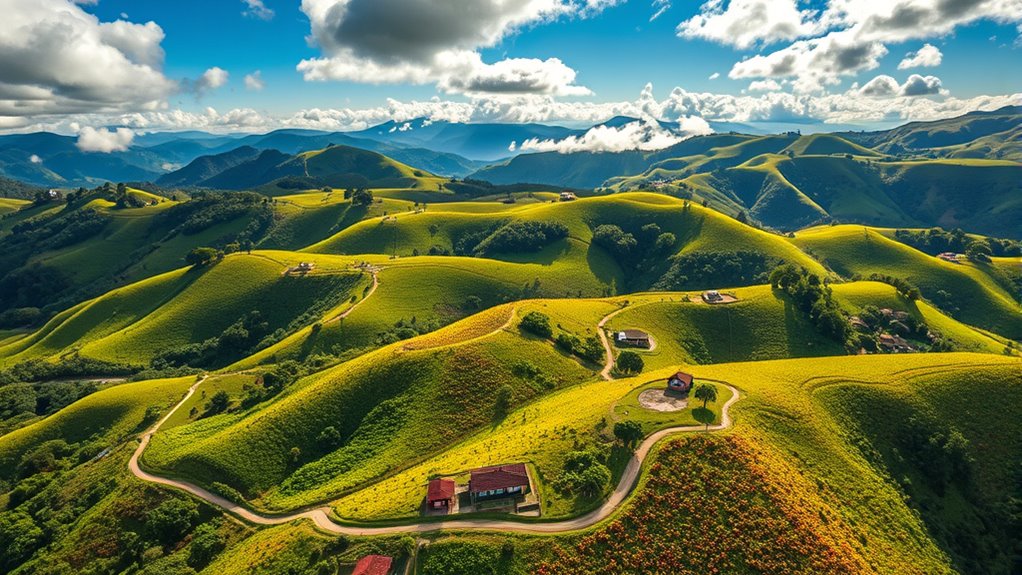

Brazilian coffee regions each offer unique flavor profiles shaped by their climate, altitude, and soil. For example, Mogiana produces bright, nutty, and chocolate notes due to high-altitude volcanic soils, while Cerrado is known for earthy, full-bodied flavors influenced by warm climates and sandy soils. Sustainable farming and precise harvesting practices further enhance these characteristics. If you keep exploring, you’ll discover how each region crafts distinct, high-quality coffees that reflect their unique environment.
Key Takeaways
- Brazil’s diverse landscapes and climates create distinct flavor profiles across regions.
- Mogiana offers bright acidity with nutty and chocolate notes, influenced by high-altitude volcanic soils.
- Cerrado produces earthy, full-bodied coffees due to warm climates and sandy soils.
- Sustainable farming, hand-harvesting, and regional conditions enhance flavor complexity and quality.
- Tradition and modern techniques combine to ensure flavorful, memorable Brazilian coffees.
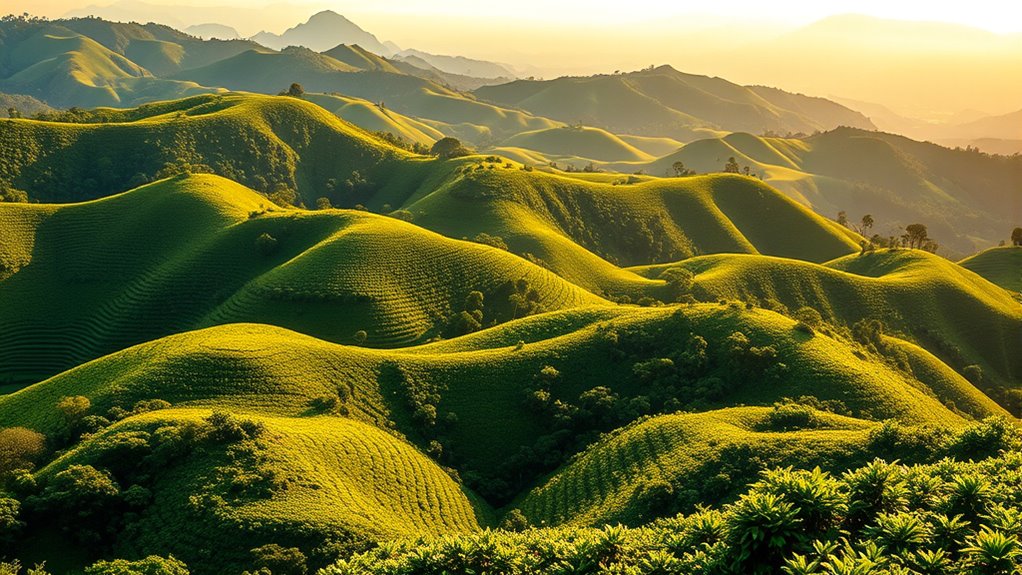
Have you ever wondered where some of the world’s best coffee comes from? If so, you’ll find that Brazil, with its diverse regions, offers a fascinating story behind each cup. The country’s vast landscape spans multiple climates and altitudes, creating unique environments that influence flavor profiles. One key aspect that shapes these flavors is sustainable farming. Farmers in Brazil increasingly adopt eco-friendly practices, focusing on conserving soil health, reducing chemical use, and protecting local ecosystems. These methods not only help sustain the land for future harvests but also contribute to better-tasting coffee. When you explore Brazilian coffee, you’re often tasting the result of meticulous coffee harvest techniques. Skilled pickers hand-select ripe cherries at the peak of their ripeness, ensuring that only the best beans make it to processing. This careful attention to harvest quality means each batch is crafted with precision, which directly impacts the flavor’s complexity and consistency.
In regions like Minas Gerais and São Paulo, you’ll notice that coffee farmers prioritize sustainable farming methods, such as shade-grown practices and organic fertilization. These techniques promote biodiversity and help maintain the health of the coffee plants. When harvest time arrives, workers go through the fields with keen eyes and gentle hands, picking only the cherries that are deep red and fully ripe. This selective process is vital because it guarantees a sweeter, more balanced cup. Many farmers also use innovative coffee harvest techniques, like strip-picking or selective hand-picking, depending on the terrain and the desired flavor profile. These methods allow for better control over ripeness and quality, giving you a richer, more nuanced taste experience. Additionally, advancements in sound design techniques can be used in multimedia presentations or documentaries about coffee to enhance storytelling and viewer engagement.
The different Brazilian regions each bring their own distinct flavor profiles to the table. For example, coffee from the Mogiana region tends to have bright acidity combined with nutty and chocolate notes, thanks to its high-altitude farms and fertile volcanic soils. In contrast, the Cerrado region offers a more earthy, full-bodied cup, shaped by its warm climate and sandy soils. No matter where the coffee originates, the combination of sustainable farming and precise coffee harvest techniques guarantees a high-quality, flavorful product. When you brew and sip this coffee, you’re tasting the culmination of years of tradition, innovation, and respect for the land. So next time you enjoy a cup of Brazilian coffee, remember that behind its rich flavors lies a careful process rooted in sustainability and meticulous harvesting that makes each sip memorable.
Frequently Asked Questions
Which Brazilian Region Produces the Most Organic Coffee?
You’ll find that the Sul de Minas region produces the most organic coffee in Brazil, thanks to its strong focus on organic certification and sustainable farming practices. Farmers here prioritize environmentally friendly methods, ensuring high-quality beans that meet strict organic standards. By choosing coffee from Sul de Minas, you support sustainable agriculture and enjoy rich, flavorful brews made with care for both the environment and community.
How Does Altitude Affect Coffee Flavor in Brazil?
Altitude influence markedly impacts coffee flavor development in Brazil. As you grow at higher elevations, the cooler temperatures slow bean maturation, allowing complex flavors to develop more fully. This results in brighter, more nuanced coffees with vibrant acidity and richer aroma. When you explore Brazilian coffees, you’ll notice that those from higher altitudes tend to have a more refined and layered flavor profile, making them highly sought after by connoisseurs.
What Are Traditional Processing Methods Used in Brazilian Coffee?
Imagine the rich aroma of freshly harvested beans—Brazilian coffee primarily uses dry and wet processing methods. In dry processing, beans dry under the sun, developing deep, fruity flavors. Wet processing involves washing beans to produce cleaner, brighter profiles. You’ll notice these methods shape the coffee’s taste, with dry processing adding complexity and wet processing highlighting clarity. These traditional techniques give Brazilian coffee its distinctive character and depth.
How Do Climate Changes Impact Coffee Quality in Brazil?
Climate changes can considerably impact coffee quality in Brazil, affecting growth cycles and bean development. You should consider climate adaptation strategies like diversifying crops and adjusting harvest times to mitigate these effects. Additionally, understanding the environmental impact of coffee cultivation helps you implement sustainable practices that protect the ecosystem. By proactively addressing these factors, you guarantee better coffee quality while supporting long-term environmental health.
Are There Specific Coffee Varieties Unique to Brazilian Regions?
They say, “Variety is the spice of life,” and in Brazil, you’ll find unique varieties that highlight regional distinctions. For example, the Bourbon and Catuai thrive in different areas, offering distinct flavors. These regional differences shape the character of the coffee, making each unique. If you explore Brazilian coffee, you’ll discover how specific varieties adapt to local climates, creating a diverse and vibrant coffee landscape you won’t find elsewhere.
Conclusion
Now that you understand Brazil’s diverse coffee regions and their unique flavor profiles, you can truly appreciate each cup’s story. Imagine savoring a bright, fruity cup from Minas Gerais or a rich, chocolatey brew from São Paulo—each sip revealing its origin. Don’t you want to explore these flavors firsthand? With so much variety, every coffee lover can find a favorite. So, why not commence your own journey through Brazil’s vibrant coffee landscape?