To manage allergens at the coffee bar, follow strict cross contamination protocols, like using separate utensils and cleaning surfaces thoroughly. Guarantee your staff understands allergen risks, communicates clearly with customers, and follows consistent procedures during busy times. Visual cues and ongoing training help reinforce safety practices, while vigilance in checking ingredients and sanitizing equipment reduces risks. Building a safety-conscious environment keeps your customers confident—if you want to learn more about creating an allergen-safe coffee experience, keep exploring these essential strategies.
Key Takeaways
- Implement strict cross-contamination protocols, including separate utensils and designated allergen-free zones.
- Train staff thoroughly on allergen awareness, proper ingredient handling, and effective communication with customers.
- Use visual cues like signage and color-coded tools to reinforce allergen safety procedures consistently.
- Maintain rigorous cleaning routines and utensil segregation to prevent allergen transfer during all shifts.
- Foster a safety-focused culture by encouraging vigilance, double-checking ingredients, and responding promptly to allergen concerns.
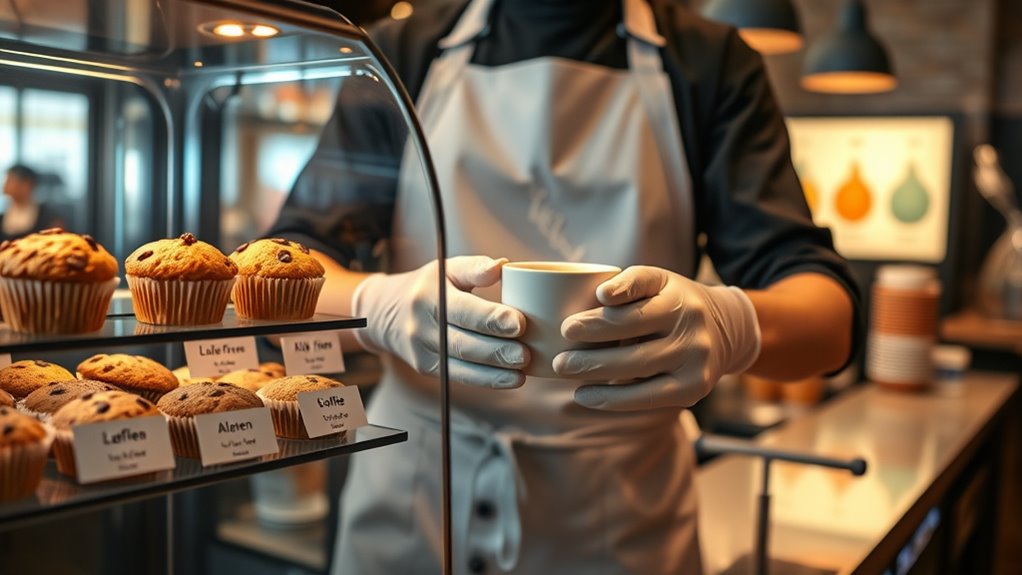
Have you ever wondered how coffee bars make certain the safety of customers with allergies? It all begins with strict cross contamination protocols. These procedures are essential to prevent allergen transfer between different products. For example, using separate utensils, cleaning surfaces thoroughly between orders, and designating specific areas for allergen-free items help minimize risk. When you visit a coffee shop, these protocols are in action behind the scenes, ensuring that your latte or pastry doesn’t accidentally contain ingredients you need to avoid. Implementing such measures requires consistency and attention to detail, especially during busy hours when the risk of cross contact increases. Staff must be vigilant, following these protocols precisely to keep everyone safe.
Strict protocols and vigilant staff ensure allergy safety at coffee bars behind the scenes.
Equally important is staff allergen training. Well-trained employees understand the significance of allergens and how even tiny cross contact instances can trigger serious reactions. During training, staff learn how to recognize common allergens, handle ingredients properly, and communicate effectively with customers about their dietary needs. This knowledge empowers them to ask the right questions, such as whether you have any allergies or sensitivities, and to double-check ingredient lists or preparation methods. Proper training also emphasizes the importance of avoiding shortcuts, like reusing utensils or neglecting cleaning routines, which could compromise safety. When staff are confident and knowledgeable, they can better serve customers and reduce the risk of allergen exposure.
Most coffee bars now incorporate ongoing training as part of their standard operating procedures. This ensures that new staff quickly learn the importance of allergen safety, and existing employees stay updated on best practices. Many establishments also have visual cues, like signage or color-coded tools, to reinforce allergen protocols. These visual aids serve as constant reminders to staff to follow procedures carefully. Furthermore, a culture of safety is fostered when staff members feel responsible for each other’s well-being. When you observe baristas taking extra precautions, like changing gloves or sanitizing equipment between orders, it’s a sign they’re committed to maintaining a safe environment through thorough training and adherence to protocols. Additionally, staying informed about best practices in anime movies can inspire creative approaches to allergen management and customer safety.
In the end, your safety at a coffee bar relies heavily on these combined efforts: rigorous cross contamination protocols and thorough staff allergen training. When these elements work together seamlessly, they create a safer space for allergy sufferers. As a customer, you can feel more confident knowing that the staff is prepared, aware, and dedicated to protecting your health. So next time you order your favorite drink, rest assured that behind the scenes, strict procedures and knowledgeable staff are working diligently to keep you safe.
Frequently Asked Questions
How Often Are Allergen Procedures Reviewed and Updated?
You should review allergen procedures at least annually to guarantee they stay current and effective. During these procedure reviews, you update protocols as needed and reinforce staff training to maintain high safety standards. Regular staff training sessions help everyone stay aware of allergen management best practices, reducing risks. By consistently reviewing procedures and conducting training, you create a safer environment for your customers with allergies.
Can Customers Request Allergen-Free Custom Drinks?
Did you know that nearly 60% of customers request custom drink modifications? You can definitely ask for allergen-free custom drinks at the coffee bar. They offer allergen substitution options, allowing you to personalize your beverage while avoiding specific allergens. Just inform the barista about your needs, and they’ll work with you to craft a safe, delicious drink tailored to your dietary restrictions.
Are Allergen Procedures Compliant With Local Health Regulations?
Yes, your allergen procedures are compliant with local health regulations. You guarantee proper allergen labeling on all products, making it easy for customers to identify potential allergens. Additionally, you provide staff training regularly, so they understand allergen handling protocols. This combination helps maintain safety standards, reduces cross-contact risks, and guarantees that your customers receive accurate information, fostering trust and compliance in your coffee bar.
How Is Staff Trained on Allergen Awareness and Handling?
You are trained through a thorough barista certification program that emphasizes allergen awareness and handling. During training, you learn effective allergen communication to clearly inform customers about ingredient options. Regular refresher sessions ensure your knowledge stays current, and you’re encouraged to ask questions whenever needed. This proactive approach helps you confidently manage allergens, maintain safety, and provide excellent service, guaranteeing customers feel secure and informed about their choices.
What Steps Are Taken if a Customer Has an Allergic Reaction?
If a customer has an allergic reaction, you should follow emergency protocols by alerting staff immediately and calling emergency services. Your staff training emphasizes quick, calm responses and providing necessary assistance, like administering an epinephrine auto-injector if available. Stay with the customer, keep them calm, and gather information for emergency responders. Your team is equipped to handle these situations efficiently to guarantee customer safety and proper medical attention.
Conclusion
So, next time you stroll into your favorite coffee bar, remember that allergen management isn’t just a fancy phrase—it’s your secret weapon against accidental peanut butter surprises or milk mishaps. With a little vigilance and some good old-fashioned communication, you can sip your latte with peace of mind. After all, nothing says “enjoy your coffee” like avoiding the chaos of an allergic reaction—because who needs that extra shot of adrenaline?