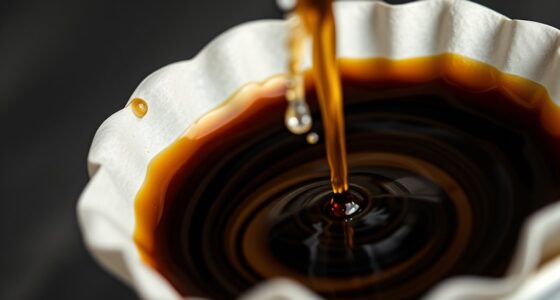
Blooming times vary with the brew method, typically lasting 30 to 45 seconds. For pour-over or drip coffee, start with about 30 seconds to release gases and prepare grounds for extraction. French press requires a slightly longer bloom, around 45 seconds, due to coarser grounds. Espresso needs a quick bloom of 10-15 seconds because of fine grounds. Adjust water temperature and grind size to optimize gas release, and if you keep exploring, you’ll master the perfect blooming technique.
Key Takeaways
- Blooming typically lasts 30 to 45 seconds, but varies based on brewing method and grind size.
- Coarser grinds (e.g., French press) require longer blooming; finer grinds (e.g., espresso) need shorter times.
- Hot water (195°F–205°F) accelerates gas release, affecting blooming duration and effectiveness.
- Proper bloom timing enhances flavor, aroma, and prevents under- or over-extraction during brewing.
- Skipping or rushing the bloom process can lead to flat, sour, or bitter-tasting coffee.

Understanding the blooming time of coffee grounds is essential for mastering each brew method. When you’re brewing coffee, the initial stage—called blooming—helps release trapped gases and primes the grounds for extraction. The timing and technique depend heavily on factors like grind size and water temperature. If you get these right, your coffee will taste fresher, more vibrant, and better balanced.
Your grind size plays a crucial role in blooming. For example, if you opt for a coarse grind, typical of French press brewing, the bloom will take slightly longer because the larger particles have less surface area exposed to water. Conversely, a fine grind, like for espresso, requires a shorter bloom time because the smaller particles react quickly to hot water. Adjusting the grind size helps control how fast gases escape during blooming, affecting overall extraction quality. If you skip or rush this step, you risk under-extracting or over-extracting, leading to dull or bitter flavors.
Adjust grind size to control gas release and optimize extraction during blooming.
Water temperature is just as important. Hotter water accelerates gas release during blooming, so you’ll want to use water between 195°F and 205°F for most brewing methods. For pour-over or drip coffee, starting with water at the higher end of this range ensures a vigorous bloom, releasing carbon dioxide efficiently. If the water’s too cool, the gases won’t escape fully, and your coffee could taste flat or muted. Conversely, water that’s too hot might cause over-extraction early on, leading to bitterness. Maintaining the correct water temperature during blooming helps ensure a balanced extraction, making each sip more flavorful and nuanced.
Timing is another key aspect. Typically, you’ll allow the coffee grounds to bloom for about 30 to 45 seconds. During this period, you’ll notice bubbles forming—carbon dioxide escaping as the fresh grounds degas. This process is vital because it prepares the grounds for even extraction when you pour or continue brewing. If you don’t let the coffee bloom long enough, some flavors may be underdeveloped, and the coffee might taste sour or flat. If you wait too long, you risk over-extraction, which can introduce bitterness and diminish the coffee’s brightness. Additionally, understanding the degassing process can help optimize the timing for a more flavorful brew.
Frequently Asked Questions
How Does Water Temperature Affect Blooming Times?
You’ll notice water temperature directly impacts blooming times because hotter water speeds up extraction, leading to quicker blooming. If your water chemistry has minerals, it can also influence how fast your coffee blooms. Use a clean brewing vessel to maintain consistent temperatures and avoid temperature drops. Keeping your water just right guarantees a proper bloom, enhancing flavor and aroma. Adjusting temperature helps you control blooming time for the best coffee experience.
Can Blooming Times Vary With Coffee Bean Origin?
Yes, blooming times can vary with coffee bean origin because different regions produce beans with unique characteristics. You might notice that freshly roasted, high-quality beans from certain origins bloom faster or more slowly. To optimize flavor, use your brewing equipment to gauge freshness and adjust your process accordingly. Keep in mind that coffee freshness impacts blooming, so always start with fresh beans for consistent results.
What Role Does Grind Size Play in Blooming Duration?
Think of grind size as the key to opening your coffee’s bloom. When your grind is uneven, with inconsistent particle distribution, the bloom duration can either be a fleeting whisper or a prolonged dance. A finer grind creates more surface area, leading to quicker blooming, while coarser grinds slow it down. Maintaining grind consistency guarantees predictable blooming, letting you control the release of flavors and enjoy a perfectly timed coffee experience.
Do Different Roast Levels Influence Blooming Time?
Different roast levels can influence blooming time because darker roasts tend to release gases faster, leading to a quicker bloom, while lighter roasts may require longer blooming to release trapped CO2. Your coffee’s freshness also plays a role, as fresher beans release more gas initially. Additionally, the brewing vessel influences blooming; for example, a pour-over with a wider surface area promotes faster blooming compared to a French press.
How Does Altitude Impact Blooming in Various Methods?
Altitude effects can considerably influence blooming in your brewing process. Higher elevations typically lead to lower boiling points, which can cause uneven extraction and affect blooming consistency. You might notice longer or shorter blooming times depending on altitude, so adjusting your method helps maintain quality. By understanding these effects, you can tweak your technique to guarantee consistent results regardless of where you’re brewing, improving overall flavor and extraction.
Conclusion
Now that you know the blooming times for each brew method, you can brew your coffee just right. Think of it like tuning a guitar—you want each note to ring clear. Paying attention to these blooming times helps reveal the full flavor of your beans, making every cup a delightful experience. So, experiment a little, enjoy the process, and savor the rich aroma—your perfect brew is just a bloom away!