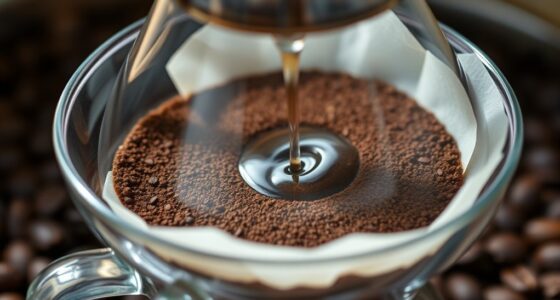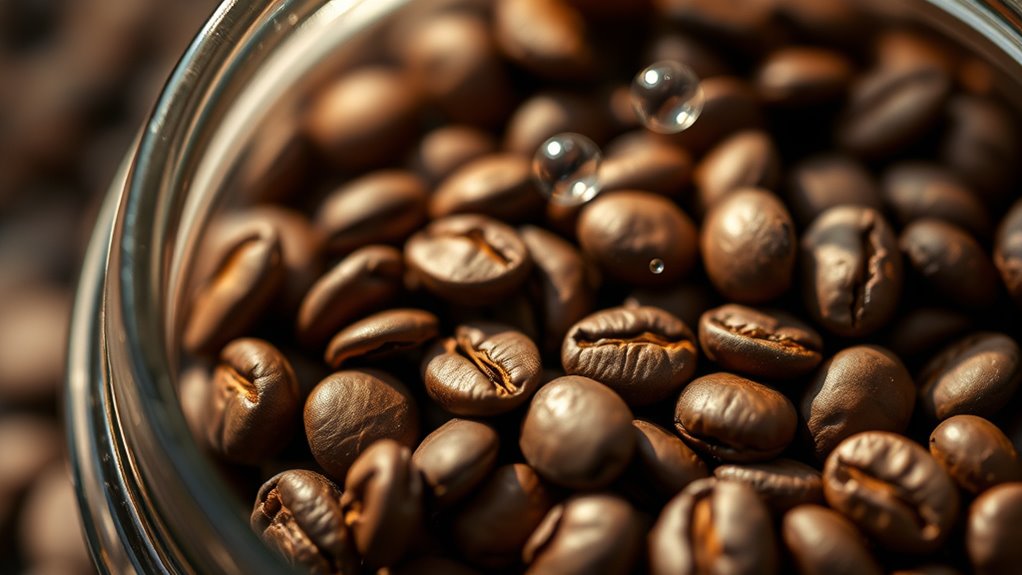

After roasting, you’ll notice fresh coffee releases gases like carbon dioxide for up to two weeks, impacting flavor and brewing. For ideal taste, wait 24-48 hours before brewing to let excess gases escape. During this period, the beans peak in flavor, aroma, and freshness. Beyond this window, flavors may decline due to oxidation and staling. To discover how to maximize your coffee’s potential, keep exploring the essential details of the degassing timeline.
Key Takeaways
- Degassing peaks within the first 24-48 hours post-roast, reducing during days 2-7.
- Brew ideally between 24 to 48 hours after roasting to minimize bubbling and enhance flavor.
- Flavor quality is highest in the initial days; it declines after about 1-2 weeks due to oxidation.
- Proper storage in airtight, cool, dark conditions prolongs freshness and flavor preservation.
- Brewing before 24 hours may cause sour notes; after two weeks, coffee may taste stale.
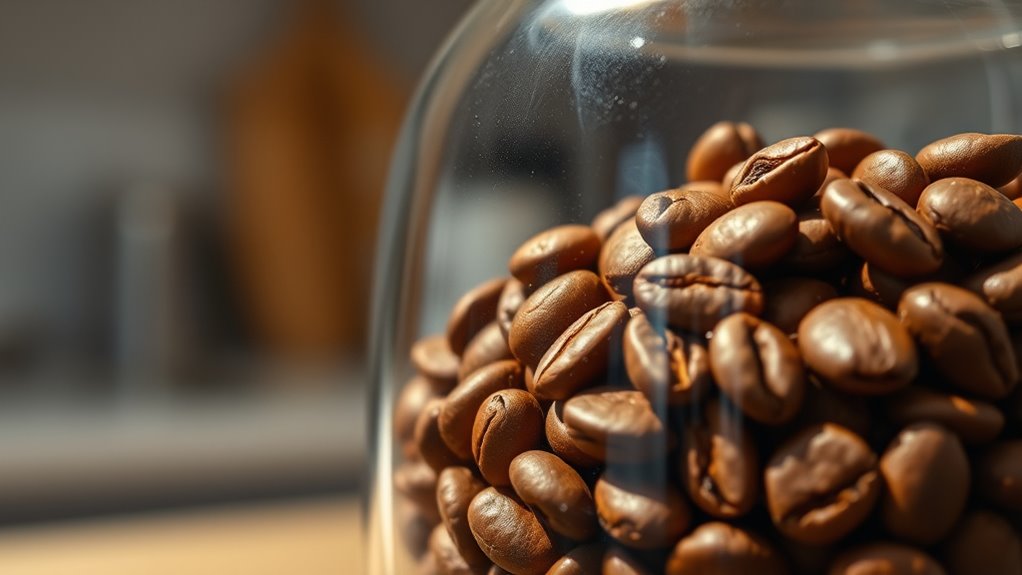
When you buy freshly roasted coffee, understanding its degassing timeline can considerably impact your brewing experience. Freshly roasted beans release carbon dioxide as they age, a process known as degassing. This gas buildup can interfere with extraction, leading to uneven brewing and less ideal flavor. Knowing how to manage this phase ensures you preserve the coffee’s best qualities and avoid over-extraction or under-extraction. Coffee bean aging is a natural process, but it’s essential to recognize that the beans don’t stay fresh forever; their flavor profile evolves over time. Properly timing your brew can make a significant difference in the taste, aroma, and overall quality of your coffee.
In the first few days after roasting, coffee beans are at their peak flavor, but they’re also actively degassing. During this period, the beans release a substantial amount of carbon dioxide, which can cause bubbling during brewing and prevent water from fully extracting the coffee’s oils and solubles. If you brew too early, you might notice a sour or grassy taste because the gases haven’t yet dissipated. Conversely, waiting too long—beyond about two weeks—can lead to flavor loss, as the beans begin to oxidize and stale, diminishing the coffee’s vibrant notes. To maximize flavor preservation, it’s best to let the beans rest for at least 24 to 48 hours after roasting, giving the initial burst of degassing a chance to subside before brewing.
As the days progress, the degassing rate slows, and the beans settle into a more stable state. Around one to two weeks, the majority of the excess gas escapes, and the coffee becomes more suitable for brewing. During this time, flavor preservation is key; storing your beans in an airtight container in a cool, dark place helps maintain their aroma and taste. After this point, the beans start to age, and their flavor complexity begins to decline. You might notice a flattening of the aroma or a duller taste. While some specialty roasters suggest aging beans intentionally for certain flavor profiles, most home brewers prefer to brew within this ideal window for freshness.
Frequently Asked Questions
How Does Storage Temperature Affect Coffee Freshness?
Storing your coffee at proper temperature control is key to maintaining freshness. If you keep it in storage conditions with consistent, cool temperatures, you’ll slow down the staling process and preserve flavor longer. Avoid heat and humidity, as they can accelerate degradation. By managing storage temperature carefully, you guarantee your coffee stays fresh and flavorful, giving you a better brew every time.
Can Degassing Be Accelerated Artificially?
Think of degassing as a bubble slowly rising to the surface of a glass of champagne; it’s a natural process. Artificial acceleration can be tricky, but some methods like gentle heat or vacuum sealing may speed up gas release. However, these techniques can risk compromising flavor or freshness. You should carefully weigh the benefits against potential downsides before attempting to artificially accelerate degassing.
Does Grind Size Impact Degassing Speed?
Yes, grind size impacts degassing speed. When you use a finer grind, the increased surface area promotes faster gas release, whereas a coarser grind slows it down. Consistent grind size guarantees uniform degassing, preventing uneven flavor extraction. Particle size plays a vital role—smaller particles degas more quickly due to their larger surface area, while larger particles take longer. Adjusting grind consistency can help you control the degassing process to suit your brewing needs.
How Long Can Brewed Coffee Stay Fresh?
You can enjoy brewed coffee for about 30 minutes to an hour before flavor retention and aroma preservation decline considerably. Interestingly, studies show that coffee starts losing its peak aroma within just 15 minutes of brewing. To maximize freshness, drink it promptly, use an airtight container if storing briefly, and avoid reheating. After this window, the taste and aroma diminish, so savor it quickly for the best experience.
Is Vacuum Sealing Effective for Preserving Freshness?
Yes, vacuum sealing is effective for preserving freshness. It removes air, which slows down oxidation and staling, helping your coffee stay fresh longer. You should vacuum seal your beans or grounds promptly after roasting or grinding to maximize freshness preservation. Just guarantee the seal is tight and the bag is properly sealed. This method is especially useful for storing coffee in the fridge or freezer, maintaining flavor and aroma over extended periods.
Conclusion
Understanding the coffee freshness and degassing timeline helps you enjoy every cup at its best. As you get to know how beans release gases and lose their zing over time, you’ll avoid brewing with stale grounds. Remember, timing is everything—strike while the iron’s hot, so to speak. Stay attentive to these cues, and you’ll always serve up a brew that’s fresh, vibrant, and full of flavor. Happy brewing!