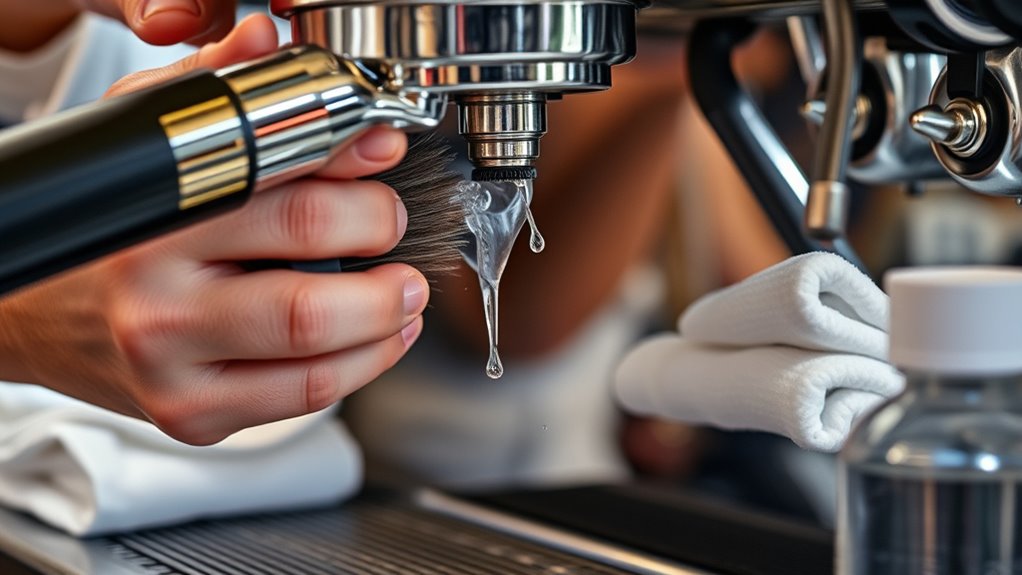

To keep your brewers and espresso machines running smoothly, rinse milk frothing parts immediately with warm water and use dedicated cleaning solutions. Regularly remove dairy residue, disassemble components, and scrub as needed to prevent buildup. Descale periodically with manufacturer-approved solutions and run clear water cycles. Using filtered water reduces mineral deposits, extending equipment life. Following these steps guarantees peak flavor and longevity—continue with these tips to master your machine maintenance.
Key Takeaways
- Rinse milk frothing parts with warm water immediately after use and disassemble for thorough cleaning.
- Regularly remove dairy buildup to prevent fermentation and off-flavors.
- Use manufacturer-recommended descaling solutions and follow proper procedures to prevent mineral buildup.
- Use filtered water for descaling and brewing to reduce mineral deposits and extend equipment lifespan.
- Schedule routine cleaning and descaling based on water hardness and usage to maintain optimal performance.
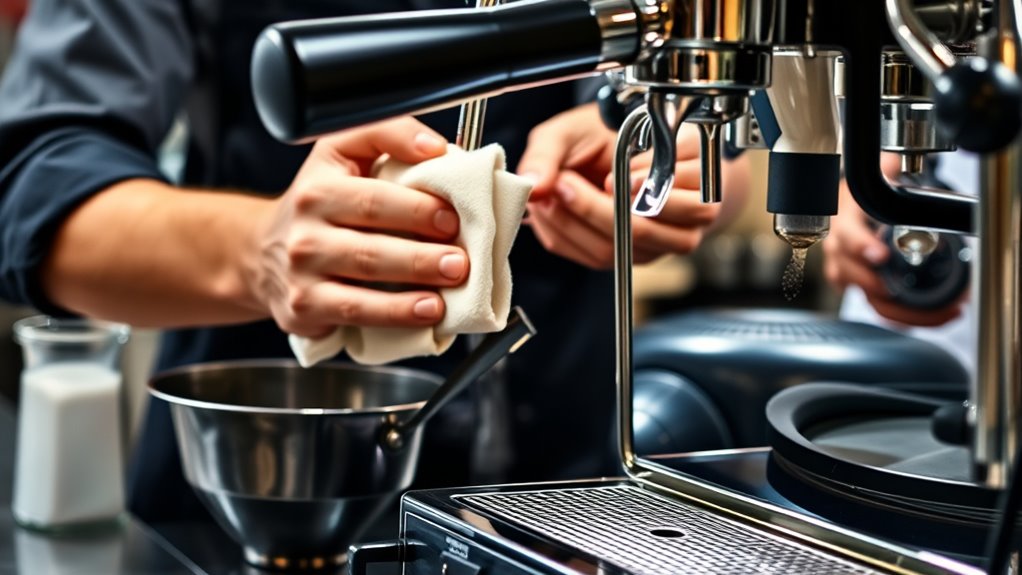
Keeping your brewers and espresso machines clean is essential for ensuring the best-tasting coffee and maintaining their longevity. Over time, dairy residue and mineral deposits can build up inside the equipment, affecting both flavor and performance. Dairy residue, in particular, can ferment if not properly cleaned, leading to sour flavors and potential bacterial growth. To prevent this, you need to follow effective cleaning protocols that include regular removal of dairy residues and proper descaling procedures.
Start by rinsing your milk frothing parts immediately after use. This simple step prevents dairy from drying and sticking, which makes cleaning more difficult later on. Use warm water and a dedicated cleaning solution designed for milk systems to thoroughly flush out the milk lines and nozzles. Avoid using harsh chemicals that can damage the components, and always follow the manufacturer’s recommendations for cleaning agents. Once you’ve rinsed, take apart the milk frothing components for a more detailed cleaning, scrubbing any residue with a soft brush if needed. Properly cleaning these parts reduces dairy buildup, which can harbor bacteria and cause off-flavors in your coffee.
Rinse milk frothing parts immediately after use with warm water and a cleaning solution to prevent buildup and bacterial growth.
Descaling procedures are equally important to keep your machines running smoothly. Hard water minerals like calcium and lime can accumulate inside the water boiler and pipes, impairing heat transfer and causing blockages. Regular descaling helps prevent these issues, extending the lifespan of your equipment. To descaling, fill the machine’s water reservoir with a descaling solution, following the instructions on the product. Run the solution through the machine as if brewing coffee, ensuring it flows through all internal channels. Afterward, rinse thoroughly with fresh water by running several brewing cycles with just water. This process clears out any residual descaling solution and mineral deposits. Using filtered water can further reduce mineral buildup and improve machine performance.
You should also schedule descaling at regular intervals, based on your water hardness and usage. For example, if you notice a decrease in water flow or longer brewing times, it’s a sign that descaling is overdue. Additionally, always use filtered water if possible, as it reduces mineral buildup and minimizes the frequency of descaling. Combining routine cleaning of dairy residues with consistent descaling procedures guarantees your machine stays in top condition, producing high-quality coffee every time.
Frequently Asked Questions
How Often Should I Replace Machine Water Filters?
You should replace your machine water filter every 2 to 3 months, depending on your filter’s lifespan and usage. Check the manufacturer’s recommended replacement schedule, as heavy use or hard water may require more frequent changes. Regular replacement guarantees maximum taste, prevents buildup, and maintains machine performance. Don’t wait too long, as a worn-out filter can lead to poor water quality and potential damage to your brewing equipment.
Are There Eco-Friendly Cleaning Options Available?
Imagine a cleaner that’s as gentle as a leaf yet powerful enough to do the job—yes, eco-friendly options exist. You can choose biodegradable cleaners and plant-based solutions that effectively clean your machines without harming the environment. These alternatives are safe, sustainable, and often just as effective as traditional cleaners. By switching, you protect your equipment and the planet, making every cup you brew a small act of eco-consciousness.
Can Cleaning Products Damage Machine Components?
Cleaning products can damage machine components if they’re not chemically compatible. You need to choose products specifically designed for your equipment to guarantee they don’t harm hardware durability. Using harsh chemicals or those not intended for your machine’s materials can cause corrosion, deterioration, or malfunctions. Always check labels and manufacturer recommendations to protect your equipment and maintain its longevity. Properly selected cleaners keep your machine safe and functioning well.
How Do I Remove Mineral Buildup Effectively?
Mineral buildup can hinder your machine’s performance, so it’s crucial to tackle scale removal promptly. You should use descaling solutions designed for your equipment, as they effectively dissolve mineral deposits. Start by turning off your machine and following the manufacturer’s instructions for safe use. Regular descaling with these solutions prevents stubborn buildup, ensuring your machine stays in top shape and your coffee tastes great every time.
What Are Signs of a Machine Needing Professional Servicing?
You’ll know your machine needs professional servicing if you notice signs like corrosion on metal parts or persistent microbial contamination despite regular cleaning. Unusual noises, leaks, or inconsistent brewing temperatures also indicate issues that may require expert attention. Addressing these problems promptly helps prevent further damage, ensuring your equipment stays in top condition and continues producing quality beverages. Regular inspections can catch these signs early, saving you time and money.
Conclusion
As you wipe down the brew head and run a cleaning cycle, it’s like watching your machine’s shine mirror the sunlight pouring through the window. Regular cleaning not only keeps your equipment spotless but also guarantees each cup tastes fresh and vibrant. Just as a well-maintained machine runs smoothly, your daily routine becomes effortless. When you prioritize cleaning, you create a seamless harmony between your machine’s performance and your coffee experience—perfectly synchronized, every time.