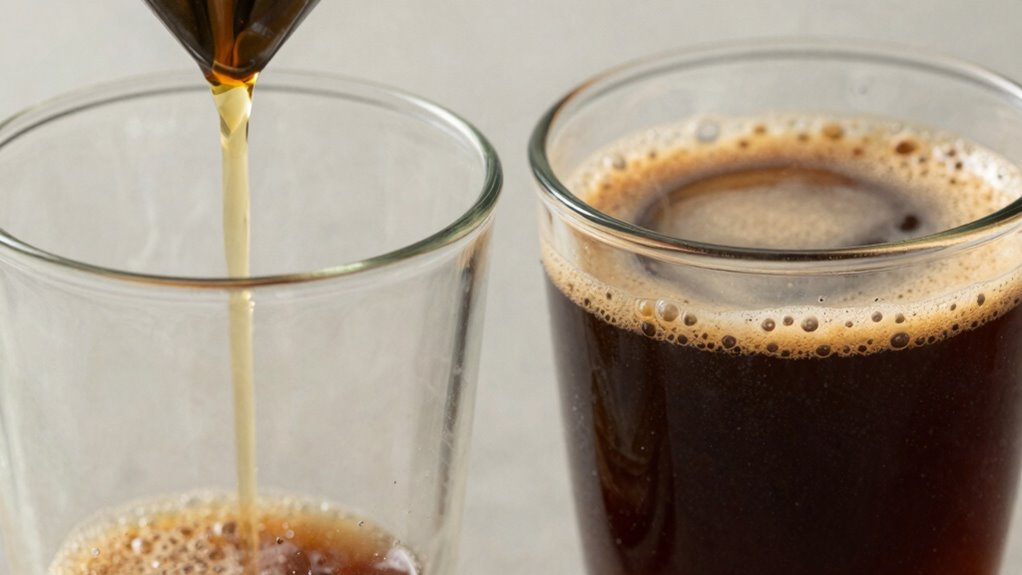

Coffee extraction is about dissolving soluble compounds from grounds, shaping the flavor complexity of your brew. Strength, on the other hand, measures how concentrated those dissolved solids are, affecting the overall intensity or palate feel. You can have a well-extracted coffee that’s weak or strong, but the strength alone doesn’t determine flavor quality. To truly craft a balanced, flavorful cup, it’s important to understand how extraction influences taste—more details await if you keep exploring.

Get kitchen staples and gadgets delivered free — and shop member deals
- Fast, free delivery on millions of items
- Access to Prime Big Deal Days deals on October 6–7
- Prime Video, Amazon Music and more included
Key Takeaways
- Extraction involves dissolving soluble compounds from coffee grounds, affecting flavor complexity, while strength refers to the concentration of dissolved solids in the brew.
- Proper extraction results in balanced flavors; strength influences how intense or weak the coffee tastes.
- Over-extraction causes bitterness and harshness; under-extraction leads to sour or flat flavors, regardless of strength.
- Adjusting parameters like grind size and brew time controls extraction, while coffee-to-water ratio mainly affects strength.
- A coffee can be strong but poorly extracted, resulting in a less flavorful brew, highlighting that extraction and strength are distinct.

When it comes to brewing coffee, understanding the difference between extraction and strength can greatly improve your cup. These two concepts are often confused, but they play distinct roles in how your coffee tastes and how enjoyable it is. Extraction refers to the process of dissolving soluble compounds from coffee grounds during brewing. This includes everything from acids and sugars to bitter compounds. Proper extraction results in a balanced brew that highlights the coffee’s flavor complexity. On the other hand, strength relates to the concentration of dissolved solids in your coffee—essentially, how strong or weak the brew tastes. While strength influences the overall intensity, it doesn’t necessarily reflect the quality of flavor.
Extraction shapes flavor complexity, while strength affects intensity—both are key to crafting a perfect cup.
Your brewing parameters—such as grind size, water temperature, brew time, and agitation—directly impact extraction. If you over-extract, you’ll notice a bitter, harsh taste, and if you under-extract, the coffee may taste sour or flat. Achieving optimal extraction is about finding the right balance where the coffee’s flavor complexity shines through. This involves controlling these parameters carefully. For example, a finer grind increases surface area, speeding up extraction, but can lead to over-extraction if not monitored. Conversely, a coarser grind might under-extract, leading to a weak, underdeveloped flavor. Temperature also plays a critical role; higher temperatures generally promote better extraction of solubles, but too high can cause bitterness. The key is adjusting these brewing parameters to suit your preferred flavor profile while ensuring a thorough extraction level. Additionally, understanding the coffee-to-water ratio helps you manage the brew strength more precisely. Knowing how different ratios affect extraction allows for more consistent results and tailored flavor profiles.
A thorough understanding of extraction levels allows you to refine your brewing process further and tailor your coffee to your taste preferences. Strength, however, is more straightforward. It’s mainly influenced by the coffee-to-water ratio. Using more coffee or less water results in a stronger brew, which often feels more intense on the palate. But keep in mind, a strong coffee isn’t necessarily flavorful if it’s under-extracted. Conversely, a weaker brew can still have excellent flavor if it’s properly extracted. So, focusing solely on strength can be misleading if you’re after a nuanced, flavorful cup. Instead, aim to fine-tune your brewing parameters to optimize extraction and, consequently, achieve the desired flavor complexity. This way, you’ll craft a coffee that’s not just strong or weak but balanced, rich, and satisfying.
As an affiliate, we earn on qualifying purchases.
Frequently Asked Questions
How Does Grind Size Affect Coffee Extraction?
Changing your grind size impacts coffee extraction by altering particle size and grind consistency. Finer grounds increase surface area, speeding up extraction and making your coffee more intense, while coarser grounds slow it down, resulting in a milder brew. If your grind is inconsistent, uneven extraction occurs, leading to over- or under-extracted flavors. Adjust your grind size to find the perfect balance, ensuring even particle size for ideal extraction and flavor.
Can Extraction Time Change the Perceived Strength of Coffee?
Think of extraction time as the conductor of an orchestra, shaping flavor balance and aroma development. If you extend extraction, you might reveal richer aromas and more complex flavors, making your coffee taste stronger. Conversely, rushing it can result in underdeveloped aroma and dull taste. So, yes, adjusting extraction time directly influences perceived strength by controlling how thoroughly flavors are extracted, enhancing or diminishing your coffee’s overall character.
What Brewing Methods Influence Extraction Levels the Most?
Pour-over, French press, and espresso brewing methods influence extraction levels the most. Pour-over allows precise control, promoting a balanced flavor profile and consistent brew. French press extracts more oils and solids, creating richer, fuller flavors but can lead to over-extraction if not timed right. Espresso uses high pressure for quick extraction, resulting in intense flavor and strong body. Each method impacts flavor balance and brew consistency, shaping your overall coffee experience.
Is a Higher Extraction Always Better for Coffee Flavor?
A higher extraction isn’t always better; think of it as a delicate dance rather than a race. Too much extraction can drown out subtle flavors, muddying the water of flavor balance and dulling aroma intensity. You want just enough to reveal the coffee’s depth without overpowering its nuanced notes. Striking this balance ensures your brew is vibrant, harmonious, and full of life, not a bitter, over-extracted mess.
How Do Temperature Variations Impact Extraction and Strength?
Temperature variations greatly influence extraction and strength because coffee’s flavor is temperature sensitive. If you brew at too high a temperature, you risk over-extraction, which can lead to bitter flavors, while too low a temperature might under-extract, resulting in weak, underdeveloped taste. To preserve flavor and achieve balanced extraction, keep your brew temperature consistent and within the ideal range, typically around 195-205°F. This guarantees you enhance strength without sacrificing flavor.
Conclusion
Understanding the difference between coffee extraction and strength helps you brew better coffee. Extraction influences flavor complexity, while strength affects how bold your coffee feels. Did you know that most ideal extraction occurs between 18-22% solubles? By fine-tuning your grind size, brew time, and coffee-to-water ratio, you can control both aspects for a perfect cup. Mastering these details ensures every sip delivers rich flavor without bitterness, elevating your coffee experience to a new level.
Halloween Picks
halloween
As an affiliate, we earn on qualifying purchases.