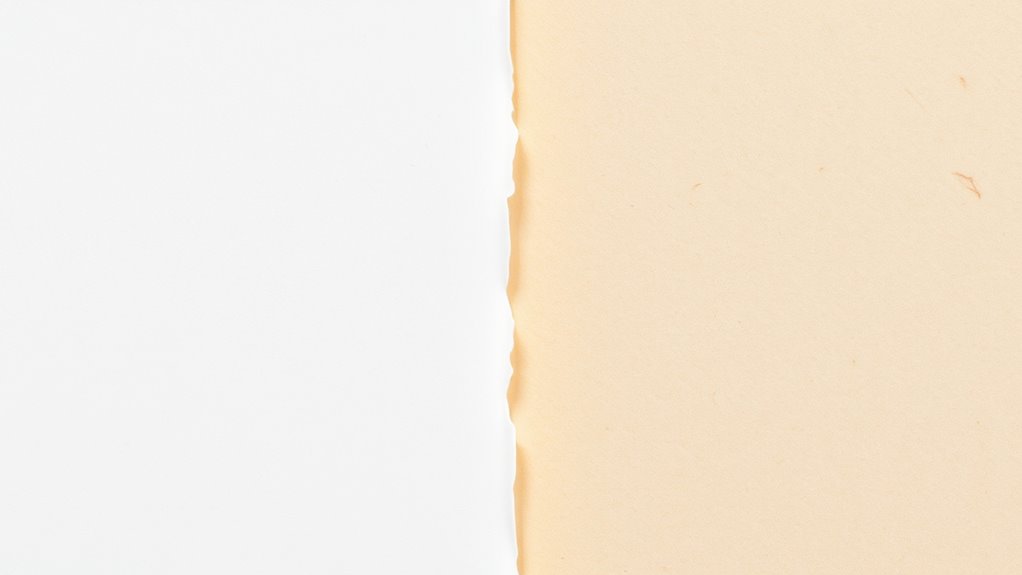

When choosing between bleached and unbleached filter paper, you should consider appearance, chemical properties, and environmental impact. Bleached paper is bright and uniform, ideal for sensitive experiments needing clarity but may leave trace residues. Unbleached paper is natural-colored, eco-friendly, and less processed, making it suitable for general filtration and green projects. Understanding their differences can help you make the best choice for your specific needs—if you explore further, you’ll find even more details to inform your decision.
Key Takeaways
- Bleached filter paper is chemically treated for a bright, white appearance, while unbleached retains its natural brown color.
- Bleached paper may introduce trace residues; unbleached is chemically closer to natural cellulose, reducing contamination risk.
- Unbleached filter paper is more eco-friendly, biodegradable, and involves fewer chemicals in its production process.
- Bleached filter paper offers higher clarity and uniformity, making it ideal for sensitive analytical applications.
- The choice depends on balancing purity, environmental impact, and specific filtration or experimental requirements.
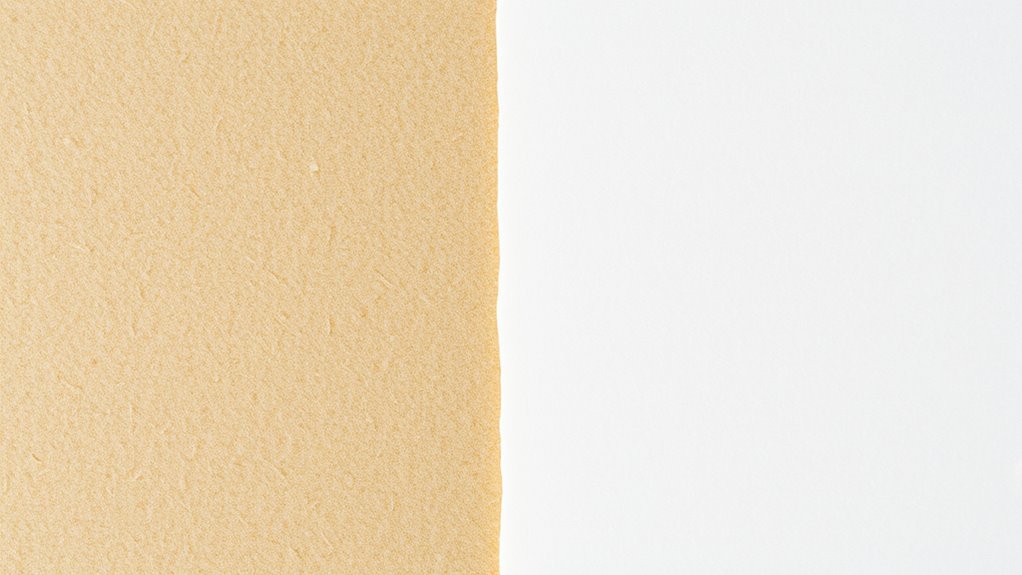
Have you ever wondered how scientists and hobbyists separate solids from liquids so efficiently? One common method involves using filter paper, which acts as a barrier, trapping solid particles while allowing liquids to pass through. When choosing filter paper, you’ll notice two main types: bleached and unbleached. Their differences go beyond appearance, touching on their chemical properties and potential environmental impact. Understanding these distinctions can help you make informed decisions based on your specific needs.
Bleached filter paper has been processed with chemicals like chlorine or oxygen-based agents to produce a bright, white appearance. This bleaching process alters the chemical properties of the paper, often removing natural impurities and lignin, which can make the paper more uniform and easier to handle in precise filtration tasks. Because of the chemical treatments involved, bleached filter paper might sometimes introduce trace residues into your samples, especially in sensitive experiments or applications requiring chemical purity. While generally considered safe for typical laboratory and hobbyist use, some scientists are cautious about potential contamination when dealing with highly reactive or delicate substances.
Bleached filter paper may leave trace residues, so use with caution in sensitive experiments requiring chemical purity.
On the other hand, unbleached filter paper retains its natural brown color because it skips the bleaching process. Its chemical properties remain closer to those of natural cellulose, making it less processed and potentially more environmentally friendly. Since unbleached paper isn’t exposed to chlorine or bleaching agents, it’s often preferred in green or eco-conscious projects. Its production typically involves fewer chemicals, reducing the environmental impact associated with manufacturing. This makes unbleached filter paper a better choice if you’re aiming to minimize chemical exposure or want a more sustainable option. Additionally, unbleached paper tends to be more biodegradable, breaking down more readily in compost or natural environments, which aligns with eco-friendly practices.
However, the choice between bleached and unbleached filter paper isn’t solely about environmental impact. You should consider the chemical properties relevant to your filtration process. Bleached papers, with their uniformity and whiteness, are often favored in analytical applications requiring high clarity and minimal interference. Conversely, unbleached paper can be suitable for general filtration, where aesthetic appearance and environmental considerations take precedence. Ultimately, your decision depends on balancing purity, environmental responsibility, and the specific demands of your project.
Frequently Asked Questions
How Does Bleaching Affect Filter Paper’s Environmental Impact?
Bleaching increases a filter paper’s environmental footprint by introducing chemicals that can harm ecosystems and require more energy to produce. It also affects resource sustainability, as bleached paper often involves more processing and chemical use, leading to greater waste. By choosing unbleached filter paper, you reduce chemical use and lower environmental impact, supporting resource sustainability and helping to minimize pollution and ecological harm.
Can Unbleached Filter Paper Be Used for Sterile Applications?
Think of unbleached filter paper as a rough, natural canvas—yet, it may not satisfy sterility concerns for delicate tasks. You might worry about chemical residue from bleaching, but unbleached options can still pose risks if not properly sterilized. For sterile applications, guarantee thorough sterilization because unbleached paper isn’t inherently sterile. While eco-friendly, it requires extra care to avoid contamination, making it less ideal for critical sterile procedures.
Which Type of Filter Paper Is More Cost-Effective Long-Term?
You’ll find unbleached filter paper more cost-effective long-term because it offers better durability, reducing the need for frequent replacements. Its natural, chemical-free composition also means fewer processing costs, leading to significant cost savings over time. While bleached paper may have a cleaner appearance, unbleached options tend to last longer and handle demanding applications better, making them a smarter investment for ongoing use.
Are There Health Risks Associated With Unbleached Filter Paper?
Unbleached filter paper often poses potential health risks because it may contain chemical residues that could cause allergic reactions. You might experience skin irritation or respiratory issues if you’re sensitive to certain chemicals. Although it’s generally safe for most uses, it’s wise to handle unbleached paper carefully and wash your hands afterward. Being aware of possible allergic reactions helps you protect your health while working with unbleached filter paper.
How Does Bleaching Influence Filter Paper’s Pore Size and Filtration Efficiency?
Bleaching generally reduces pore size variation in filter paper, leading to more uniform filtration performance. This process removes lignin and impurities, making the pores more consistent and enhancing the paper’s ability to filter finer particles efficiently. As a result, bleached filter paper usually offers improved filtration performance compared to unbleached options, which tend to have larger or more uneven pores that can compromise the filtration process.
Conclusion
So, whether you choose bleached or unbleached filter paper, think of it as picking between a crisp white canvas or a natural brown tapestry. Bleached paper gleams like a snow-covered mountain, offering purity and brightness. Unbleached, on the other hand, whispers stories of nature’s untouched beauty, like a forest floor. Your choice paints your experiment’s story—bright and pristine or earthy and authentic—so pick what best colors your scientific masterpiece.