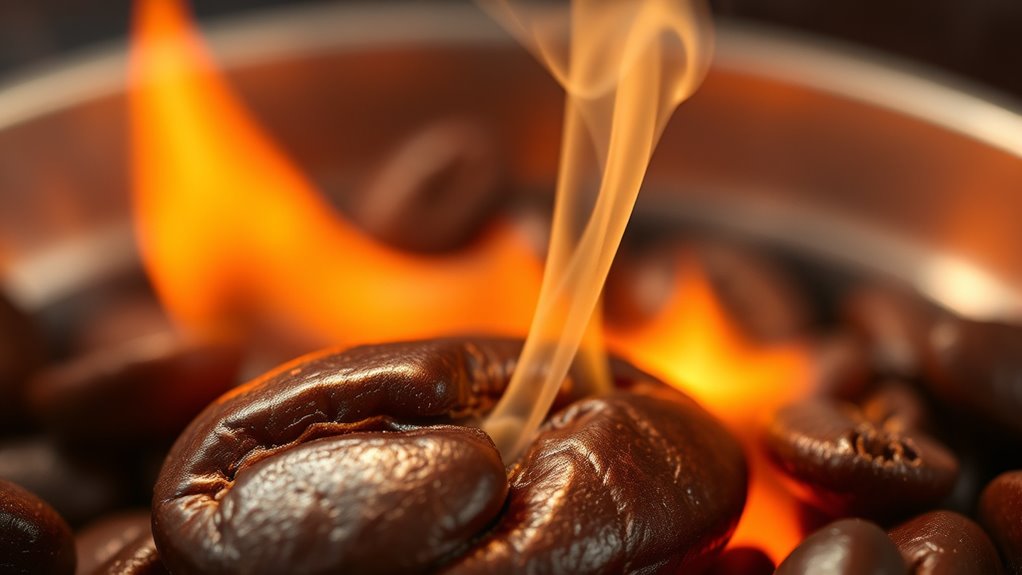

When you’re roasting, it’s key to understand the stages of charge, first crack, and development. You start by loading the beans carefully to ensure even heat; this is the charge. Next, you’ll hear the first crack—a rapid expansion indicating the changeover from light to medium roast—and choose how to proceed. Finally, during development, you adjust heat to deepen flavor or stop for a lighter profile. Mastering these stages helps you fine-tune your roast and bring out the beans’ best qualities.
Key Takeaways
- The charge stage involves loading beans at controlled temperatures to ensure even heat distribution.
- First crack marks the rapid expansion of beans and signals the transition from light to medium roast.
- Timing of first crack varies based on bean origin and equipment, influencing roast level and flavor development.
- The development stage allows further flavor enhancement or stopping the roast for lighter profiles.
- Precise temperature and equipment control are essential for managing each stage and highlighting bean-specific characteristics.

Have you ever wondered how roasting transforms raw ingredients into rich, flavorful dishes? When it comes to something like coffee beans or nuts, the process isn’t just about heating them up—it’s a carefully controlled art that hinges on understanding key stages like charge, first crack, and development. Central to this process is knowing the bean origin, because the unique characteristics of beans from different regions influence how they behave during roasting. For example, beans from Ethiopia might crack at a different temperature than those from Colombia, so adjusting your roasting equipment accordingly guarantees you get the best flavor profile. Roasting equipment, whether it’s a drum roaster, air roaster, or even a home popcorn popper, plays a pivotal role in managing heat transfer and airflow, giving you control over the entire process.
Understanding bean origin is key to mastering roasting for optimal flavor development.
The journey begins with the charge, which is when you load raw beans into the roasting equipment. This step sets the stage for everything that follows. The temperature at this point must be carefully calibrated based on the bean origin—some beans require a gentler start to prevent uneven roasting, while others can handle a more aggressive initial heat. As the beans heat up, they start to emit a grassy aroma, signaling that they’re warming evenly. During this stage, you need to monitor closely, adjusting the heat as needed to prevent scorching or under-roasting. Your roasting equipment’s temperature controls and airflow settings are essential here, helping you create an even heat environment that respects the bean’s origin and desired flavor outcome.
Once the beans reach a certain temperature, they hit the first crack—a pivotal moment where the beans rapidly expand, and the moisture inside turns into steam, causing a cracking sound. This is when the beans start to develop their characteristic flavor and color. The timing of the first crack varies depending on bean origin and roasting equipment, but it generally signifies the transition from a light to a medium roast. If you’re aiming for a specific flavor profile, paying attention to this crack is critical; it marks the point where you can decide to halt the roast or push further for a darker profile. Good roasting equipment allows you to precisely control the heat ramp-up, giving you the ability to navigate through the first crack with confidence, ensuring consistent results with each batch.
After the first crack, the development stage begins, where you continue to roast to deepen flavors or stop if you want a lighter profile. The bean origin influences how long you should hold during this phase—some beans develop more complex flavors with extended roasting, while others might turn bitter if pushed too far. This is where your roasting equipment’s temperature management and timing become essential. Proper control allows you to fine-tune the roast, balancing the bean’s natural qualities with your desired profile. Ultimately, understanding how bean origin and roasting equipment work together during these stages guarantees you craft a perfectly roasted product that highlights the unique characteristics of your raw ingredients.
Frequently Asked Questions
How Does Ambient Temperature Affect Roasting Outcomes?
Ambient temperature and humidity in your roasting environment directly influence your results. Warmer temperatures can speed up heat transfer, potentially causing uneven roasting, while high humidity slows evaporation, affecting bean development. You might notice darker roasts or inconsistent profiles if the environment isn’t controlled. To guarantee consistent outcomes, monitor and adjust for ambient humidity and temperature, keeping your roasting environment as stable as possible.
What Is the Ideal Duration Between First Crack and Development?
Imagine the glow of a sunset fading gently; you want to pause just long enough to capture that perfect hue. Between first crack and development, aim for about 1 to 2 minutes, monitoring roast color indicators like sheen and hue. Use cooling methods promptly after your desired development, stopping the roast before it turns too dark. This balance guarantees rich flavors without overdevelopment, creating a vibrant, nuanced cup.
How Can I Tell if My Roast Is Overdeveloped?
You can tell your roast is overdeveloped if you notice signs like flavor deterioration, such as a burnt or overly bitter taste, or a loss of brightness and complexity. Overdevelopment signs also include a flat or dull aroma and a hollow or muted cup profile. If the roast tastes less vibrant and more charred than intended, it’s likely overdone. Monitoring these cues helps you refine your roasting to avoid overdevelopment.
What Equipment Is Best for Maintaining Consistent Charge Temperatures?
Perfectly preserving the charge temperature requires precise equipment. You should prioritize a roast chamber with reliable heat retention, such as a well-insulated drum or fluid-bed roaster. Look for models with accurate, adjustable thermostats and consistent heat controls. These features help you maintain steady temperatures, preventing fluctuations that could affect your roast. Investing in quality equipment ensures you keep that vital charge temperature consistent, creating consistently crafted coffee with each batch.
How Does Bean Origin Influence Roasting Profiles?
You’ll find that bean origin substantially influences roasting profiles because different bean varietals have unique moisture levels, density, and flavor potential. These factors affect how they respond to heat, impacting roasting consistency. For example, beans from Africa often require different profiles than those from Central America. Understanding these nuances lets you tailor your approach, ensuring consistent results while highlighting the distinct qualities of each origin.
Conclusion
Now that you understand the stages of roasting—charge, first crack, and development—you might wonder if aiming for a specific crack guarantees perfect flavor. Some say that listening closely to the first crack is all you need, but others argue that the real secret lies in how you develop the beans afterward. Trust your senses and experiment; mastering roasting isn’t about following rules, but about discovering what works best for your unique taste.