For ideal immersion brewing, aim for a coffee-to-water ratio of about 1:15 to 1:17. This means using roughly 15-17 grams of coffee per 250 ml of water for a balanced, rich flavor. Adjust slightly if you prefer a stronger or lighter brew. Fine-tuning your ratio along with grind size and brew time helps you achieve the flavor you’re after. To learn how small tweaks can elevate your brew, keep exploring these techniques.
Key Takeaways
- Typical coffee-to-water ratios for immersion brewing range from 1:15 to 1:17 for balanced extraction.
- Using a 1:15 ratio yields a stronger, more intense brew, ideal for robust coffee styles.
- A 1:17 ratio produces a milder, more delicate cup, suitable for lighter roasts or extended steeping.
- Adjust ratios based on grind size: finer grinds may require slightly lower ratios to prevent over-extraction.
- Consistency in ratio enhances control over brew strength, flavor, and extraction quality in immersion methods.
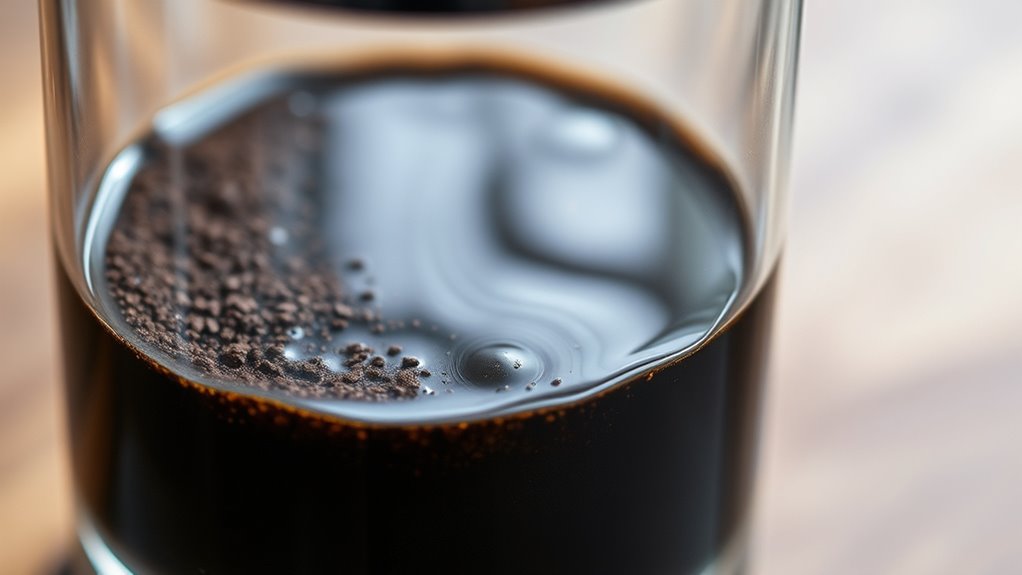
Ever wondered how the right coffee-to-water ratio can dramatically improve your immersion brewing experience? It’s not just about the amount of coffee or water you use; it’s about how they interact during the brewing process. One of the most critical factors influencing this interaction is your grind size. A proper grind size ensures that your coffee extracts evenly, which directly impacts your brew time and overall flavor. If your grind is too fine, it can slow down extraction, leading to over-extraction and a bitter taste. Conversely, a grind that’s too coarse may result in under-extraction, producing a weak, sour brew. Finding the right grind size aligns with your chosen coffee-to-water ratio, allowing for ideal contact and extraction within a reasonable brew time. Additionally, understanding extraction principles helps optimize flavor and clarity in your cup.
Adjusting your grind size isn’t just about flavor—it also affects brew time. When you use a finer grind, the increased surface area causes the coffee to extract more quickly but can also extend your brew time if the water struggles to pass through. A coarser grind, on the other hand, slows the extraction process, requiring a longer immersion period to achieve the desired strength. Knowing how to balance grind size with your coffee-to-water ratio helps you control the brew time effectively. For example, if you prefer a shorter, more intense brew, opt for a finer grind but keep the ratio consistent, so the extraction remains balanced. If you’re aiming for a more mellow, extended brew, a coarser grind with a slightly higher coffee-to-water ratio can be ideal, giving you enough contact time without over-extracting.
The key is to experiment with small adjustments, paying attention to how changes in grind size and ratio influence your brew time and flavor. Typically, immersion brews like French press or AeroPress benefit from a slightly coarser grind, which prevents over-extraction and keeps brew time manageable. Conversely, a medium grind works well for methods like the Clever Dripper or other immersion devices where control over extraction is essential. Remember, consistency is vital—once you find a grind size and ratio that produce your preferred flavor and brew time, stick to it. This consistency helps in dialing in your ideal extraction, ensuring each cup is just right. Ultimately, mastering the relationship between grind size, brew time, and coffee-to-water ratio releases the full potential of your immersion brewing, delivering a richer, more satisfying cup every time.
Frequently Asked Questions
How Do Different Grind Sizes Affect Immersion Brewing Ratios?
Different grind sizes notably impact immersion brewing ratios by affecting extraction efficiency. Finer grinds increase surface area, leading to quicker extraction and a more robust flavor at the same ratio. Coarser grinds slow extraction, often requiring adjustments in brew time or water amount to achieve desired strength. You should experiment with grind size to find the ideal balance, ensuring your coffee’s flavor is fully extracted without over- or under-extracting.
Can I Adjust Ratios for Stronger or Weaker Coffee?
Yes, you can adjust ratios for stronger or weaker coffee. To make it stronger, increase the coffee amount or reduce water slightly, but also consider brew time adjustments—longer steeping enhances flavor extraction. For a weaker brew, do the opposite. Remember, flavor extraction techniques like stirring or agitation can also improve strength without changing ratios. Experiment to find your perfect balance, adjusting ratios and brew time as needed.
What Are Common Mistakes When Measuring Coffee-To-Water Ratios?
You might think measuring coffee-to-water ratios is simple, but errors often happen due to poor scale calibration or overlooking measurement accuracy. Common mistakes include not zeroing your scale, using approximate rather than precise measurements, and inconsistent scoop sizes. Always double-check your scale for calibration, use a consistent measuring method, and avoid eyeballing ratios. This guarantees your coffee strength remains consistent and true to your desired profile.
How Does Ambient Temperature Influence Brewing Ratios?
Ambient effects and temperature fluctuations can impact your brewing ratios by altering water absorption and extraction rates. When it’s warmer, your coffee may brew faster, so you might need to adjust the ratio slightly to avoid over-extraction. Conversely, colder temperatures slow down extraction, requiring a bit more coffee or longer brew time. Keep an eye on ambient effects, and tweak your ratios accordingly for consistent, flavorful results.
Are There Ratios Suitable for Cold Brew Versus Hot Immersion Brewing?
Yes, there are ratios suited for cold brew versus hot immersion brewing. For cold brew, you typically use a higher coffee-to-water ratio, around 1:4 to 1:8, to maximize flavor extraction over a longer steeping time. Hot immersion brewing often employs a ratio closer to 1:15 to 1:17, emphasizing brewing consistency and balanced flavor extraction. Adjust these ratios based on your taste preferences for ideal results.
Conclusion
So, next time you obsess over the perfect coffee-to-water ratio, remember—it’s all about personal taste, not some strict rule. Ironically, the more you experiment, the closer you get to that elusive “perfect cup.” So loosen up, trust your taste buds, and enjoy the process. After all, in the world of immersion brewing, the only ratio that truly matters is the one that makes your coffee just right for you. Cheers to your perfect brew!