Colombian coffee regions offer a vibrant array of flavor profiles influenced by altitude, climate, and terrain. In high-altitude zones like Nariño and Huila, you’ll find coffees with bright acidity and fruity notes, while lower-altitude areas such as Santander and Antioquia produce fuller-bodied, nuttier flavors. Microclimates and traditional processing methods further shape unique taste experiences. To discover the diverse range of Colombian coffee and what makes each region special, keep exploring these fascinating influences.
Key Takeaways
- High-altitude regions like Nariño and Huila produce coffees with bright acidity and fruity notes.
- Lower-altitude areas such as Santander and Antioquia yield fuller-bodied, nuttier coffees.
- Climate variability and microclimates create diverse flavor profiles across different regions.
- Consistent rainfall and seasonal patterns influence cherry ripening and flavor development.
- Traditional processing methods and terrain-specific microclimates further enhance regional taste distinctions.
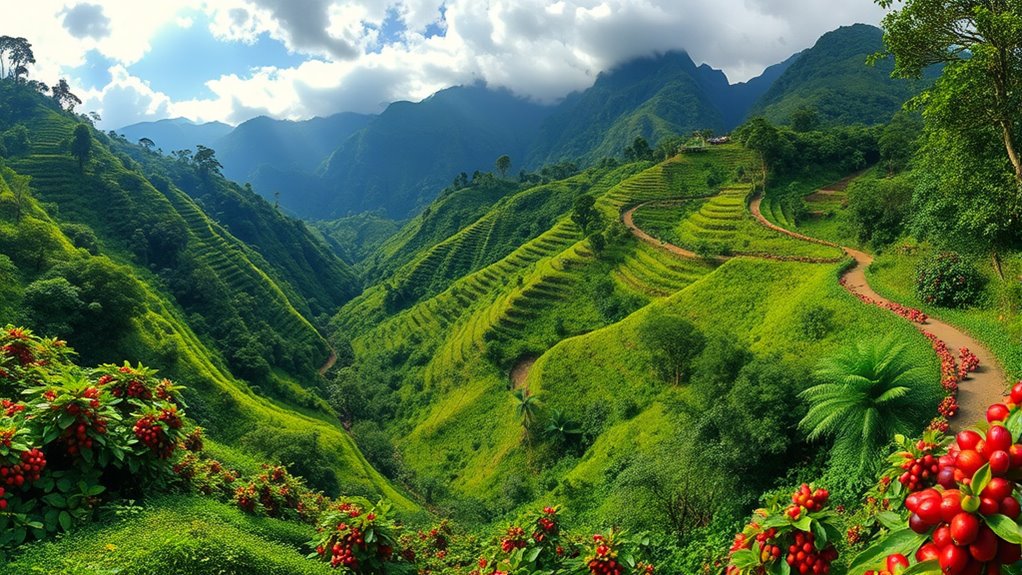
Colombia’s renowned coffee regions are a vibrant tapestry of diverse climates and terrains that shape the flavor and quality of its coffee. As you explore these regions, you’ll notice how the unique conditions influence every cup you enjoy. The regional climate plays a pivotal role in coffee farming, affecting everything from bean development to flavor complexity. Each altitude, temperature, and rainfall pattern contributes to the distinctive profiles that make Colombian coffee so sought after.
Colombia’s diverse climates and terrains uniquely shape its coffee’s rich flavors and high quality.
In these regions, coffee farming thrives under specific climatic conditions. For example, the cooler high-altitude zones, such as those in Nariño or Huila, create the ideal environment for growing Arabica beans with bright acidity and fruity notes. Here, the moderate temperatures slow the ripening process, allowing the beans to develop richer flavors. Conversely, regions with slightly warmer and lower altitudes, like parts of Santander or Antioquia, produce coffees with a fuller body and nuttier undertones. The regional climate’s variability means that no two coffees are exactly alike, even within the same country.
You’ll find that the consistent rainfall and well-defined wet and dry seasons in Colombia support healthy coffee plants. The dry season allows the beans to ripen fully and reduces the risk of diseases, while ample rainfall sustains the plants during growth periods. This balance helps farmers produce high-quality coffee with nuanced flavor profiles. The combination of altitude and climate fosters the slow maturation of cherries, which enhances the beans’ aroma and taste. Additionally, the use of traditional processing methods in many regions further influences the final flavor.
Understanding the influence of regional climate on coffee farming helps you appreciate the complexity behind each cup. The microclimates created by Colombia’s varied terrains—mountains, valleys, and coastal areas—allow farmers to cultivate different varietals and processing methods. This diversity results in coffees that range from bright and citrusy to smooth and chocolatey, each reflecting its unique environment. As you taste Colombian coffee, you’re experiencing the product of a carefully balanced interaction between nature and farming practices.
Ultimately, the regional climate is the backbone of Colombia’s coffee quality. It shapes the flavor profiles that distinguish Colombian coffee from other origins and offers you a rich palette of tastes to explore. Whether you prefer the lively acidity of high-altitude beans or the rounded smoothness of lower-altitude varieties, the climate-driven diversity ensures that every sip provides a glimpse into Colombia’s complex, vibrant coffee landscape.
Frequently Asked Questions
How Does Altitude Affect Coffee Flavor in Colombia?
Altitude markedly affects coffee flavor in Colombia by influencing mountain elevation effects. As you go higher, the cooler temperatures slow bean maturation, leading to denser beans with brighter acidity and complex flavors. You’ll notice that high-altitude coffees often have a more vibrant, nuanced taste compared to those grown at lower elevations. So, when you taste Colombian coffee, consider how altitude shapes its unique aroma, acidity, and overall flavor profile, making each cup special.
Which Colombian Region Produces the Most Acidic Coffee?
Like a spark ignites a flame, the region around Santander produces the most acidic coffee in Colombia. Its soil composition, rich in volcanic ash, enhances bright, lively flavors. You’ll notice this acidity more when the beans are harvested with meticulous techniques, ensuring only the best cherries are picked. This combination makes Santander’s coffee stand out, offering a crisp, vibrant taste that energizes every sip you take.
What Are the Seasonal Variations in Colombian Coffee Taste?
You’ll notice seasonal harvests cause flavor shifts in Colombian coffee throughout the year. During the main harvest, beans are fresher, with brighter, more vibrant acidity and fruity notes. In the off-season, the coffee matures, leading to mellower, more balanced flavors with subtle sweetness. These variations allow you to enjoy a dynamic coffee experience, as each season offers a unique profile shaped by climatic changes and harvest timing.
How Do Processing Methods Influence Regional Flavor Profiles?
Processing methods dramatically shape regional flavor profiles, turning ordinary beans into extraordinary cups. When you choose washed processing, you reveal a bright, clean taste that highlights the region’s inherent characteristics. Natural processing, on the other hand, intensifies fruitiness and body, creating a bold, complex profile. These techniques influence flavor development by emphasizing specific traits—whether crisp clarity or rich sweetness—making each region’s coffee uniquely memorable and profoundly expressive of its terroir.
Are There Unique Coffee Varieties Exclusive to Certain Regions?
Yes, certain regional bean varieties are exclusive to specific Colombian regions, thanks to cultivar diversification. You’ll find unique beans like Castillo or Tabi that thrive in particular areas, which gives each region its distinct flavor profile. This regional specialization means that by exploring different regions, you can experience a variety of exclusive coffee varieties that showcase Colombia’s rich cultivar diversity and unique growing conditions.
Conclusion
As you explore Colombia’s diverse coffee regions, you might believe that flavor solely depends on altitude or climate. But the real magic lies in how each region’s unique combination of soil, elevation, and processing methods creates distinct profiles. This suggests that true coffee complexity isn’t just about geography—it’s about the artistry and tradition behind each cup. So, next time you sip Colombian coffee, remember you’re tasting a rich story woven through nature and craftsmanship.