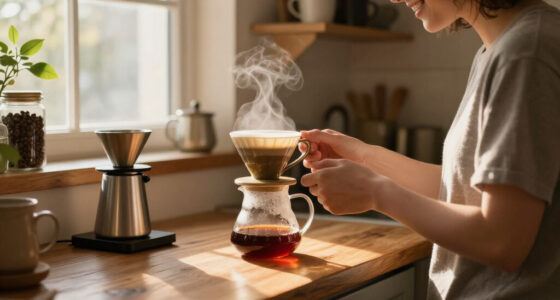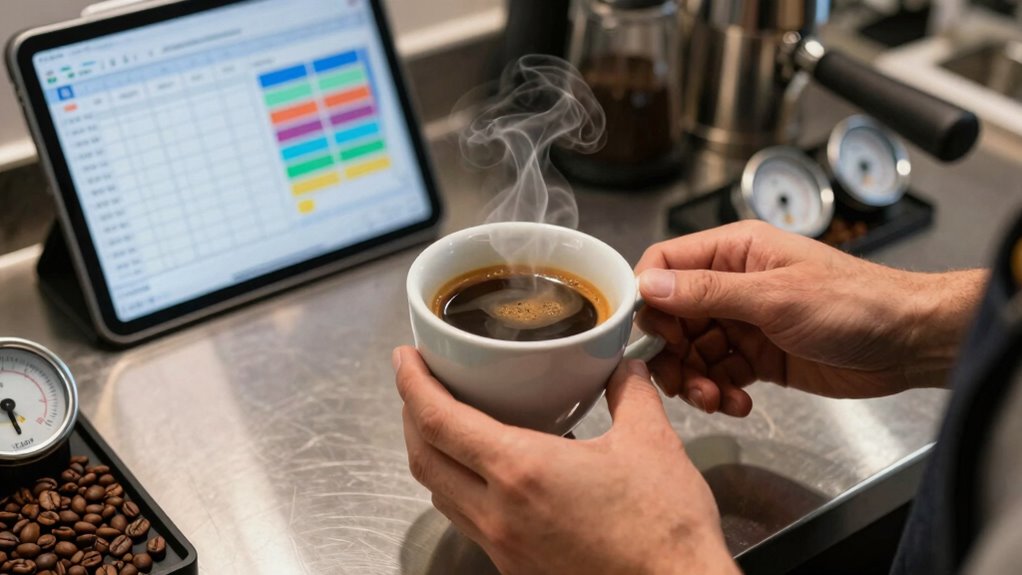

During a drink quality audit, you should track key factors like the coffee’s aroma, which reveals freshness and roast quality, as well as flavor characteristics such as balance and bitterness. Keep an eye on the visual presentation, including crema and temperature, to guarantee consistency. Monitor operational practices like equipment calibration and cleanliness, and document everything to identify patterns or issues. Staying thorough helps you maintain high standards and improve each cup—stick with us to discover more essential tips.

Get kitchen staples and gadgets delivered free with Prime
- Fast, free delivery on millions of items
- Prime Video, Amazon Music and more included
- Member-only deals all year
Key Takeaways
- Aroma profile to assess freshness, roast level, and brewing consistency.
- Visual presentation, including crema, temperature, and overall appearance.
- Customer feedback to identify flavor issues and satisfaction levels.
- Operational factors such as equipment calibration, cleanliness, and staff training.
- Documentation of procedures and results to monitor trends and guide improvements.
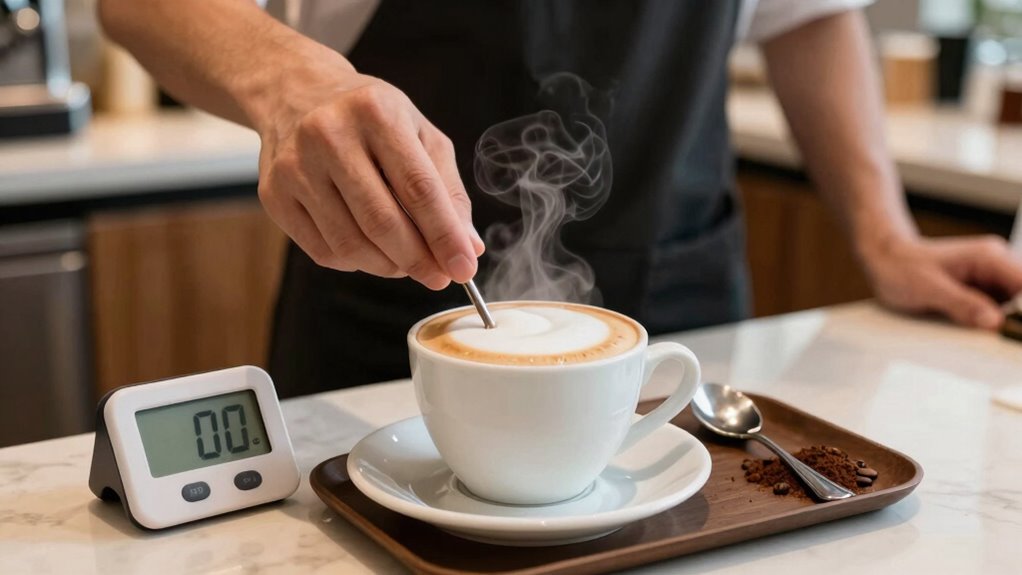
Have you ever wondered how consistently cafes deliver on the quality of their drinks? When you step into a cafe, the experience often hinges on factors that might seem small but are essential to customer satisfaction. During a drink quality audit, it’s important to pay close attention to specific elements that directly influence your customers’ perception and loyalty. One of the most immediate indicators of a well-crafted coffee is its coffee aroma. The aroma isn’t just a pleasant smell—it’s a complex profile that reveals a lot about the freshness, roast level, and brewing method. If the aroma is weak or off-putting, it’s a sign that something in the process isn’t quite right. By consistently tracking the coffee aroma, you can identify trends, such as changes in bean freshness or brewing techniques, and make adjustments accordingly. Additionally, understanding how aroma profiles vary can help you refine your roasting and brewing processes for better consistency.
Consistently monitoring coffee aroma reveals freshness, roast, and brewing quality, guiding improvements and ensuring customer satisfaction.
Customer feedback also plays a key role in evaluating drink quality. Your customers are the ultimate judges of your product, and their comments can uncover issues that aren’t immediately observable. Pay attention to both positive and negative feedback—are they praising the richness of the coffee’s flavor, or are they complaining about bitterness or a lack of aroma? Regularly collecting and analyzing customer feedback helps you spot patterns and pinpoint specific areas for improvement. For example, if several customers mention that their coffee tastes burnt or lacks balance, it’s a clear sign to revisit your roasting or brewing procedures. Combining customer feedback with objective measures like aroma and appearance gives you a complete view of your coffee quality. Recognizing operational factors that impact quality can also help you implement targeted training programs for staff, ensuring consistency across shifts. Monitoring equipment calibration regularly can prevent deviations in drink quality caused by malfunctioning machines. Moreover, paying attention to the training provided to staff can significantly influence the consistency of each drink served.
Another essential aspect to track is the consistency of presentation, including the temperature, crema, and overall appearance of the drinks. These visual cues influence the perception of quality even before tasting begins. An ideal drink should look appealing, with a rich, velvety crema for espresso-based drinks, and should be served at the right temperature to preserve flavor and aroma. If any of these elements fall short, it can negatively impact the overall experience. Measuring and recording these aspects during audits helps ensure every cup meets your standards, maintaining customer trust. Additionally, it’s beneficial to consider the storage of ingredients and equipment, as improper storage can impact drink quality and consistency.
Lastly, it’s important to document any operational factors that can influence quality, such as equipment calibration, cleanliness, and staff training. These behind-the-scenes elements directly affect aroma, taste, and presentation. Keeping meticulous records allows you to track improvements over time and address recurring issues proactively. In summary, a thorough drink quality audit isn’t just about tasting; it’s about examining every detail—aroma, appearance, customer feedback, and operational practices—to guarantee your cafe consistently delivers exceptional drinks that keep customers coming back.
Products Worth Considering

Breville Barista Pro Espresso Machine with Grinder, Brushed Stainless Steel

De'Longhi Linea Classic Espresso Machine with Adjustable Milk Frother

De’Longhi Classic Matte Black Espresso Machine with Milk Frother
As an affiliate, we earn on qualifying purchases.
Frequently Asked Questions
How Often Should a Drink Quality Audit Be Conducted?
You should conduct a drink quality audit weekly to guarantee flavor consistency and temperature control. Regular checks help catch issues early, maintain high standards, and keep customers satisfied. During each audit, test for consistent flavor profiles and verify beverages are served at ideal temperatures. Frequent assessments also enable your team to identify trends, address problems promptly, and continuously improve the overall quality of your drinks.
What Training Is Needed for Staff Conducting the Audit?
Start with skillful staff training to guarantee they excel in audit calibration. You need staff who understand the standards, recognize quality cues, and can accurately assess drink details like temperature, taste, and presentation. Hands-on practice, clear checklists, and regular refresher sessions build confidence and consistency. Well-trained staff stay sharp, conduct diligent audits, and deliver delightful drinks, ultimately boosting your cafe’s reputation and customer satisfaction.
How Do You Handle Customer Feedback During the Audit?
You handle customer feedback during an audit by actively listening and encouraging honest communication, ensuring customer satisfaction remains high. Use feedback management techniques to record suggestions and concerns accurately. Address issues promptly and thank customers for their input, showing you value their experience. This approach helps you identify areas for improvement, maintain quality standards, and build loyalty, ultimately enhancing your cafe’s reputation and customer satisfaction during the audit process.
What Equipment Is Essential for a Drink Quality Assessment?
You need essential equipment like calibrated thermometers and scales for accurate measurements, ensuring your equipment is regularly calibrated for consistency. Sensory evaluation tools, such as tasting spoons and aroma strips, help you assess flavor, aroma, and texture objectively. These tools allow you to maintain high standards during drink quality assessments, ensuring each beverage meets your café’s quality benchmarks while providing a consistent experience for your customers.
How to Document and Analyze Audit Results Effectively?
Think of your audit results as a tapestry woven with threads of flavor consistency and presentation standards. Document each detail clearly, noting deviations or excellence. Use a standardized checklist or digital tools to record findings systematically. Analyze trends over time, identifying recurring issues or improvements. This approach guarantees your insights are actionable, helping you refine your café’s quality, much like a skilled artist refining their masterpiece with each stroke.
Conclusion
By keeping a keen eye on these key aspects during your drink quality audit, you’re fundamentally guiding the heartbeat of your cafe’s success. Think of it as tending a delicate garden—each detail, from flavor to presentation, is a crucial bloom. When you stay attentive and consistent, you guarantee your drinks shine like stars in a clear night sky, delighting every customer and cultivating loyalty that’s as steady as the North Star.