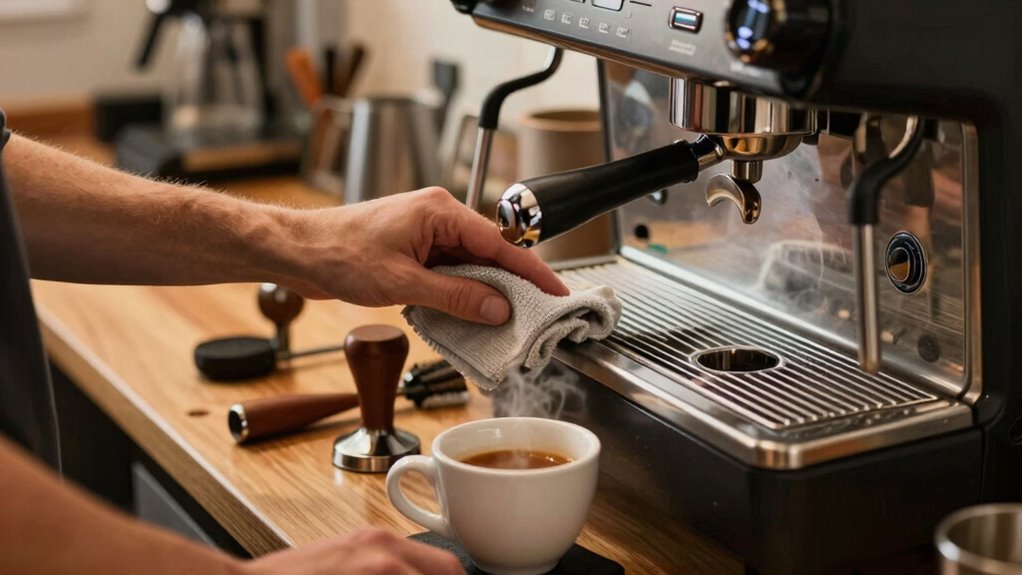

To build a stronger closing routine for your espresso bar, regularly review customer feedback to identify issues like odors or dirty surfaces, and use those insights to adjust your procedures. Train staff thoroughly, assign clear roles, and utilize checklists to guarantee all tasks—cleaning, restocking, and equipment checks—are completed efficiently. Incorporate eco-friendly practices and maintain open communication. Focusing on consistency and quality keeps your bar running smoothly and customer-focused—stay tuned to learn more ways to enhance your closing process.

Get kitchen staples and gadgets delivered free with Prime
- Fast, free delivery on millions of items
- Prime Video, Amazon Music and more included
- Member-only deals all year
Key Takeaways
- Develop detailed checklists incorporating customer feedback to ensure all closing tasks are thorough and consistent.
- Clearly assign roles and responsibilities to staff for accountability and smooth collaboration during closing.
- Train staff regularly on closing procedures, emphasizing cleanliness, equipment checks, and customer experience improvements.
- Use feedback to address issues like odors or dirty surfaces, demonstrating responsiveness and fostering loyalty.
- Incorporate eco-friendly practices and proactive maintenance to uphold quality, sustainability, and operational efficiency.
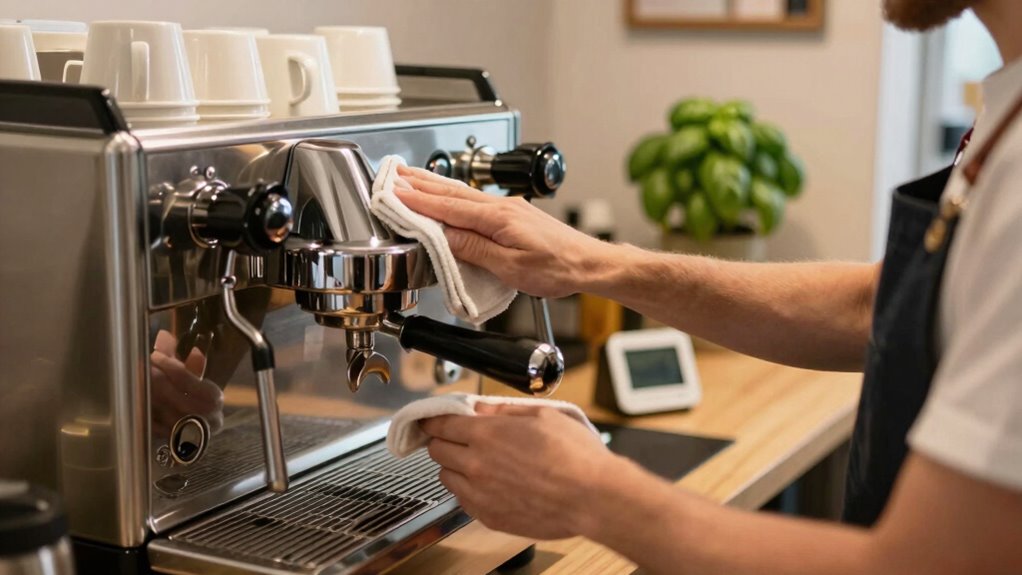
Closing your espresso bar effectively is vital for maintaining quality and guaranteeing smooth operations the next day. A reliable closing routine not only safeguards your equipment and inventory but also leaves a positive impression on your customers and staff. To build a stronger closing routine, start by reviewing customer feedback regularly. Listen to what your customers are saying—whether it’s about wait times, product quality, or cleanliness. Their insights can highlight areas needing improvement and help you tailor your closing procedures to better meet their expectations. When you incorporate customer feedback into your closing routine, you demonstrate that you value their experience, fostering loyalty and encouraging honest communication.
Listen to customer feedback to improve your closing routine and enhance overall satisfaction.
Next, focus on staff training. Every team member should understand their specific responsibilities during closing, from cleaning to restocking. Well-trained staff can execute closing tasks efficiently, minimizing errors and reducing stress at the end of your shift. Invest time in training new employees thoroughly and conduct refresher sessions periodically. Reinforce the importance of consistency in closing procedures, so everyone follows the same steps every night. A unified approach not only speeds up the process but also ensures that nothing gets overlooked, like cleaning espresso machines or checking inventory levels. Regularly reviewing your closing procedures can help identify opportunities for improvement and keep your team aligned. Incorporating standardized protocols can further streamline your closing process and reduce variability. Additionally, utilizing checklists can serve as a visual reminder for staff, helping ensure all tasks are completed thoroughly. Implementing eco-friendly cleaning supplies and waste reduction strategies can also enhance your sustainability efforts and appeal to environmentally conscious customers.
It’s essential to establish a detailed checklist that covers all closing steps. This checklist should include cleaning equipment, disposing of waste properly, sanitizing surfaces, restocking supplies, and securing cash and valuables. Make sure every staff member has access to it and understands each item’s significance. This consistency helps prevent mistakes and saves time, especially during busy nights when fatigue can set in. Incorporating customer feedback into your checklist—if patrons mention issues like lingering odors or dirty tables—can help ensure those issues are addressed during closing. This proactive approach shows your commitment to quality and customer satisfaction.
In addition, assign specific roles to staff members to foster accountability. When everyone knows their responsibilities, the closing process becomes smoother and more organized. Encourage open communication among staff members during the closing shift, so any issues or discrepancies can be addressed immediately. Regularly review and update your closing procedures based on staff input and customer feedback, keeping your routine dynamic and effective. By doing so, you create a culture of continuous improvement.
Ultimately, building a stronger closing routine requires a combination of listening to your customers, investing in staff training, and maintaining clear, consistent procedures. When these elements come together, your espresso bar will close confidently each night, ready for the next busy day. Your customers will notice the attention to detail, and your staff will appreciate the clarity and structure, making closing a seamless, positive experience for everyone involved.
espresso machine cleaning supplies
As an affiliate, we earn on qualifying purchases.
As an affiliate, we earn on qualifying purchases.
Frequently Asked Questions
How Often Should Cleaning Supplies Be Restocked During Closing?
You should restock cleaning supplies daily during closing to guarantee inventory management stays efficient. Regular supply scheduling helps prevent shortages and keeps your bar spotless. Check your supplies at the end of each shift, and if stocks are low, restock immediately. This routine keeps your team prepared for the next day, maintains cleanliness standards, and avoids last-minute rushes. Consistent restocking fosters smooth operations and a professional environment.
What Are Common Signs of Equipment Wear That Need Attention?
You might notice strange noises or inconsistent coffee extraction, which are signs of equipment wear needing attention. During equipment inspection, look for leaks, rust, or loose parts. Incorporate maintenance scheduling into your closing routine, ensuring timely repairs. This coincidence of routine checks and maintenance keeps your espresso bar running smoothly, preventing costly breakdowns. Regularly monitoring these signs helps maintain quality and efficiency, making your closing routine more effective and reliable.
How Can Staff Improve Efficiency During the Closing Process?
To improve efficiency during closing, you should focus on staff training and process optimization. Train your team on streamlined procedures, ensuring everyone knows their responsibilities. Use checklists to keep tasks organized, and identify bottlenecks to refine your workflow. Encourage clear communication and teamwork, so closing tasks are completed quickly and accurately. Regularly review and adjust your routine based on feedback, making your closing process more efficient over time.
What Backup Plans Are Recommended for Equipment Failures?
Think of your espresso bar like a ship steering stormy seas. When equipment fails, emergency protocols become your lighthouse, guiding you safely through. Always have spare parts on hand to quickly repair essential machinery, preventing downtime. Establish clear backup plans, including alternative brewing methods or manual processes. Regularly train staff on these protocols, so when trouble hits, everyone knows their role, ensuring your bar stays afloat and your customers stay satisfied.
How to Handle Last-Minute Customer Requests During Closing?
When handling last-minute customer requests during closing, prioritize clear customer communication by politely explaining your closing time and offering alternative solutions if needed. Follow your emergency procedures if the request involves a safety concern or emergency. Stay calm and professional, guaranteeing the customer feels valued while efficiently managing your closing tasks. This approach maintains good customer relations and ensures a smooth, stress-free closing process.
Conclusion
By blending consistency with confidence, your closing routine becomes a cornerstone of your espresso bar’s success. Focus on flawless functions like final cleaning, precise preparation, and punctual posting. This disciplined dedication develops a dependable, professional process that promotes peak performance and perfects your patrons’ experience. With a committed closing routine, you create a cycle of cleanliness, confidence, and continuity, ensuring your espresso bar ends on a high note and begins again with brilliance.
NFL season / tailgating Picks
team gear
As an affiliate, we earn on qualifying purchases.