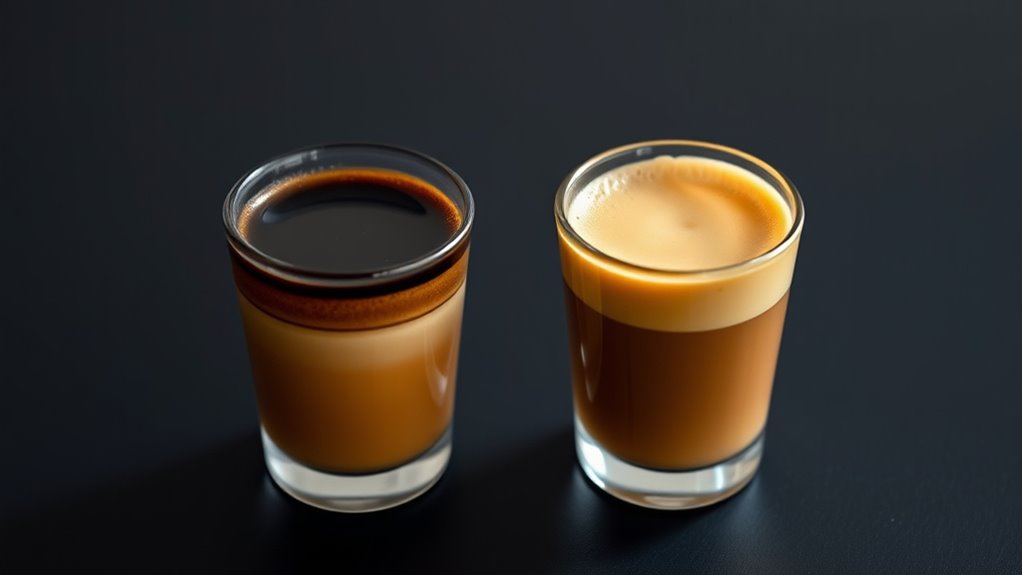

If you’re choosing between a 1:2 and 1:3 espresso ratio, consider the flavor and strength you prefer. A 1:2 recipe delivers a concentrated, bold shot that highlights rich oils and intense aromas, perfect for a full-bodied experience. A 1:3 ratio creates a lighter, more balanced espresso with mellow, complex flavors. Experimenting with both will help you find your ideal shot, and exploring further will reveal even more about how ratios influence your brew.
Key Takeaways
- The 1:2 ratio yields a stronger, more concentrated espresso highlighting rich, aromatic flavors; 1:3 produces a lighter, more balanced shot.
- 1:2 espresso has a shorter extraction time with finer grind, emphasizing intensity; 1:3 involves coarser grind and longer extraction for smoother taste.
- 1:2 tends to be more robust and full-bodied; 1:3 offers a mellower, more nuanced flavor profile.
- Adjusting grind size and tamping is crucial for both ratios to optimize extraction and flavor.
- Personal preference and bean type influence whether a 1:2 or 1:3 ratio best suits your espresso.
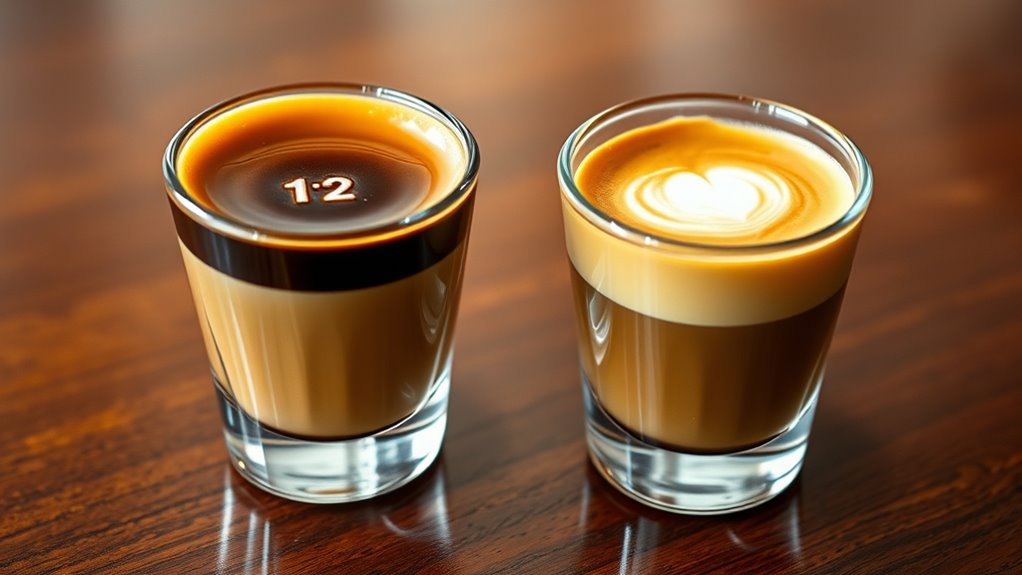
Are you looking for a simple way to perfect your espresso every time? If so, understanding ratio-based espresso recipes can make a big difference in achieving the coffee flavor you desire. The ratio between coffee grounds and water is fundamental to brewing techniques that influence not just strength, but also the overall taste and texture of your shot. Two common ratios, 1:2 and 1:3, offer distinct experiences, and choosing the right one depends on your preferences and the type of espresso you’re aiming for.
Starting with a 1:2 ratio, you’re using less water relative to coffee grounds, resulting in a more concentrated shot. This approach tends to emphasize the bold, rich flavors of the coffee, highlighting the beans’ aromatic oils and nuanced notes. When using this ratio, you’ll want to pay close attention to your brewing techniques. The grind size should be fine but not overly powdery, and the tamping must be firm and even to ensure uniform extraction. The shorter extraction time keeps the coffee’s intensity intact, making it perfect for those who enjoy a robust, full-bodied espresso. Keep in mind that with a 1:2 ratio, over-extraction can quickly lead to bitterness, so precision and timing are key.
Using a 1:2 ratio emphasizes bold, rich flavors with fine grounds and precise tamping.
On the other hand, a 1:3 ratio introduces more water, producing a slightly lighter and more balanced espresso. This ratio tends to mellow out some of the sharpness while allowing more of the coffee’s complex flavors to come through. Brewing techniques for this ratio involve a slightly coarser grind and possibly a longer extraction time, which helps to draw out subtler notes without over-extracting. If you prefer a smoother, less intense profile that still retains the essence of your coffee beans, a 1:3 ratio might be more suitable. You’ll want to monitor your shot carefully, adjusting grind and tamp to avoid under-extraction, which can lead to a weak or sour flavor.
Additionally, understanding the science behind extraction and how artistic expression plays a role in crafting the perfect shot can elevate your brewing skills. Ultimately, the choice between 1:2 and 1:3 ratios comes down to personal taste and the specific coffee beans you’re using. Experimenting with these ratios allows you to explore different brewing techniques that enhance your coffee flavor profile. Whether you favor the boldness of a 1:2 shot or the smoother complexity of a 1:3, understanding how ratios influence extraction will help you craft consistently excellent espresso. With practice, you’ll develop an intuitive grasp of how to tweak your brewing process to get just the right shot every time.
Frequently Asked Questions
How Do Different Ratios Affect Espresso Flavor Profiles?
You’ll notice that a 1:2 ratio emphasizes flavor extraction, resulting in a bolder, more intense espresso with richer body and concentrated taste. A 1:3 ratio produces a lighter, more balanced brew, highlighting nuances and subtle flavors. Using these ratios helps you achieve brewing consistency; adjusting them allows you to tailor the flavor profile to your preference, whether you want a robust shot or a more delicate, aromatic experience.
Are Certain Ratios Better for Specific Coffee Beans?
Certain ratios work better for specific coffee beans, depending on your desired brew strength and crema development. For instance, a 1:2 ratio often enhances brew strength and produces richer crema, ideal for bold, intense flavors. Conversely, a 1:3 ratio offers a lighter, more balanced shot with subtler crema and a smoother profile. Experimenting helps you find the best ratio for each bean, optimizing flavor and crema quality.
How Does Grind Size Influence These Ratio-Based Recipes?
Grind size considerably impacts ratio-based recipes because it affects extraction and flavor. A finer grind increases resistance, requiring you to adjust brew temperature for ideal extraction, while a coarser grind allows water to flow faster, possibly needing a higher temperature. Consistent grind size ensures even extraction, maintaining the intended ratio taste profile. Always experiment with grind consistency and brew temperature to perfect your 1:2 or 1:3 espresso recipes.
Can These Ratios Be Adjusted for Personal Taste Preferences?
Like a barista in a bustling café, you can definitely tweak these ratios to suit your taste. Adjusting the amount of coffee or water affects the shot’s strength, which influences milk frothing and crema development. Experiment with slight changes until you find that perfect balance, whether you prefer a bolder or milder flavor. Trust your palate, and remember, even in espresso, personalization reigns supreme.
Do These Ratios Impact Caffeine Content in the Espresso?
Yes, these ratios impact caffeine content by affecting water volume and extraction time. A 1:2 ratio uses less water, leading to a quicker extraction and potentially higher caffeine concentration, while a 1:3 ratio involves more water, which can dilute the caffeine. Adjusting the ratio changes how long the coffee extracts, influencing both flavor and caffeine levels. So, your chosen ratio directly affects the caffeine content in your espresso.
Conclusion
Choosing between 1:2 and 1:3 espresso ratios is like selecting the right brushstroke for your masterpiece. The 1:2 offers a bold, intense shot, while the 1:3 reveals a smoother, more balanced flavor. Think of it as sculpting your perfect brew—each ratio chisels a different character into your cup. Experiment and trust your palate, because in the end, your ideal espresso is a unique work of art waiting to be uncovered.