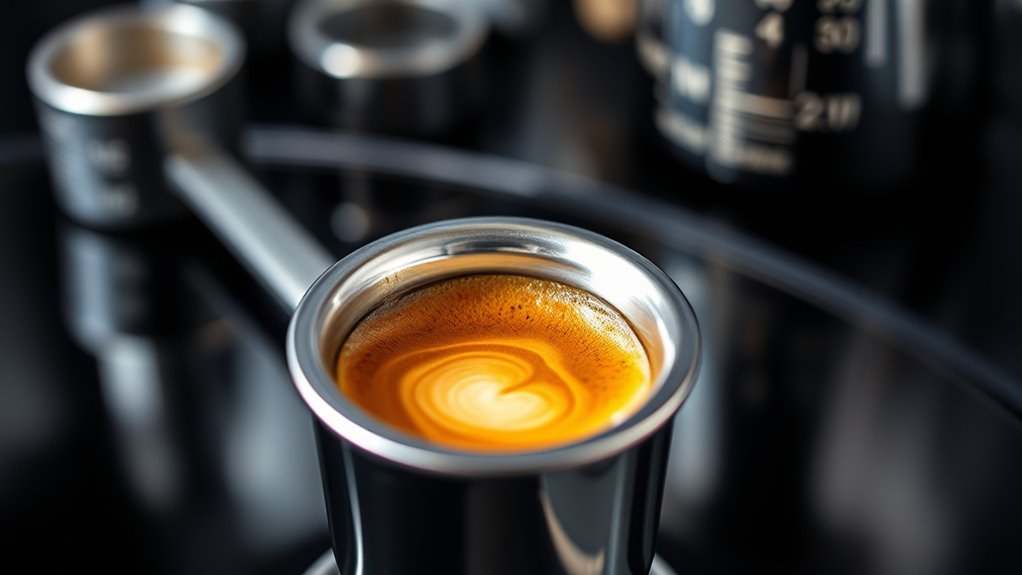
To achieve the perfect espresso, aim for a brew yield of about 1.75 to 2 ounces per shot, ensuring consistent flavor and strength. Keep your extraction percentage between 18-22% of the coffee weight to balance sweetness and bitterness. Adjust your grind size, temperature, and tamping to hit these targets, avoiding over- or under-extraction. Mastering these variables helps produce rich, smooth espresso every time—so continue exploring how to fine-tune your process for the best results.
Key Takeaways
- Standard espresso brew yield is typically 1.75 to 2 ounces per shot, aligning with flavor and strength goals.
- Optimal extraction percentage ranges from 18% to 22% of coffee grounds for balanced flavor.
- Proper grind size, dose, and temperature adjustments help achieve target yield and extraction levels.
- Over-extraction (>22%) can cause bitterness, while under-extraction (<18%) results in sour, weak espresso.
- Monitoring yield and extraction allows for consistent, high-quality shots and flavor balance.
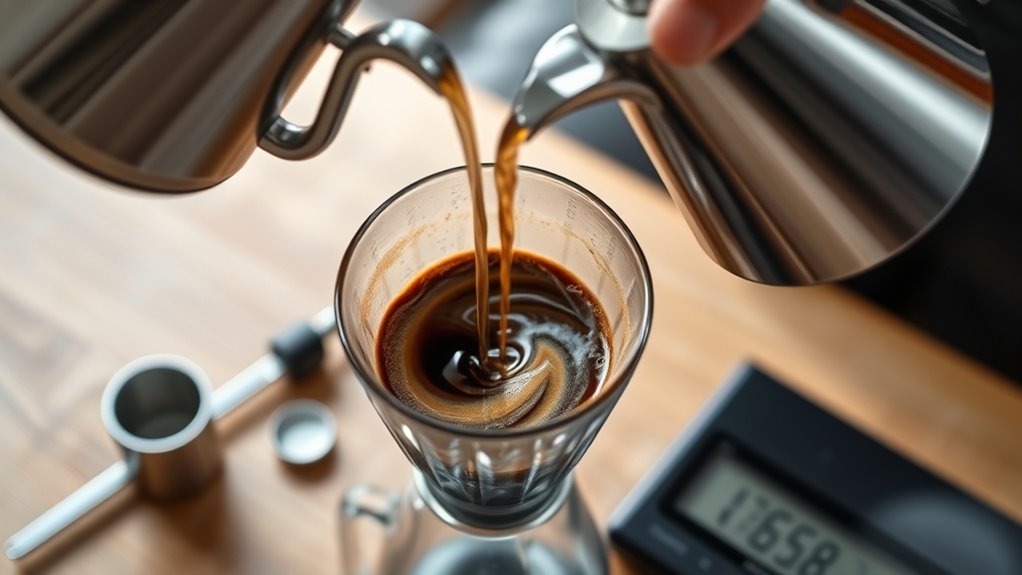
Achieving the perfect espresso shot depends heavily on understanding brew yield and extraction targets. These elements directly influence the balance, flavor, and strength of your espresso. To get it right, you need to pay close attention to your coffee grind and brewing temperature, as both play critical roles in the extraction process. Your coffee grind determines how quickly water passes through the coffee bed, affecting both brew yield and extraction efficiency. A finer grind creates more resistance, slowing water flow and increasing extraction time, while a coarser grind results in faster flow and potentially under-extraction. Adjusting your grind size helps you hit the desired brew yield, which is typically around 1.75 to 2 ounces of espresso for a standard shot, though this can vary depending on preferences and equipment. Additionally, precise control over your brewing variables enhances consistency and quality. Brewing temperature is just as essential. Water that’s too hot can lead to over-extraction, pulling harsh, bitter flavors, whereas too low a temperature causes under-extraction, leaving your espresso weak and sour. The ideal brewing temperature for espresso generally falls between 195°F and 205°F (90°C to 96°C). Maintaining a consistent temperature ensures that your coffee grounds extract the right compounds, resulting in a balanced shot. When your brewing temperature is suitable, and your coffee grind is correctly adjusted, you’ll see your extraction yield align with your target range—typically around 18-22% of the coffee’s weight. This percentage indicates how much soluble material has been extracted from the coffee grounds. Monitoring brew yield involves more than just measuring volume; it’s about understanding how much of the coffee solubles are being extracted at a given volume. Too high a yield may lead to over-extraction, making the espresso bitter and astringent, while too low a yield can result in under-extraction, leaving the shot sour and flat. To achieve the right extraction, you often need to tweak your grind size, dose, tamping pressure, and brewing temperature. Consistency in these parameters allows you to reach your target yield and extraction percentage. This not only enhances flavor but also ensures that each shot is of high quality and reproducible. In essence, mastering brew yield and extraction targets hinges on controlling your coffee grind and brewing temperature. Fine-tuning these variables allows you to extract the perfect balance of flavors, creating a rich, smooth, and flavorful espresso shot every time. Practice, patience, and precise adjustments are your best tools in achieving this goal, helping you develop a deeper understanding of your equipment and coffee beans.
Frequently Asked Questions
How Does Grind Size Affect Brew Yield?
Your grind size directly impacts brew yield by controlling water flow through the coffee. A finer grind increases resistance, often lowering yield and improving extraction, while a coarser grind allows water to pass faster, increasing yield but risking under-extraction. Adjusting grind size helps you maintain brew consistency, ensuring each shot is balanced and flavorful. Experimenting with grind size allows you to fine-tune brew yield and achieve the perfect espresso shot.
What Are Common Extraction Target Percentages?
Imagine you’re dialing in your espresso shot. Typically, aiming for an extraction target of around 18-20% guarantees ideal flavor. To achieve this, you need measurement accuracy and brewing consistency. For example, if your extraction percentage drops below 18%, your coffee might taste underdeveloped. Staying within this range helps you maintain quality, ensuring each shot is balanced and flavorful, making your brewing process more reliable.
How Can I Adjust Brew Yield Without Altering Flavor?
You can adjust brew yield without changing flavor by modifying your brew ratio or considering bean freshness. Increase the brew yield by slightly extending the extraction time or using a coarser grind, which allows more water to pass through without over-extracting. Keep an eye on bean freshness, as older beans may require different yield adjustments. These tweaks help maintain consistent flavor while changing yield.
What Tools Are Best for Measuring Extraction?
You should use digital refractometers and timers to measure extraction accurately. Digital refractometers help you determine the coffee’s total dissolved solids (TDS), giving precise extraction readings. Timers ensure you track your brew time consistently, which affects extraction. Combining these tools allows you to fine-tune your espresso, guaranteeing ideal extraction and flavor without guesswork. Regularly measuring with a refractometer and timing your shots helps you achieve consistent, high-quality results.
How Does Water Temperature Influence Extraction Targets?
Think of water temperature as the conductor of an orchestra, guiding the perfect harmony of flavors. When water heats up, it releases more soluble compounds, boosting extraction targets, but if it’s too hot, it risks over-extraction and bitterness. Maintaining water chemistry and temperature stability guarantees consistent extraction. A precise temperature allows the coffee’s nuanced notes to shine, creating a balanced, flavorful espresso without overpowering or underwhelming your brew.
Conclusion
So, next time you chase that perfect espresso shot, remember: all the brew yield and extraction targets in the world won’t save you if you ignore taste. Ironically, obsessing over numbers might just make your coffee duller. Sometimes, the best shot’s the one that surprises you—beyond the charts and guidelines. So, relax, experiment, and let your palate be the real judge. After all, coffee’s about enjoyment, not just precision.