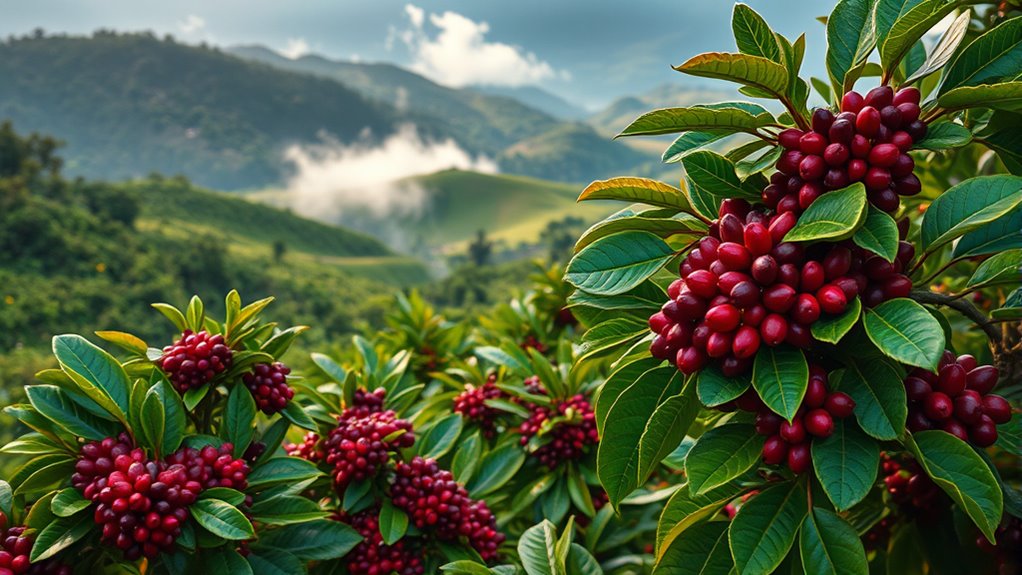

Ethiopian coffee regions each offer distinct flavor profiles shaped by soil, altitude, and traditional farming methods. Yirgacheffe produces bright, citrusy notes with a floral aroma, while Sidamo offers a balanced cup with berry and spice hints. Harrar tends to be full-bodied with wine-like qualities. The unique terroir and processing methods influence these flavors strongly. If you explore further, you’ll uncover how each region’s environment and practices create these unforgettable tastes.
Key Takeaways
- Yirgacheffe features bright, citrusy, floral coffees due to its high-altitude, volcanic soil.
- Sidamo offers a balanced flavor with hints of berry and spice from diverse microclimates.
- Harrar is known for full-bodied, wine-like coffees with deep, complex flavors.
- Processing methods like washed, natural, and honey influence regional flavor nuances.
- Traditional cultivation and brewing practices enhance the unique aroma and acidity of each region.

Have you ever wondered why Ethiopian coffee is renowned worldwide? It’s because of the rich history and unique environments that shape its distinct flavor profiles. Ethiopia’s coffee cultivation dates back centuries, with smallholder farmers nurturing coffee plants on lush highlands and fertile slopes. These regions benefit from ideal growing conditions—altitude, rainfall, and soil—making each area produce beans with its own character. The result is a diverse array of flavors that captivate coffee enthusiasts everywhere. As you explore Ethiopian coffee, you’ll notice that traditional cultivation practices play a crucial role in maintaining quality. Farmers often grow coffee alongside other crops, practicing sustainable methods handed down through generations. This way, they preserve the land’s health and ensure the beans develop their full potential. The process isn’t just about planting and harvesting; it’s about craftsmanship rooted in tradition. Once harvested, the beans are processed through methods like washed, natural, or honey processing, which influence the final flavor. But what truly sets Ethiopian coffee apart is how it’s brewed. Many locals prefer traditional brewing methods—such as the jebena, a clay coffee pot—and these techniques highlight the beans’ complex aromas and bright acidity. When you brew coffee using these methods, you’re engaging with a centuries-old ritual that emphasizes simplicity and authenticity. The traditional brewing process often involves boiling coffee grounds with water, producing a thick, flavorful brew that reveals the coffee’s nuanced profile. These methods bring out the fruitiness, floral notes, and vibrant acidity characteristic of Ethiopian beans. Whether you’re using a cezve, a traditional pot, or a modern pour-over, understanding how these techniques influence flavor can deepen your appreciation. The regional differences in Ethiopia also contribute to the varied flavor profiles. For instance, coffee from Yirgacheffe is celebrated for its bright, citrusy notes and floral aroma, while Sidamo offers a balanced cup with hints of berry and spice. Harrar, on the other hand, tends to be more full-bodied with wine-like qualities. Each region’s unique climate and elevation, combined with traditional cultivation and brewing methods, craft these distinctive tastes. Additionally, terroir plays a vital role in shaping the flavor profiles, as the specific environmental conditions impart unique characteristics to each batch. When you sip Ethiopian coffee, you’re partaking in a cultural heritage that values quality, tradition, and connection to the land. It’s a journey through history and nature, all captured in a single cup. So, whether you’re brewing at home or enjoying a local café, recognizing these elements can deepen your enjoyment and understanding of Ethiopia’s renowned coffee.
Frequently Asked Questions
How Does Altitude Affect Coffee Flavor in Ethiopia?
Altitude markedly impacts your Ethiopian coffee’s flavor by increasing acidity and brightening the overall profile. Higher elevations mean cooler temperatures, which slow the coffee’s maturation, allowing complex flavors to develop. Elevation’s impact results in beans with vibrant, citrusy notes and a lively acidity that makes each sip invigorating. So, as you explore Ethiopian coffees, notice how altitude shapes the unique, bold flavors you experience in every cup.
Which Ethiopian Region Produces the Most Aromatic Coffee?
Imagine a symphony where each instrument adds layers to the melody. In Ethiopia, Yirgacheffe stands out as the most aromatic coffee region. Its coffee beans, harvested at peak ripeness, develop intricate flavor complexities, with floral and citrus notes that dance on your palate. You’ll find that the careful harvesting process enhances these aromatic qualities, making Yirgacheffe a true jewel among Ethiopian coffees, offering a sensory experience like no other.
Are There Seasonal Variations in Flavor Profiles?
Yes, there are seasonal variations in flavor profiles. During seasonal harvesting, you’ll notice flavor fluctuation caused by changing weather conditions, altitude, and soil. These factors influence the coffee’s acidity, body, and aroma. As the harvest shifts throughout the year, the beans develop different characteristics, making each season’s coffee unique. So, if you pay attention, you can enjoy a diverse range of flavors from Ethiopian coffees year-round.
How Do Processing Methods Influence Regional Taste Differences?
You’re right on the money—processing techniques truly shape regional taste differences. When you change methods like washed or natural processing, it’s like adding your own flavor twist. Fermentation impacts, in particular, add complexity, enhancing fruity or wine-like notes. These choices influence the coffee’s character, making each region’s beans unique. So, by tweaking processing steps, you’re effectively steering the flavor profile, giving each coffee a signature taste that tells its regional story.
What Are the Unique Flavor Notes of Ethiopian Heirloom Varieties?
You’ll notice that Ethiopian heirloom varieties offer vibrant, complex flavors with bright citrus and floral notes. During Ethiopian coffee tasting, you might detect hints of blueberry, jasmine, or bergamot, showcasing their unique characteristics. These heirloom varieties stand out for their diverse and expressive taste profiles, often with a balanced acidity and a fruity, wine-like finish. Exploring these beans reveals the rich, nuanced essence that makes Ethiopian coffee truly special.
Conclusion
Now that you’ve journeyed through Ethiopia’s coffee regions, you can truly appreciate their unique flavor profiles. Each region, like a secret garden, offers a distinct taste experience — from fruity and floral to complex and spicy. Think of it as discovering a vintage record collection in a dusty attic; every sip transports you to a different time and place. So, next time you sip Ethiopian coffee, remember, it’s like tasting history brewed with passion and tradition.