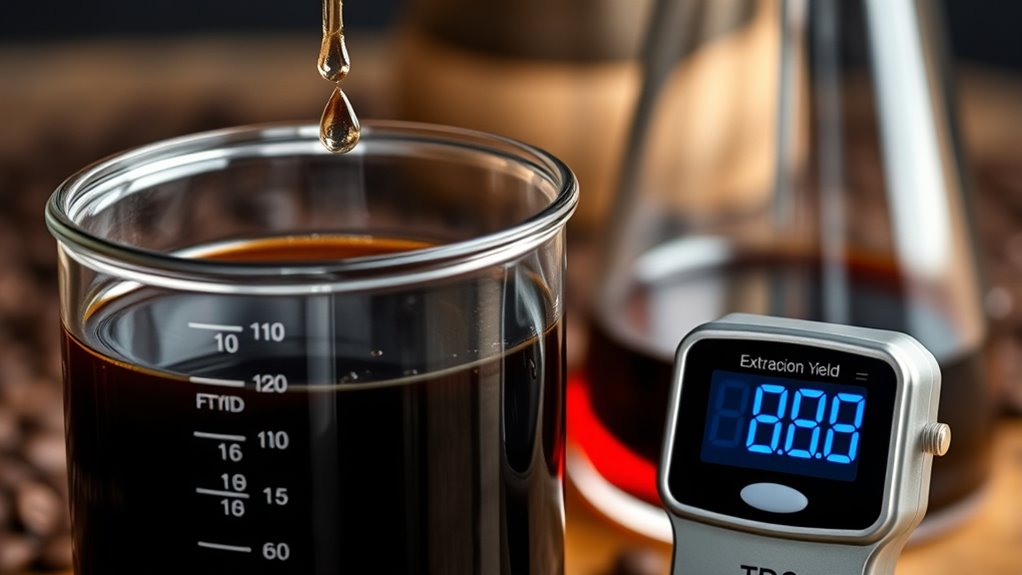
Extraction yield and TDS are key to understanding coffee clarity and flavor. TDS measures how concentrated the coffee is, while extraction yield shows how much of the coffee’s solubles you’ve successfully extracted. Ideally, these two work together for a balanced brew—too high or low can result in sour or bitter flavors. By adjusting grind size, brew ratio, and extraction time, you can fine-tune their relationship. Keep exploring to master their interplay for the perfect cup.

Get kitchen staples and gadgets delivered free with Prime
- Fast, free delivery on millions of items
- Prime Video, Amazon Music and more included
- Member-only deals all year
Key Takeaways
- Extraction yield measures the percentage of dissolved solids from coffee grounds, while TDS indicates the concentration of dissolved solids in the brew.
- A balanced extraction yield (around 18-22%) generally correlates with optimal TDS levels for flavor clarity.
- High TDS with low extraction yield suggests over-concentration and uneven extraction; low TDS with high yield indicates under-extraction.
- Adjusting grind size, brew ratio, or contact time influences both TDS and extraction yield, affecting overall brew quality.
- Understanding the interplay between TDS and extraction yield helps optimize brewing parameters for desired taste profiles.
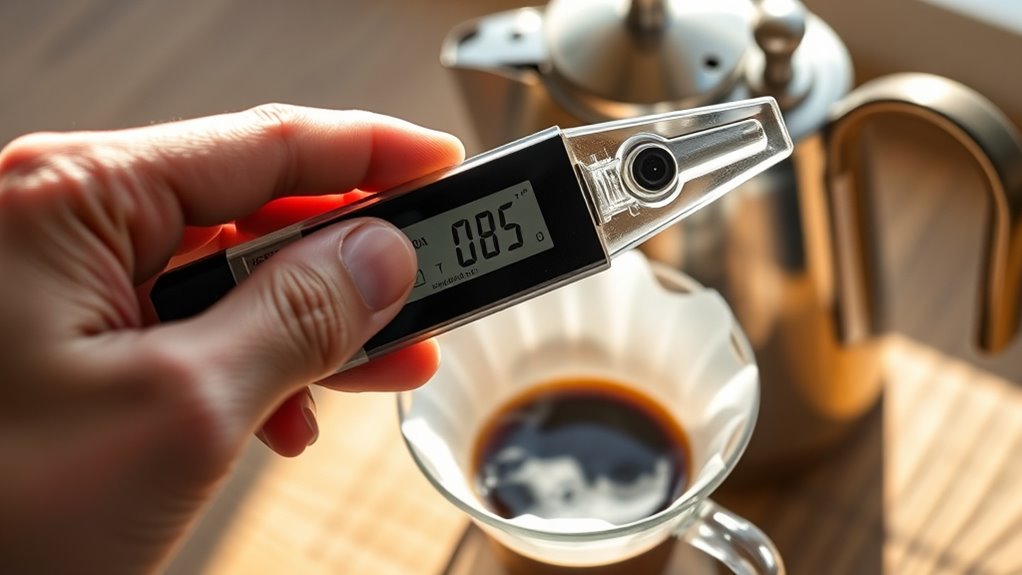
Understanding the relationship between extraction yield and TDS (Total Dissolved Solids) is essential for optimizing your extraction processes. When you’re brewing coffee, the way you control variables like brew ratio and grind size directly impacts both these metrics. A proper brew ratio, which is the ratio of coffee to water, ensures you’re extracting the right amount of solids without over- or under-extracting. For example, using too much water relative to coffee can dilute the brew, lowering TDS and possibly decreasing your extraction yield. Conversely, too little water can lead to a concentrated shot with high TDS but poor balance. Striking the right brew ratio helps you hit that sweet spot where TDS and extraction yield align with your taste preferences.
Grind size plays a pivotal role here. A finer grind increases the surface area of coffee particles, enabling water to extract more solids efficiently. If your grind is too fine, you risk over-extraction, resulting in a bitter, overly strong brew with high TDS but potentially a lower overall extraction yield because the extraction becomes uneven. On the other hand, a grind that’s too coarse can cause under-extraction, leading to a weak, watery coffee with low TDS and a low extraction yield. Adjusting grind size allows you to control how much of the coffee’s solubles are released during brewing, which influences both TDS and extraction yield.
Tuning these factors requires understanding their interplay. For example, if your TDS is high but the extraction yield remains low, it may indicate over-concentration of dissolved solids without enough overall extraction. This could be due to using too fine a grind or an improper brew ratio. Conversely, if your TDS is low but the extraction yield is high, it suggests you’re under-extracting, possibly because your grind is too coarse or your brew ratio is off. To optimize, experiment with small adjustments to grind size and brew ratio, then measure TDS and extraction yield to see how they respond. Additionally, understanding the relationship between extraction yield and TDS can help refine your process further. Over time, you’ll develop a feel for how these variables work together to produce a balanced, flavorful cup.
As an affiliate, we earn on qualifying purchases.
Frequently Asked Questions
How Does Water Temperature Influence Extraction Yield and TDS?
You’ll find that water temperature considerably impacts extraction yield and TDS, shaping your coffee’s flavor. Higher temperatures boost water chemistry, extracting more solubles, which increases TDS and yields. But too hot can over-extract, causing bitterness. Maintaining consistent water temperature helps you achieve brewing consistency, ensuring ideal extraction without overdoing it. Adjusting temperature carefully lets you control extraction yield, balancing flavor and strength for a perfect cup every time.
What Role Does Grind Size Play in Extraction Efficiency?
You should focus on grind size because it directly affects extraction efficiency. Using a uniform grind guarantees consistent particle size, allowing water to extract flavors evenly. Smaller particles increase surface area, boosting extraction, but can lead to over-extraction if too fine. Conversely, larger particles slow extraction. Achieving the right grind size and uniformity helps you control extraction, balancing flavor and TDS for a better brew.
Can Extraction Yield and TDS Predict Flavor Profile Accurately?
Imagine tasting a cup of coffee and knowing exactly how it was brewed; that’s what extraction yield and TDS aim for. While they provide a solid baseline, they can’t fully predict flavor profile with perfect accuracy. You need sensory analysis and flavor consistency checks to truly understand the nuances. These metrics guide you, but the artistry of tasting reveals the real story behind each brew’s unique character.
How Do Brewing Time and Method Impact These Metrics?
Your brew time and brewing method directly influence extraction yield and TDS. A longer brew time generally increases extraction, raising TDS, but can lead to over-extraction and bitterness. Different brewing methods, like French press or pour-over, affect contact time and pressure, altering these metrics. By adjusting brew time and choosing the right method, you control extraction, balancing flavor and strength to suit your taste preferences.
Are There Optimal Ranges for Extraction Yield and TDS for Different Coffees?
Think of brewing coffee like tuning a musical instrument—you want the right pitch for each. Yes, there are ideal ranges for extraction yield and TDS, but they vary with coffee variability. Generally, aim for an extraction yield of 18-22% and TDS around 1.2-1.5%. Adjust based on bean origin and roast, because each coffee responds uniquely, so fine-tuning ensures a harmonious, flavorful cup every time.
Conclusion
Now that you understand extraction yield and TDS, you can better appreciate your brew’s complexity. Think of it as the dance of flavors, where timing and precision matter—like a barista’s secret recipe from an old-world tavern. Keep experimenting, and don’t forget: even in this modern age, a well-crafted cup still relies on balance and patience. Master these, and your coffee experience will be as legendary as a knight’s tale.
NFL season / tailgating Picks
team gear
As an affiliate, we earn on qualifying purchases.