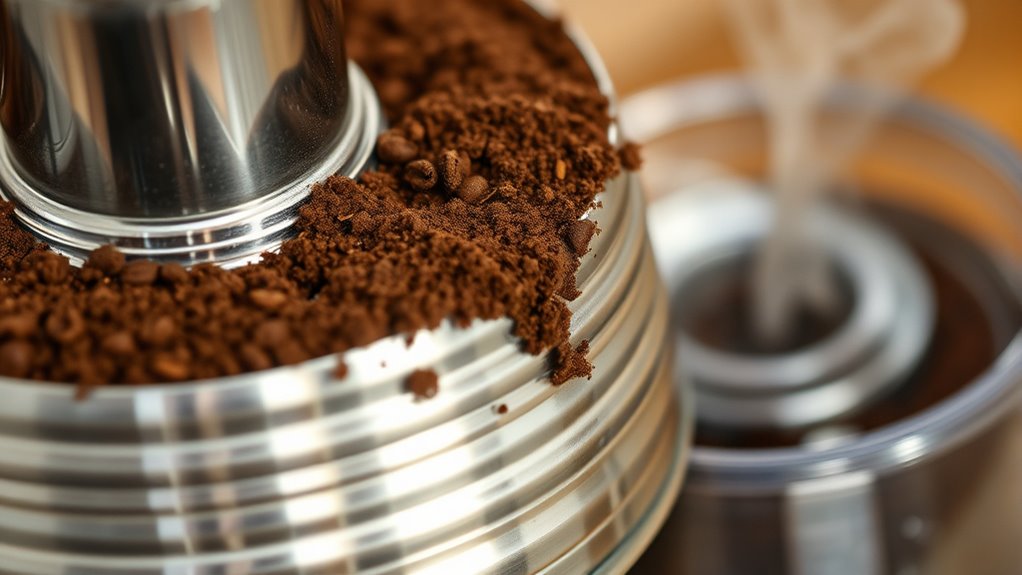

Understanding grind retention and purging is key to optimizing your manufacturing process. Properly capturing excess grind prevents waste and contamination, while automated storage systems help track and manage leftover material efficiently. Timely purging removes stale or contaminated grind, ensuring product quality and system integrity. Integrating data and automation supports precise control, reduces waste, and boosts overall efficiency. Stay with us to discover how these strategies can turn grind management into a seamless part of your operations.
Key Takeaways
- Proper management of grind retention prevents material loss, contamination, and maintains product quality.
- Automated storage systems efficiently capture, organize, and track leftover grind for recycling or reprocessing.
- Regular data cleanup ensures accurate records, prevents waste, and optimizes reuse of high-quality retained material.
- Automated purging schedules remove stale or contaminated grind, preserving system integrity and product standards.
- Integrating data and automation enhances tracking, timing, and consistency of purging, boosting manufacturing efficiency.

Understanding grind retention and purging is indispensable for optimizing your manufacturing process. When you’re managing grind materials, it’s imperative to keep track of how much product remains in the system after each cycle. This leftover material, known as grind retention, can impact your efficiency, product quality, and overall throughput. To effectively handle this, you need to set up an automated storage system that captures excess grind. Automated storage helps you organize and monitor retained material, ensuring it doesn’t get lost or improperly mixed. By automating this process, you reduce manual handling, minimize errors, and streamline recycling or reprocessing of the retained grind.
Automated storage of grind retention ensures accurate tracking and efficient reprocessing of leftover material.
However, simply storing excess grind isn’t enough. Over time, the accumulated material can become stale, contaminated, or inconsistent in quality. This is where data cleanup becomes a critical part of your operation. Regular data cleanup involves reviewing and updating your records on grind retention levels, storage conditions, and reprocessing schedules. When you keep your data clean and current, you gain better insight into how much material is being retained and when it should be purged. This prevents overstocking, reduces waste, and ensures you’re reusing only high-quality material. Additionally, tracking material flow patterns can help optimize your entire process and prevent bottlenecks.
Effective purging is a key step in maintaining ideal manufacturing conditions. When you purge grind retention, you remove the stale or contaminated material from your system, preventing it from compromising new batches. The timing and method of purging depend on your production cycle and the nature of your product. Automated systems can assist in scheduling purges at regular intervals, reducing downtime and manual intervention. Proper purging also involves controlling environmental factors like humidity and temperature, which can affect the quality of retained grind.
Incorporating automation into your storage and purging processes isn’t just about convenience; it’s about precision and control. Automated storage enables you to track the amount of retained material accurately, while automated purging ensures consistent removal of unwanted product. Additionally, integrating data cleanup routines into your management system keeps your records accurate, which helps in forecasting, inventory planning, and quality assurance. When you combine these strategies, you create a closed-loop system that minimizes waste, maximizes material reuse, and maintains product integrity.
Ultimately, understanding and managing grind retention and purging with the aid of automated storage and diligent data cleanup empowers you to optimize your manufacturing efficiency. It reduces costs, enhances product consistency, and keeps your operations running smoothly. Staying proactive in these areas ensures you make the most of your materials and maintain high standards in your production process.
Frequently Asked Questions
How Does Grind Retention Affect the Taste of Brewed Coffee?
Grind retention can considerably impact your brewed coffee’s flavor consistency and brew strength. When old grounds stay in your grinder, they can cause over-extraction, leading to bitter flavors, or under-extraction, resulting in weak taste. This inconsistency hampers your ability to get a balanced brew. Regularly purging your grinder helps maintain ideal grind freshness, ensuring each cup has the right flavor profile and consistent strength for a satisfying coffee experience.
What Are the Best Methods to Reduce Grind Retention in Grinders?
To reduce grind retention in your grinder, start by regularly calibrating the burrs to guarantee grind consistency. Use a brush or compressed air to clear out residual grounds after each use, preventing buildup. Consider grinding smaller amounts at a time to minimize leftovers. Maintaining your grinder and checking burr alignment help keep retention low, ensuring fresher grounds and better-tasting coffee. These steps keep your setup clean and your coffee flavorful.
Does Purging Impact the Overall Freshness of Coffee Beans?
Purging can positively impact your coffee’s freshness preservation by clearing stale air and residual grind buildup. When you purge your grinder, you prevent flavor degradation caused by old grounds mingling with new beans. This simple step guarantees each brew bursts with vibrant, fresh flavors. By maintaining consistent purging practices, you safeguard your coffee’s quality, ensuring every cup delivers the delightful aroma and taste you crave.
How Often Should I Purge My Grinder to Maintain Optimal Performance?
You should purge your grinder every few days or weekly, depending on your usage, to maintain ideal performance. Incorporate regular cleaning schedules to remove residual coffee grounds and oils that can affect flavor. Also, calibrate your grinder after cleaning to ensure consistent grind size. Regular purging prevents buildup, keeps your machine running smoothly, and preserves the freshness of your coffee beans, giving you the best possible brew every time.
Can Improper Purging Cause Equipment Damage Over Time?
An ounce of prevention is worth a pound of cure, so improper purging can indeed cause equipment damage over time. When you neglect proper maintenance, residue buildup leads to clogs, wear, and reduced efficiency. This shortens your grinder’s lifespan and creates costly maintenance issues. Regular purging keeps your equipment in top shape, ensuring longevity and smooth operation, so don’t overlook maintenance — it’s key to long-term performance.
Conclusion
Understanding grind retention and purging helps you optimize your process and reduce waste. You might think it’s complicated or time-consuming, but with the right approach, it’s straightforward and worth the effort. Don’t let concerns about complexity hold you back—improving these techniques can save you money and increase efficiency. By staying proactive and informed, you’ll ensure your operation runs smoothly and sustainably, making the investment in learning these concepts well worth it.