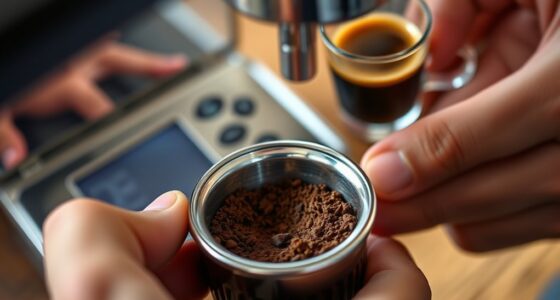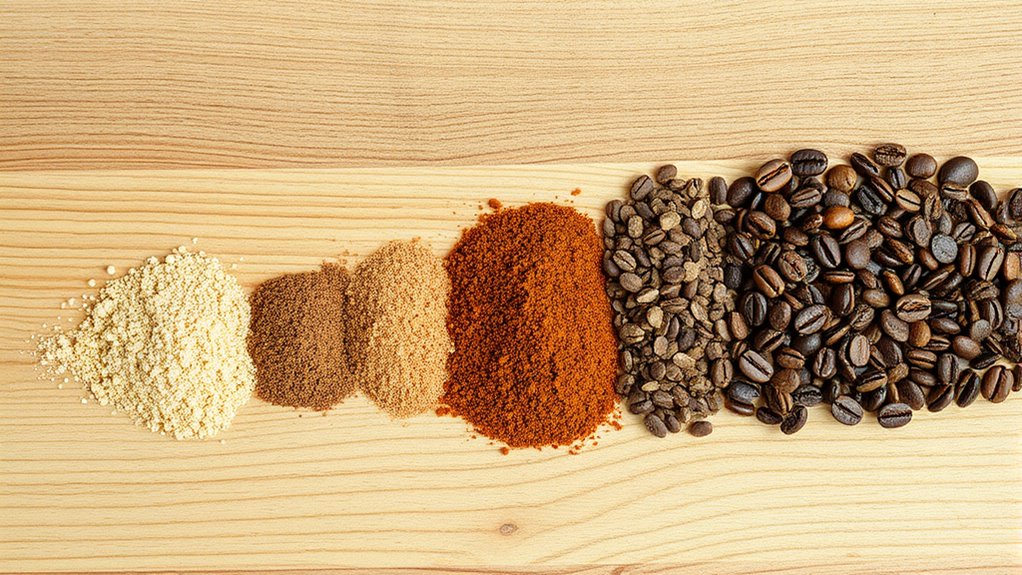

To find the right grind size for all brew methods, use a chart that matches each technique with its ideal texture. For instance, opt for a medium-fine grind for pour-over and AeroPress, a fine grind for espresso, a coarse grind for French press, and a very coarse grind for cold brew. Adjusting the grind size influences extraction and flavor, so understanding these guidelines helps unleash the full potential of your coffee—keep exploring to get it just right.
Key Takeaways
- Different brew methods require specific grind sizes, such as fine for espresso and coarse for French press.
- Medium-fine grind is ideal for pour-over and AeroPress brewing techniques.
- Cold brew demands a very coarse grind to prevent over-extraction during long steeping.
- Uniform grind size enhances extraction consistency across all brewing methods.
- Using the correct grind size maximizes flavor extraction and improves overall coffee quality.

Ever wondered how the perfect grind size can make or break your coffee experience? The secret lies in understanding how different grind levels influence your brew’s flavor profiles. When you choose the right grind, you *unlock* the full potential of your beans, revealing nuanced tastes and aroma notes that define your favorite coffee. But achieving that ideal grind isn’t just about intuition; it’s about knowing your grinding equipment options and how they impact the texture of your coffee grounds. Whether you’re using a blade grinder, burr grinder, or a manual mill, each has its own advantages and effects on your coffee’s flavor profile.
For lighter, more delicate brews like pour-over or AeroPress, a medium-fine grind works best. This grind size allows water to extract subtle flavors without overdoing the bitterness. If you’re using a burr grinder, you can easily dial in this setting, ensuring consistent results. Blade grinders, however, tend to produce uneven grounds, which can lead to inconsistent extraction and muddled flavors. When you’re making espresso, you need an even, fine grind to create the high pressure necessary for a rich, full-bodied shot. Espresso grind requires precision, and burr grinders excel here because of their ability to produce uniform particles. On the other hand, French press coffee benefits from a coarse grind, which prevents over-extraction and results in a smooth, robust flavor. If you’re using a manual grinder, it might take some effort to reach this coarseness, but it’s worth it for that bold profile.
Coarser grinds are also used for cold brew, where a very coarse texture prevents over-extraction during long steeping times. The grind size directly influences how water interacts with coffee grounds, ultimately shaping the flavor profiles you experience. Small adjustments in grind size can highlight different flavor notes—sometimes bringing out bright, fruity tones, other times emphasizing deeper, chocolaty undertones. That’s why understanding your grinding equipment options is *crucial*. Investing in a quality burr grinder gives you better control over consistency, which translates into more precise flavor extraction. Cheaper blade grinders can introduce unevenness, leading to uneven flavors and a less satisfying cup.
In the end, mastering your grind size is essential to maximizing your coffee’s flavor potential. It’s about selecting the right equipment and making small adjustments to suit your brewing method. When you pay attention to grind size and equipment options, you’re not just making coffee—you’re creating a tailored experience that highlights the unique qualities of each bean. So, next time you brew, remember that the grind size you choose is the foundation of a truly exceptional cup.
Frequently Asked Questions
How Does Grind Size Affect Brewing Time?
You’ll notice that grind size directly impacts brew time and extraction rate. When your grind is too fine, it slows down the water flow, increasing brew time and risking over-extraction, which can make your coffee bitter. Conversely, a coarser grind speeds up the process, reducing brew time and potentially under-extracting, leading to a weak flavor. Adjusting the grind size helps you control both brew time and extraction for the perfect cup.
Can I Adjust Grind Size for Different Coffee Beans?
You can absolutely adjust grind size for different coffee beans, especially considering their freshness and storage. When beans are fresher, you might need a slightly coarser grind because their oils can make the grind stick together. Proper grind size storage helps maintain consistency, so you can fine-tune your grind based on bean characteristics. Experimenting with grind size allows you to optimize flavor and extraction for every batch, ensuring a perfect brew each time.
Is a Coarser Grind Better for Cold Brew?
A coarser grind is generally better for cold brew because it helps prevent over-extraction and produces a smoother, less bitter flavor. Don’t fall for grind size myths that all methods need fine grinds; each affects brewing flavor profiles differently. For cold brew, coarser grounds steep slowly, extracting rich, balanced flavors. Adjust your grind size accordingly to optimize your brew, and experiment to find what best suits your taste.
How Often Should I Change Grind Size During Brewing?
You should change your grind size during brewing only if things go hilariously wrong, like over- or under-extraction. Usually, maintaining grind size consistency is key, so focus on grinder calibration first. Don’t keep fiddling; once you dial in the perfect grind, stick with it. If your brew’s flavor shifts unexpectedly, then it’s time to tweak your grind size again. Ironically, stability often beats constant adjustments.
What Tools Help Achieve Consistent Grind Sizes?
You can achieve consistent grind sizes by using burr grinders, which are designed to produce uniform particles. Burr grinders, whether flat or conical, help maintain grind consistency, ensuring your brew tastes great every time. Avoid blade grinders, as they produce uneven particles. Regularly calibrate your burr grinder and use dosing tools to maintain precision. This way, you get reliable, consistent grounds for your preferred brewing method.
Conclusion
Now that you’ve got this grind size chart, your brew game will never be the same. Think of it as a secret recipe, revealing the perfect cup every time. Remember, the right grind isn’t just a detail—it’s the key that turns your coffee’s potential into pure perfection. So, experiment boldly, trust your taste buds, and let this chart guide you on your flavorful journey. Your perfect brew awaits—just grind and enjoy!