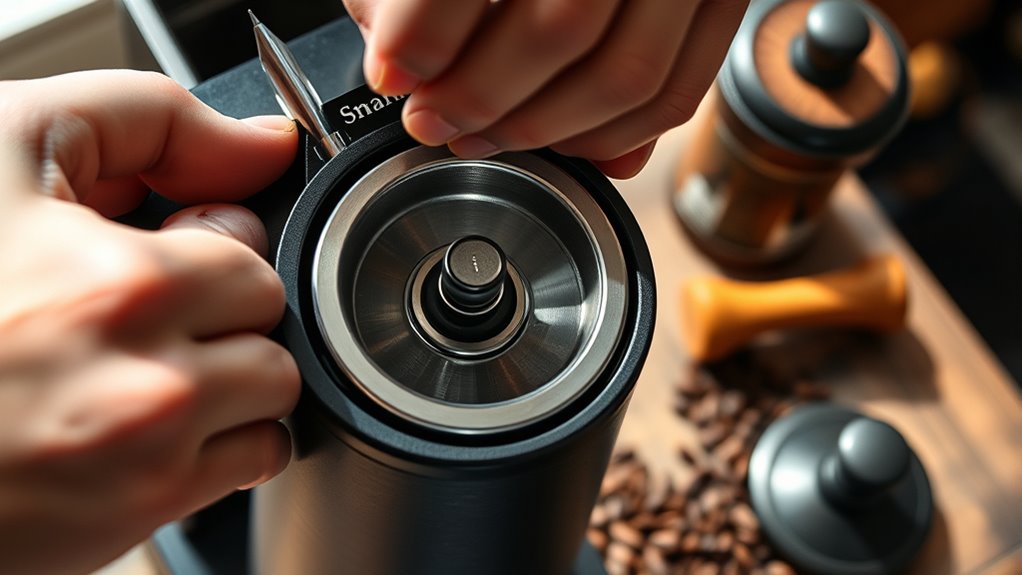

To guarantee your grinder performs well, start by unplugging it and removing the hopper to access the burrs. Clean them thoroughly and check their alignment, tightening or adjusting as needed for uniform grinding. Season your beans with a small batch first to smooth burr surfaces and reduce static. Properly aligned and seasoned burrs produce consistent grinds, improve flavor extraction, and decrease maintenance. If you want to master these steps, the details ahead will guide you through the process.
Key Takeaways
- Proper burr alignment ensures uniform grind size, consistent flavor, and prevents uneven extraction.
- Regularly inspect and tighten burrs according to manufacturer instructions for optimal performance.
- Clean burrs thoroughly to remove oils and particles, reducing static and clumping issues.
- Season beans before brewing to smooth burr surfaces, improve grind consistency, and enhance flavor clarity.
- Maintaining correct burr alignment and seasoning extends grinder lifespan and ensures high-quality coffee results.
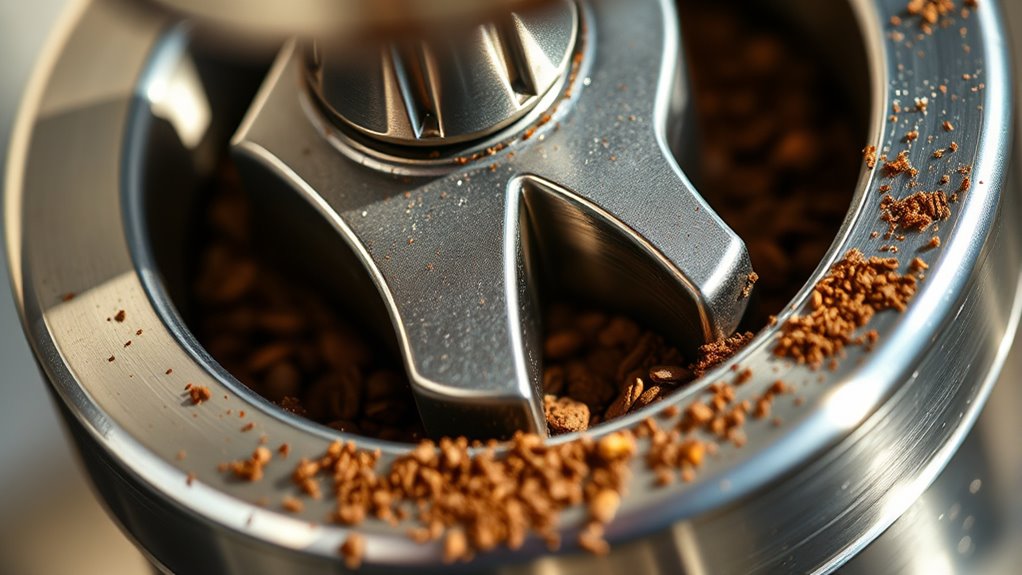
Properly aligning and seasoning your grinder burrs is essential for achieving the best coffee flavor and consistency. When your grinder burrs are correctly aligned, they produce a uniform grind size, which is vital for extracting the right flavors during brewing. Misaligned burrs can lead to uneven grounds, resulting in over-extraction or under-extraction, both of which compromise taste. To maintain peak performance, you need to focus on grinder burr maintenance regularly. This involves checking the burrs for wear, ensuring they’re tight and properly seated, and adjusting them as needed. Proper alignment not only improves grind consistency but also extends the life of your burrs by preventing uneven wear. Regular burr adjustment helps keep your grinder operating at optimal performance and ensures consistent flavor extraction.
Seasoning coffee beans plays a significant role in achieving a superior flavor profile. Before brewing with a freshly cleaned grinder, it’s advisable to run a small batch of seasoning coffee beans through the grinder. This process helps smooth out any rough spots on the burrs’ surface, reducing static and clumping issues that can interfere with a clean grind. Seasoning coffee beans effectively primes the burrs, ensuring they produce consistent grinds from the first shot of espresso or brew of drip coffee. It’s a simple but often overlooked step that makes a noticeable difference in flavor clarity and overall grind quality.
To properly perform grinder burr maintenance, start by unplugging your grinder and removing the hopper. Carefully inspect the burrs for any signs of damage or buildup of coffee oils and particles. Use a brush or a soft cloth to clean the burrs thoroughly. If your grinder allows, adjust the burrs to ensure they’re aligned perfectly—consult your manufacturer’s instructions for precise adjustment procedures. Once aligned, run a few grams of seasoning coffee beans through the grinder. Discard the initial grounds, as they might contain residual dust or uneven particles. Repeat this process a couple of times to establish a smooth, consistent grind.
Frequently Asked Questions
How Often Should I Realign My Grinder Burrs?
You should check your grinder calibration and realign the burrs every 1 to 3 months, depending on usage. Regular use causes burr wear, which can affect grind consistency. If you notice uneven grounds or a decline in flavor, it’s time for realignment. Frequent calibration ensures peak performance, maintains flavor quality, and prolongs your grinder’s lifespan. Don’t wait too long—staying ahead of burr wear keeps your coffee tasting great.
Can Seasoning Improve the Flavor of My Coffee?
You might find that seasoning your grinder actually enhances your coffee’s flavor, much like how fresh coffee beans do. When you season your grinder, it helps remove old residues, revealing the true taste of your beans. Keep in mind, coffee bean freshness greatly impacts flavor, so combine that with proper grinder maintenance tips. Over time, seasoning becomes a subtle ritual that brings out richer, more consistent profiles in every cup you brew.
What Tools Are Needed for Burr Alignment?
You need specific burr alignment tools like a feeler gauge or a caliper to guarantee precise adjustments. These tools help you measure the gap between burrs accurately. Additionally, using grinder calibration techniques, such as adjusting grind settings and testing with small coffee samples, ensures proper alignment. Proper burr alignment improves grind consistency, flavor extraction, and overall coffee quality, making your brewing process more efficient and enjoyable.
Is Seasoning Necessary for All Grinder Types?
Seasoning your grinder is like tuning a fine instrument; it’s often necessary to achieve perfect harmony. Not all grinder types require seasoning, but for those that do, it helps stabilize burr positioning and improves grind consistency. When you season your grinder, you’re fundamentally pre-conditioning the burrs, reducing uneven grinding and ensuring a consistent brew. Skipping this step might leave your coffee tasting off-key, so consider seasoning for the best results.
How Do I Tell if My Burrs Are Misaligned?
You can tell if your burrs are misaligned by inspecting the grind consistency; uneven or inconsistent grounds suggest misalignment. Check for burr wear, which may cause uneven grinding, and use alignment tools to verify proper positioning. If you notice sharp or uneven burr edges, it’s time to realign them. Regularly inspecting and adjusting your burrs ensures ideal grinding performance and prevents damage caused by misalignment.
Conclusion
So there you have it—your foolproof guide to grinder burr alignment and seasoning. Follow these tips, and you’ll be the coffee wizard everyone envies, or at least avoid the dreaded, flavorless grind. Remember, a well-maintuned grinder is like a well-behaved pet: it only responds to your commands if you keep it happy. Now go forth, tweak, season, and brew—your taste buds will thank you (or at least pretend to). Cheers to perfect coffee!