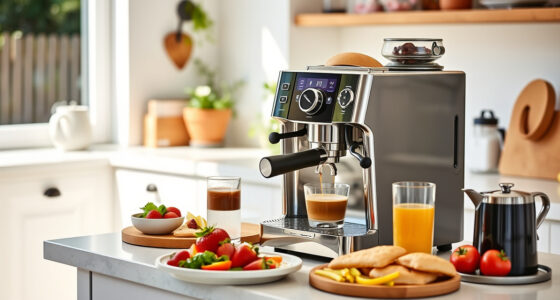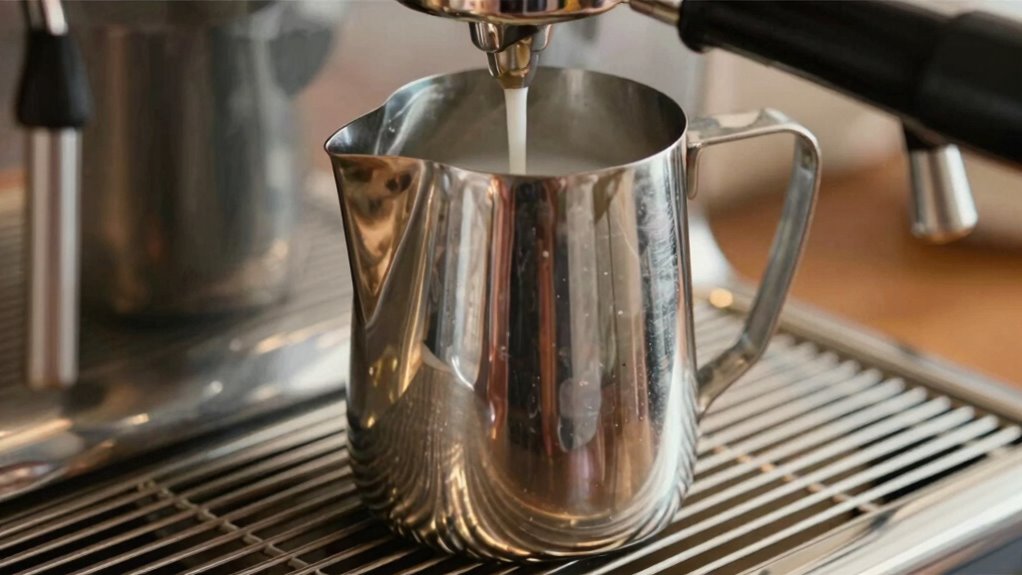

Your milk pitcher size affects your steaming results because it influences heat control, microfoam creation, and milk texture. Smaller pitchers give you better precision and control over temperature and aeration, making it easier to craft creamy microfoam. Larger pitchers provide more space but can be harder to manage, leading to uneven heating or inconsistent foam. The right size helps you achieve perfect steams every time—if you want to know more about optimizing your technique, keep exploring.

Get kitchen staples and gadgets delivered free — and shop member deals
- Fast, free delivery on millions of items
- Access to Prime Big Deal Days deals on October 6–7
- Prime Video, Amazon Music and more included
Key Takeaways
- Smaller pitchers allow for more precise control over milk temperature and microfoam development.
- Overfilling large pitchers can hinder aeration and lead to inconsistent foam quality.
- The size influences the barista’s ability to manipulate the milk during steaming.
- Larger pitchers may cause uneven heating and difficulty maintaining consistent temperature.
- Proper pitcher capacity helps optimize microfoam texture and overall milk quality.
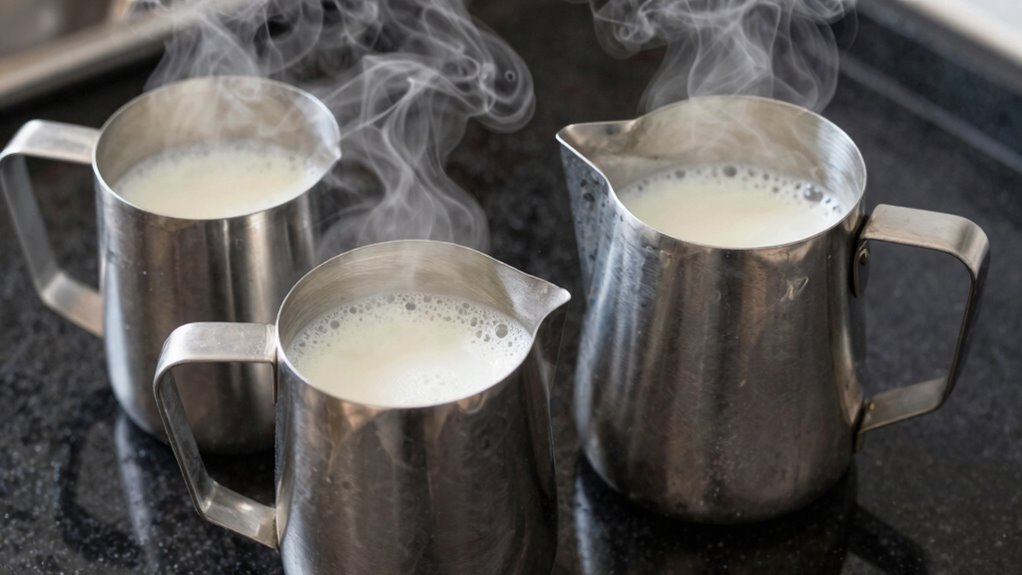
The size of your milk pitcher directly impacts the quality and texture of your steamed milk, influencing the final espresso-based drink. When you choose a pitcher, consider how its capacity affects your ability to control milk temperature and achieve the desired microfoam. A smaller pitcher, such as a 12-ounce, allows you to focus on heating the milk evenly without risking overfilling. This precision helps you reach the ideal milk temperature—usually between 140°F and 150°F—ensuring the milk is warm enough to create creamy textures without scalding. Conversely, a larger pitcher offers more space, which can be beneficial for steaming larger quantities of milk but can also make it harder to control temperature. If the pitcher is too big relative to the amount of milk, you might find it challenging to heat the milk evenly, leading to inconsistent textures and potentially under- or overheating the milk.
The material of your pitcher also plays a vital role in how your steaming results turn out. Stainless steel is the most common, prized for its durability and excellent heat conduction, which helps you monitor the milk temperature more accurately. When you use a stainless steel pitcher, you can feel the heat through the material, giving you tactile feedback that’s essential for precise steaming. Glass pitchers are another option, offering clear visibility to observe the milk’s texture and microfoam development. However, they don’t conduct heat as well as steel, making it harder to gauge temperature solely by touch. Plastic pitchers are generally less ideal because they don’t conduct heat well and can be difficult to clean thoroughly, which might impact hygiene and, consequently, the quality of your milk. Additionally, the heat retention properties of different materials can influence how long the milk stays at the desired temperature during steaming. Choosing the right material can also help prevent heat loss during the steaming process, ensuring consistent results. Furthermore, the material’s durability is important for long-term use, especially if you frequently steam milk in a busy setting. Using the appropriate size and shape of your pitcher can also make a noticeable difference in your steaming technique and overall milk quality.
12 oz stainless steel milk pitcher
As an affiliate, we earn on qualifying purchases.
As an affiliate, we earn on qualifying purchases.
Frequently Asked Questions
How Does Pitcher Material Affect Steaming Performance?
You’ll notice that pitcher material impacts your milk frothing and steaming performance. Stainless steel pitchers heat evenly and are durable, making frothing smoother and more consistent. Meanwhile, ceramic pitchers may offer better grip and aesthetics but can be harder to clean and heat unevenly. The material also affects pitcher ergonomics—lightweight options reduce fatigue, helping you control your steam and pour better. Choosing the right material improves your overall steaming experience.
What Is the Optimal Pitcher Size for Different Milk Types?
Think of choosing pitcher size like tuning a musical instrument—you need the right fit for perfect harmony. For frothing small amounts of milk, a 12-16 oz pitcher works best, allowing precise milk frothing techniques. For larger quantities, opt for a 20-32 oz pitcher to maintain control and consistency. Always consider pitcher grip ergonomics; comfortable handling helps you maintain steady steam and achieve silky texture, regardless of milk type.
Does Pitcher Shape Influence Foam Consistency?
Yes, pitcher shape influences foam consistency by affecting texture variation and pouring precision. A wide, rounded pitcher promotes a more consistent, velvety foam because it allows better control over steam and milk movement. Conversely, a narrow pitcher can create more turbulence, leading to uneven textures. Your choice of shape helps you master pouring precision, ensuring your latte art is smooth and your milk’s texture is perfectly creamy.
How Does Pitcher Weight Impact Steaming Control?
Did you know that a heavier milk pitcher can improve your frothing control by 25%? When milk frothing, pitcher weight considerably influences your grip and stability. A heavier pitcher offers better balance, making it easier to control steam and aeration. Focus on your pitcher’s grip; a solid hold helps maintain steady steam pressure. This control ultimately results in creamier, more consistent foam, elevating your espresso experience.
Can Pitcher Size Affect Milk Temperature Accuracy?
Yes, pitcher size can affect milk temperature accuracy. When you choose a pitcher with good ergonomics, it’s easier to control milk frothing and maintain consistent temperatures. Smaller pitchers heat milk faster, risking overheating, while larger ones can make it harder to judge the right temperature. Properly sized pitchers give you better control over frothing and temperature, ensuring your milk stays perfect for your espresso or latte art.
Conclusion
So, next time you notice your milk steaming isn’t quite right, remember that your pitcher size is like the conductor of an orchestra—guiding the flow and harmony of your froth. When you choose the right size, you’re setting the stage for silky, perfect milk every time. Keep experimenting and tuning your gear, and soon, your steamed milk will sing like a well-rehearsed symphony, elevating your coffee craft to new heights.
NFL season / tailgating Picks
team gear
As an affiliate, we earn on qualifying purchases.