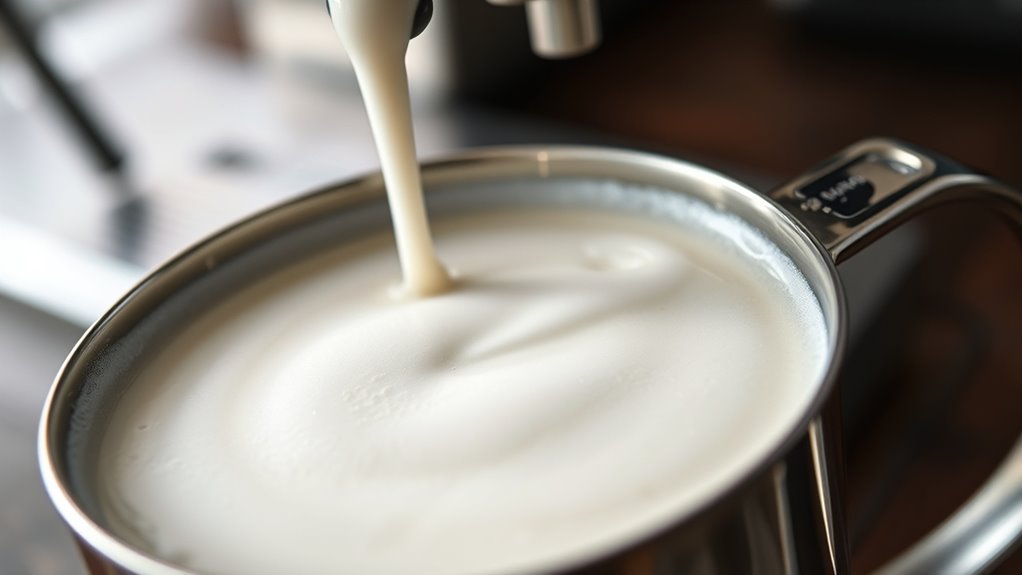

To master milk steaming for latte art, start with a clean, cold pitcher and position the steam wand just below the surface at an off-center angle. Create a whirlpool effect while gradually introducing air, aiming for microfoam with tiny, smooth bubbles. Keep the milk at around 140-150°F and maintain a steady motion until it’s glossy and velvety. If you want to learn more, you’ll find tips to perfect your technique and produce stunning latte art.
Key Takeaways
- Use a clean, cold pitcher and position the steam wand just below the surface for optimal microfoam.
- Incorporate air gradually by slightly submerging the wand and creating a whirlpool to develop fine microfoam.
- Maintain steady motion and tilt the pitcher to ensure even heating and smooth texture without large bubbles.
- Aim for a temperature of 140-150°F (60-65°C) by feeling the pitcher to prevent overheating or scorching.
- Swirl the milk after steaming to integrate foam and liquid, producing a glossy, velvety consistency ideal for latte art.
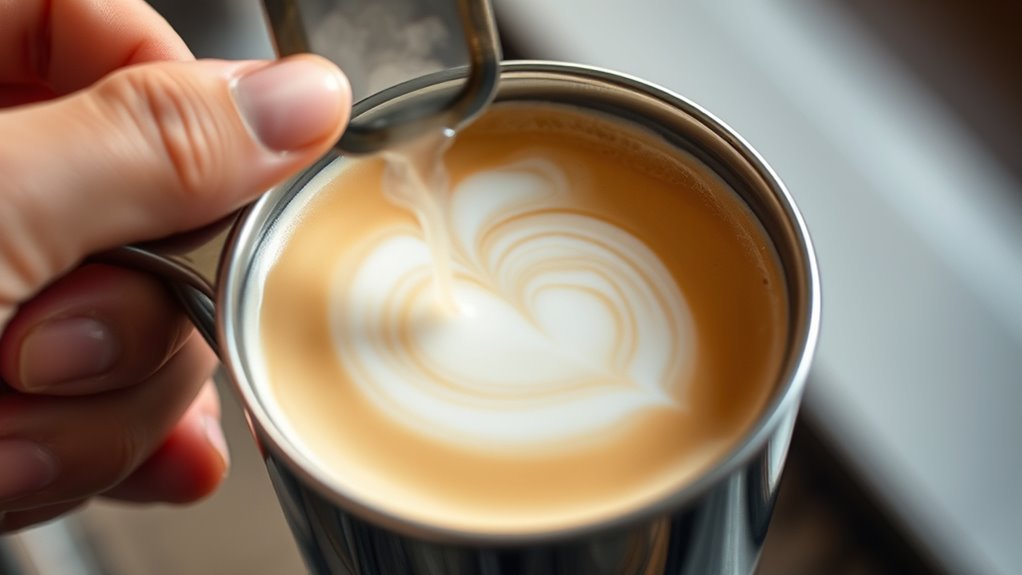
Have you ever wondered what makes perfectly steamed milk? Achieving ideal milk texture is essential for creating beautiful latte art and delivering a satisfying coffee experience. The secret lies in mastering steaming techniques that produce the right balance of microfoam and temperature, resulting in a silky, glossy consistency. When you focus on milk texture, you’re ensuring your milk is smooth, velvety, and free of large bubbles, which is vital for pouring intricate designs. The key is to keep the milk moving consistently while steaming, so you incorporate air gradually and steadily, creating fine microfoam that integrates seamlessly with the liquid.
Steaming techniques start with the right equipment and a clean, cold pitcher. Position the steam wand just below the milk’s surface and slightly off-center to create a whirlpool effect. As you turn on the steam, listen for a gentle hissing sound, which indicates that air is being incorporated into the milk. Don’t rush this step; introducing air slowly helps develop the milk’s microfoam rather than large bubbles. Once the milk begins to expand and warm, lower the pitcher to position the steam wand deeper, allowing the milk to heat evenly. The goal is to reach a temperature of around 140 to 150°F (60-65°C), feeling the pitcher warm but not hot to touch. Overheating can ruin the milk texture, making it too thick or scorched.
As you continue steaming, tilt the pitcher slightly and keep the wand submerged, maintaining a steady motion to avoid large bubbles or splatters. To refine your technique, focus on creating a consistent vortex, which helps break down larger bubbles and produce that smooth microfoam needed for latte art. Incorporating a high-pressure steam system can also help achieve the desired texture more efficiently. Once your milk has reached the right temperature and texture, turn off the steam and wipe the wand immediately to prevent residue buildup. Swirl the pitcher gently to integrate the foam with the liquid, creating a shiny, uniform surface.
With practice, you’ll learn to gauge the perfect milk texture by feel and appearance. The milk should be glossy, with a satin-like sheen, and flow smoothly when poured. Mastering steaming techniques takes patience, but it’s the foundation for stunning latte art and a better coffee experience. Remember, every step counts—from the initial positioning of the wand to the final swirl—to produce that ideal microfoam you need. Keep practicing, and soon you’ll be creating beautifully textured milk that elevates your coffee to an art form.
Frequently Asked Questions
How Can I Fix Over-Steamed Milk?
To fix over-steamed milk, start by gently swirling the pitcher to restore a smooth, shiny milk foam. Avoid adding more milk; instead, focus on reheating the existing foam with a proper steaming technique. Keep the steam wand just below the surface to create fine microfoam, then quickly stop steaming once you reach the right temperature. This helps you regain a velvety texture suitable for latte art.
What Types of Milk Produce the Best Latte Art?
You should choose whole milk or milk with higher fat content, as they produce the best microfoam quality for latte art. Look for fresh, cold milk to guarantee smooth, glossy microfoam that’s easy to pour. Avoid skim milk, as it often creates thin foam. Your milk selection directly impacts the texture and stability of your microfoam, making it easier to create intricate and clean latte art designs.
How Does Altitude Affect Milk Steaming?
At higher altitudes, you need to make altitude adjustments because lower air pressure reduces vapour pressure, making it harder to steam milk properly. You might find it takes longer to achieve the right texture, so you should increase the steaming time or temperature slightly. Keep an eye on the milk’s temperature and texture, adjusting your technique as needed to compensate for the altitude’s impact on vapour pressure for perfect latte art.
What’s the Ideal Temperature Range for Steaming Milk?
You should aim for a temperature range of 140°F to 160°F when steaming milk. Proper temperature control is essential for achieving the right microfoam and sweetness. Use your steaming techniques to guarantee even heat distribution, avoiding overheating that can scorch the milk or create large bubbles. Keep a thermometer handy and listen for a gentle hissing sound as you steam, which indicates you’re within the ideal temperature zone for perfect latte art.
How Do I Prevent Bubbles From Forming During Steaming?
A stitch in time saves nine; to prevent bubbles while steaming, focus on creating stable foam with proper microfoam techniques. Keep your steam wand just below the surface, maintaining a steady motion to avoid introducing large air bubbles. Always angle your pitcher slightly to encourage even heating and foam stability. Consistent control of steam and technique will help you achieve smooth, velvety microfoam and prevent unwanted bubbles from forming.
Conclusion
Mastering milk steaming means mastering consistency, control, and confidence. It’s about shaping your skills, refining your technique, and elevating your art. With each pour, you create not just beautiful latte art, but a moment of connection, a display of dedication, and a celebration of craft. Keep practicing, stay patient, and embrace the journey. Because in perfecting your milk steaming, you’re not just making coffee—you’re making art, expressing passion, and inspiring others along the way.