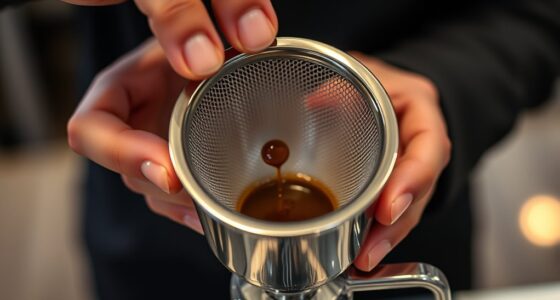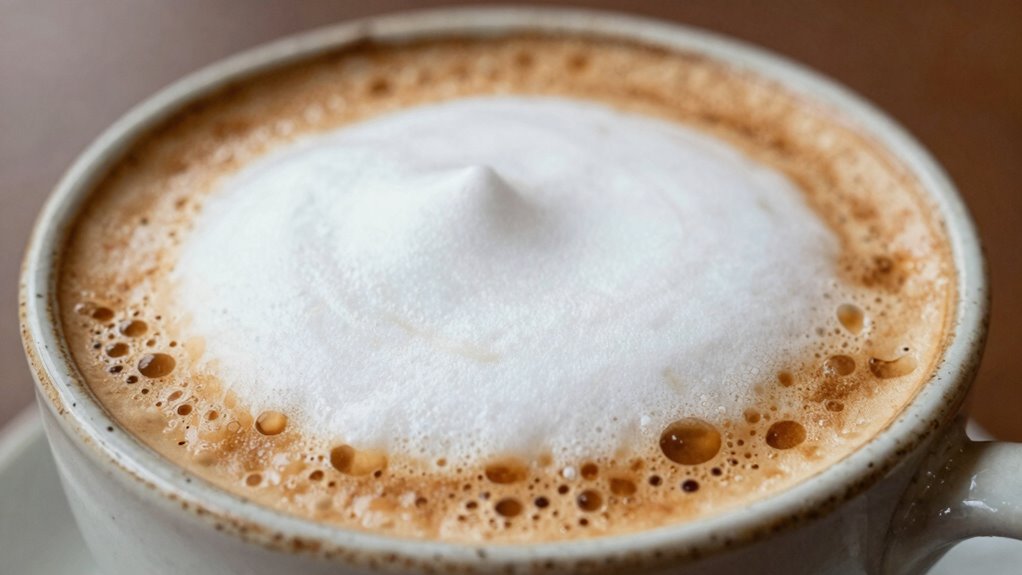

If your cappuccino collapses quickly, it’s likely due to poor frothing technique, inconsistent espresso quality, or improper pouring. Over-aeration or overly hot milk destroys the microfoam, making it fragile and short-lived. Also, if your espresso isn’t properly extracted, it won’t bind well with the milk foam, causing it to collapse faster. Mastering these steps can help you keep that perfect foam longer—keep going to discover how to make your cappuccinos last!

Get kitchen staples and gadgets delivered free with Prime
- Fast, free delivery on millions of items
- Prime Video, Amazon Music and more included
- Member-only deals all year
Key Takeaways
- Over-aeration during frothing creates fragile foam that quickly collapses.
- Excessive steaming temperature denatures milk proteins, weakening foam stability.
- Poor espresso extraction results in weak oils and acidity, destabilizing the foam.
- Delayed pouring allows bubbles to merge, causing foam to deflate prematurely.
- Improper pouring technique disturbs delicate microfoam, reducing its longevity.
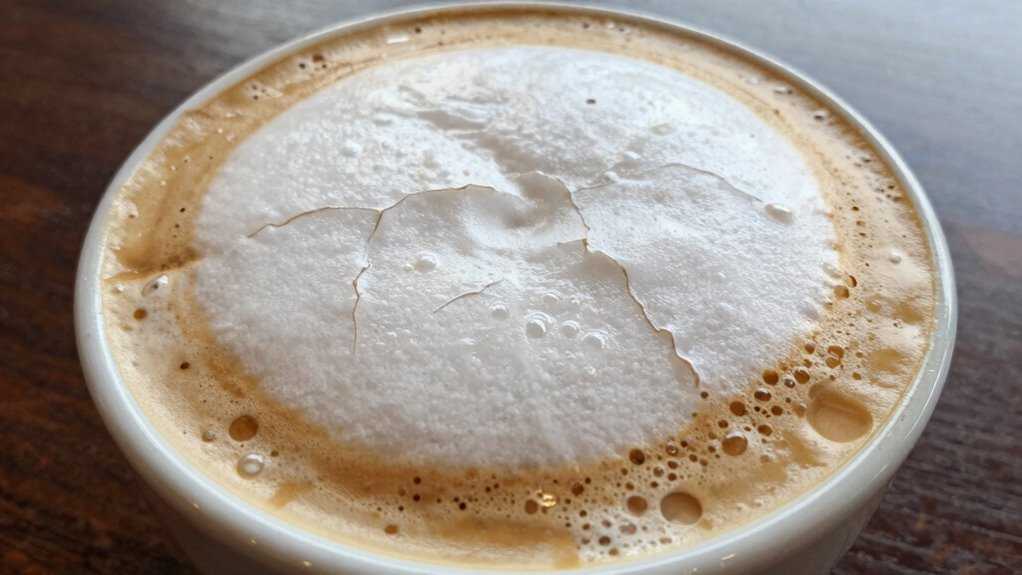
If your cappuccino’s foam collapses quickly, you’re not alone, and understanding why can help you enjoy a lasting frothy top. The main reason often comes down to how the milk frothing process is handled and how well the espresso extraction was performed. When milk is frothed correctly, it creates a stable microfoam that holds its structure, giving your cappuccino that iconic, velvety surface. But if the milk isn’t steamed properly or the foam is over-aerated, it loses its stability quickly, causing the foam to collapse sooner than you’d like.
Milk frothing is a delicate balance. If the milk is steamed too aggressively or at too high a temperature, the proteins and fats in the milk can be denatured, leading to larger bubbles that aren’t as stable. This results in a foam that’s airy but fragile, which collapses faster. Conversely, if the milk isn’t aerated enough, the foam will lack volume and won’t cling together well, making it more prone to sinking or disappearing rapidly. Achieving the right texture involves introducing air gently and controlling the temperature—around 140-150°F (60-65°C)—to produce a creamy, dense microfoam that resists collapse. Additionally, proper espresso extraction contributes significantly to foam stability, as it ensures the correct balance of oils and acidity needed to interact with the milk. The consistency of the espresso shot also plays a role in creating a stable foam, as a well-extracted shot provides the necessary coffee oils that help bind the microfoam.
Proper steaming creates stable microfoam by balancing air and temperature, preventing quick foam collapse.
A further consideration is the milk temperature during steaming, as overheating can lead to destabilized foam. When your espresso is brewed correctly, it’s rich in oils and has a balanced acidity, which interacts well with the milk to create a cohesive foam. If the espresso is under-extracted, it may be too thin or sour, causing the foam to separate or break apart quickly. Over-extraction can produce a bitter, overly strong espresso that disrupts the delicate balance needed for stable foam. Proper extraction ensures that the espresso has a smooth, syrupy consistency, which helps the foam stay intact longer. Also, steam wand technique plays a vital role in creating a stable foam, as the angle and depth of the wand influence how evenly the milk is aerated and heated. Furthermore, the stability of microfoam can be affected by the cleanliness and condition of your steam wand, as buildup or clogging can lead to uneven steaming and inconsistent foam quality.
Another factor to reflect upon is the timing between steaming the milk and pouring your cappuccino. If you let the milk sit too long, the microfoam can start to deflate as bubbles merge and break apart. Pouring immediately after steaming preserves the foam’s structure, giving it a better chance to stay fluffy. Additionally, the way you pour the milk influences foam stability. A steady, controlled pour allows the microfoam to sit on top without disturbing its structure, helping your cappuccino stay frothy for longer.
milk frothing pitcher for espresso
As an affiliate, we earn on qualifying purchases.
As an affiliate, we earn on qualifying purchases.
Frequently Asked Questions
Can the Type of Milk Affect Cappuccino Stability?
Yes, the type of milk affects cappuccino stability. Milk composition plays a big role; whole milk creates a creamier, more stable foam, while skim milk produces lighter foam that may collapse faster. Milk additives, like stabilizers or thickeners, can also improve foam longevity. So, choosing the right milk and considering additives helps you craft a cappuccino with a longer-lasting, well-formed foam.
Does the Temperature of the Milk Influence Foam Longevity?
Think of milk temperature like tuning a finely crafted instrument: it directly impacts foam longevity. When you steam milk too hot, the proteins destabilize, causing foam to collapse quickly, much like a poorly tuned string. Cooler milk maintains ideal protein stability and milk fat integrity, resulting in longer-lasting foam. So, keeping your milk at the right temperature preserves the delicate balance needed for a stable, enduring cappuccino froth.
How Does Altitude Impact Cappuccino Foam?
Altitude effects can markedly impact your cappuccino foam, as lower atmospheric pressure at higher elevations weakens foam stability. You may notice your foam collapses faster or doesn’t form as well because the reduced air pressure makes it harder for bubbles to hold their shape. To improve foam stability at high altitudes, try using fresher milk, adjusting your steaming technique, or adding stabilizers. These tweaks can help you achieve a longer-lasting, creamy cappuccino foam.
Are There Specific Coffee Beans That Produce Better Foam?
Are there coffee beans that produce better foam? Absolutely. Think of it as a symphony where the bean origin and roast level set the tone. Light roasts from regions like Ethiopia often yield more stable foam, while medium roasts from Latin America can offer richer textures. You should experiment with different bean origins and roasts, as they directly influence the quality and longevity of your cappuccino foam.
Can Storage Methods Affect the Cappuccino’s Structure?
Yes, storage methods can affect your cappuccino’s structure. Using airtight storage containers preserves freshness and prevents moisture from degrading the milk or coffee, which impacts foam stability. Proper preservation techniques, like keeping milk chilled and sealed tightly, help maintain its frothing quality. When you store milk or coffee improperly, the foam may collapse faster because the ingredients lose their ideal texture, making your cappuccino less stable and less enjoyable.
Conclusion
So, next time your cappuccino collapses too quickly, remember it’s not just about the foam—it’s about understanding the delicate dance of milk and air. Like a fleeting kiss, its beauty fades faster than you’d like, reminding you to savor each sip. Embrace the imperfections, for they tell a story of craftsmanship and fleeting moments. In this fragile art, you find a reminder: some of the best things in life are meant to be enjoyed before they disappear.
Halloween Picks
halloween
As an affiliate, we earn on qualifying purchases.