TL;DR

Get kitchen staples and gadgets delivered free with Prime
- Fast, free delivery on millions of items
- Prime Video, Amazon Music and more included
- Member-only deals all year
Hormel Foods announced it will acquire Wisconsin-based chicken processor Brakebush Brothers for $1.055 billion. The deal, expected to close in the first quarter of Hormel’s fiscal 2027, strengthens Hormel’s position in value-added chicken and its growing foodservice business.
Hormel Foods is expanding deeper into protein with a $1.055 billion acquisition of Brakebush Brothers, a family-owned maker of value-added chicken products, the company announced Sept. 30, 2026. The deal gives the Spam and Jennie-O producer a larger presence in one of the fastest-growing corners of the protein market and adds scale to its foodservice operations, which have outperformed its larger retail business in recent quarters.
Brakebush Brothers, founded in 1925 and headquartered in Wisconsin, generated approximately $1.2 billion in net sales during the last year, according to Food Dive, which first reported the deal. The company predominantly serves foodservice customers, a channel where Hormel has been steadily building its presence. The purchase is expected to close during the first quarter of Hormel’s fiscal 2027, which ends in late January.
Hormel described the acquisition as a way to expand in value-added chicken products, a category the company views as one of the most attractive growth areas in protein. John Ghingo, Hormel’s president and incoming CEO, said the deal strengthens the company’s foodservice operations through added scale, expertise and customer reach.
The acquisition fits into a broader strategy at the 135-year-old Hormel, whose portfolio spans Applegate organic meats, its namesake chili, Planters nuts and Skippy peanut butter. The company has positioned itself as a beneficiary of rising consumer demand for protein, with an estimated 70% of Americans saying they want more protein in their diets, up from 59% four years earlier, according to the International Food Information Council. Growing use of GLP-1 weight-loss drugs has added to that demand as consumers on the medications seek protein to fill nutritional gaps.
Why Chicken and Foodservice Drive the Deal
The deal matters because it shifts more of Hormel’s business toward two areas performing better than the rest of its portfolio: chicken and foodservice. Hormel’s sales are heavily skewed toward retail, which accounts for more than 60% of revenue, while foodservice makes up close to one-third. In its most recent quarter, Hormel cut its net sales and organic growth outlook for fiscal 2026 amid declines in commodity turkeys, private label snack nuts and cautious consumer spending tied to inflation. Its foodservice segment, by contrast, posted a 2% increase in organic net sales.
For consumers and industry watchers, the acquisition signals continued consolidation in packaged food as companies chase protein demand. Ghingo told Food Dive that Hormel’s “protein-centric” portfolio gives it a “unique” growth opportunity compared with food makers hit hard by the pullback in consumer spending. “Protein, in particular, has seen real resilience,” Ghingo said. “The fact that our portfolio is centered around protein is a really good place to be.”
Hormel’s Path to a Protein-Centered Portfolio
Hormel has spent years building a portfolio that extends far beyond its flagship Spam brand, spanning turkey through Jennie-O, natural and organic meats through Applegate, and snacking through Planters and Skippy. That positioning has aligned the company with one of the strongest trends in food: consumers across age groups say they want more protein in their diets, and the rise of GLP-1 medications has reinforced the shift.
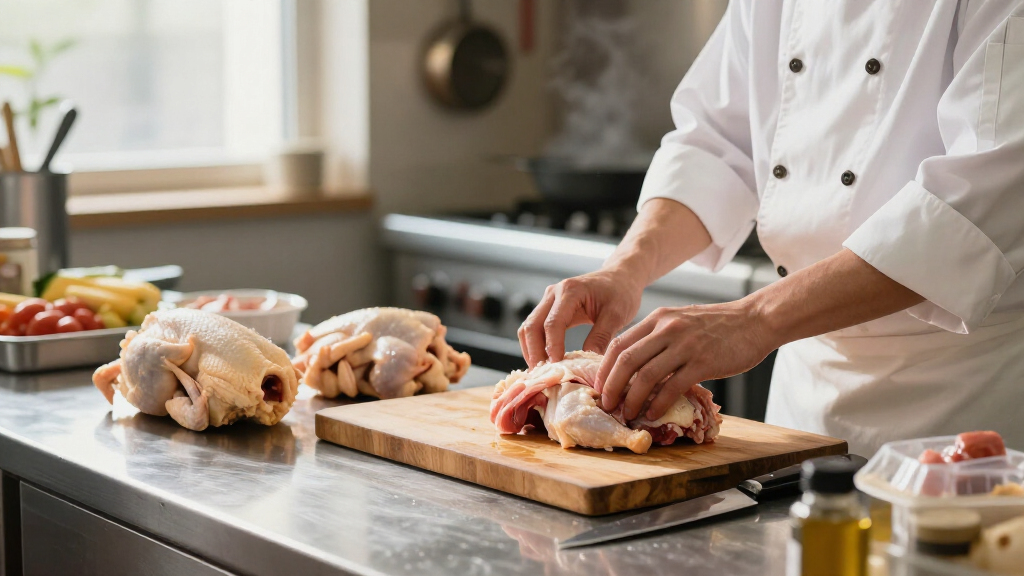
The Brakebush purchase is the latest move to deepen that exposure. Chicken demand has grown steadily as a relatively affordable, versatile protein, and value-added chicken products — prepared, breaded or seasoned items sold largely to restaurants and institutions — carry higher margins than raw commodity meat. Brakebush, a century-old family business with about $1.2 billion in annual sales, brings Hormel established foodservice relationships and manufacturing scale in that segment. The announcement also comes as Ghingo prepares to take over as CEO, adding a sizable deal to the early agenda of the incoming leadership.
“Chicken has been one of the most attractive growth categories in protein, and Brakebush has built an exceptional platform to serve that demand.”
— John Ghingo, Hormel president and incoming CEO
Deal Terms and Integration Still Pending
The acquisition has not yet closed. It is expected to be completed in the first quarter of Hormel’s fiscal 2027, ending in late January, meaning the transaction could still face regulatory review, financing conditions or other closing hurdles typical of deals of this size. Hormel has not publicly detailed how Brakebush will be integrated, whether any leadership or staffing changes are planned, or precisely how the deal will be financed.
It also remains unclear how quickly the acquisition will affect Hormel’s financial results. The company recently lowered its fiscal 2026 net sales and organic growth outlook, and it has not specified what contribution Brakebush is expected to make to earnings once the deal closes.
Closing Timeline and Hormel’s Next Moves
Investors and industry observers will watch for the deal’s closing during the first quarter of Hormel’s fiscal 2027, which ends in late January. Hormel is expected to provide more detail on the acquisition’s financial impact, integration plans and any contribution to guidance in upcoming earnings calls.
The transaction also marks an early test for John Ghingo, who is set to become CEO, and signals that further investment in protein and foodservice is likely to remain central to Hormel’s strategy. Additional moves — whether organic growth in chicken, further acquisitions, or expansion of foodservice capacity — would be consistent with the direction the company has outlined.
Key Questions
What is Hormel acquiring?
Hormel Foods is acquiring Brakebush Brothers, a family-owned Wisconsin company founded in 1925 that makes value-added chicken products, for $1.055 billion.
When will the deal close?
The acquisition is expected to close during the first quarter of Hormel’s fiscal 2027, which ends in late January 2027.
How big is Brakebush Brothers?
Brakebush generated approximately $1.2 billion in net sales during the last year, according to Food Dive, and predominantly serves foodservice customers such as restaurants and institutions.
Why is Hormel buying a chicken processor?
Hormel says chicken is one of the most attractive growth categories in protein, and Brakebush adds scale, expertise and customer reach to its foodservice business. Demand for protein is rising, with 70% of Americans saying they want more in their diets, according to the International Food Information Council.
How does this fit Hormel’s current business?
Retail makes up more than 60% of Hormel’s sales and has faced pressure from cautious consumer spending. Foodservice, close to one-third of the business, grew 2% in organic net sales in the most recent quarter, making it a target for expansion.
Source: rss
Fall Picks
fall essentials
As an affiliate, we earn on qualifying purchases.