🔍 Read the full analysis: Pasta Al Forno: The Baked Sunday Pasta Of The South on Mad Tasting

Get kitchen staples and gadgets delivered free with Prime
- Fast, free delivery on millions of items
- Prime Video, Amazon Music and more included
- Member-only deals all year
TL;DR
Pasta al forno means “baked pasta,” not one fixed recipe. Southern Italian versions vary by household and region; cooking pasta just shy of done and using plenty of sauce helps keep the casserole tender.
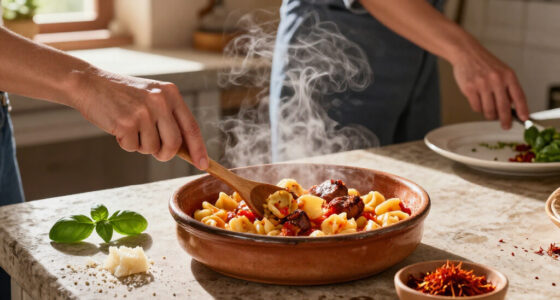
Pasta al forno, the Italian term for “baked pasta,” describes a family of dishes rather than a single canonical recipe, according to a guide from Mad Tasting. The guide outlines how Southern Italian households adapt the casserole with ingredients such as ragù, eggplant, peas and cheese, and says keeping the pasta undercooked before baking and the mixture well-sauced helps prevent a dry result.
The dish brings together cooked pasta, sauce, cheese and often additional ingredients, then bakes them until the center is hot and the surface browned. The guide presents it as a meal suited to Sunday lunch and shared tables: cooks can assemble a casserole ahead of serving, bake it, then let it rest briefly so portions hold together.
Recipes vary. Some Sicilian versions may include eggplant, peas or hard-boiled eggs, sometimes with small meatballs. Other Southern Italian versions may use ragù, mozzarella, ricotta or cured meat. These are examples rather than required ingredients, and the guide says family traditions and available ingredients shape each pan.
For a reliable bake, the guide recommends sturdy short pasta such as rigatoni, penne or ziti, which can hold sauce and filling. Cook the pasta just shy of al dente because it will continue cooking in the oven. Use enough sauce to keep the mixture moist; leftover cooked pasta may need additional sauce because it has already absorbed liquid. Mozzarella can provide melted pockets, ricotta a creamy layer, and grated hard cheese extra flavor and browning.
Pasta Al Forno The Baked Sunday Pasta of the South
Pasta al forno means “baked pasta,” a flexible Southern Italian tradition shaped by household and regional tastes. A tender bake depends on pasta cooked just shy of done and plenty of sauce.
One name, many versions
The method defines the dish; there is no single required ingredient list.
Eggplant and more
Some versions may include eggplant, peas, hard-boiled eggs or small meatballs.
Choose a direction
Ragù, mozzarella, ricotta or cured meat can shape a household’s bake.
Build a tender casserole
Sturdy short pasta holds sauce and filling through baking.
Rigatoni, penne and ziti are examples suited to the casserole.
Stop just shy of al dente so it can finish in the oven.
Coat pasta generously; leftovers may need extra sauce because they have absorbed moisture.
Bake until hot and browned, then rest briefly so portions hold together.
Why it suits a shared meal
Prepare the casserole ahead, bake it while organizing the meal, and serve after a short rest.
- Browned surface
- Tender, saucy middle
- Ingredients adapted to what is on hand
- Sauce protects the pasta
- Cheese enriches and binds
- Time in the oven browns the top
The guide’s main point is that pasta al forno is adaptable by design. Its name describes the cooking method, so readers do not need to follow one authoritative ingredient list to make a version of the dish. That flexibility makes the casserole a practical way to use leftover sauce and combine small amounts of ingredients already on hand.
For a Sunday meal, the format also allows much of the preparation to happen before people sit down. A casserole can bake while the rest of the meal is being organized, then rest before serving. The result, as described in the guide, pairs a browned top with a tender, saucy middle—an outcome that depends on moisture and timing, not simply on adding more cheese.
The regional examples offer a way to make deliberate choices without treating them as strict rules. A cook might build around eggplant, ragù or a particular cheese, then use other available ingredients to complete the pan. The guide frames that approach as a way to keep the finished dish coherent while preserving its household character.
Products Worth Considering

Instant Pot Pro 6-Quart 10-in-1 Electric Pressure Cooker

Weber Smokey Mountain Cooker 14 Charcoal Smoker

Instant Pot Duo Plus 6-Quart 9-in-1 Electric Pressure Cooker
As an affiliate, we earn on qualifying purchases.
Regional Recipes, Not One Formula
The source guide distinguishes pasta al forno from dishes defined by a more specific format. It describes pasta al forno broadly as pasta mixed with sauce, cheese and other ingredients before baking. Its identity comes from the method and the range of local or family variations, rather than a single standard recipe.
In the guide’s examples, Sicilian cooks may use eggplant, peas and hard-boiled eggs, while other Southern Italian households may lean on ragù, mozzarella, ricotta or cured meat. A cook can use those examples as inspiration, but they should not be read as a complete map of regional practice or as ingredients present in every household’s version.
The guide also notes that short pasta shapes suit the casserole because their ridges, openings or tubes catch sauce and small pieces of filling. Rigatoni can work with chunky ragù, while penne and ziti offer other shapes for holding or layering ingredients. The choice depends on the sauce and filling, not on a single prescribed pairing.
““The name means ‘baked pasta,’ but it does not point to one official recipe.””
— Mad Tasting guide
Limits of the Regional Examples
The source is a cooking guide, not a survey of Italian food practices. It gives examples of ingredients associated with some versions but does not establish how common each recipe is across Southern Italy or within particular towns and households. It also does not provide a complete recipe with quantities, oven temperature or baking time.
The guidance to cook pasta just shy of done and keep the mixture saucy is practical advice, but the precise amount of sauce and time in the oven will depend on the pasta, casserole size and ingredients. Readers should not treat the examples as rules that define every regional version.
Building a Tender Sunday Bake
The guide’s next step for a home cook is to choose a clear direction—such as eggplant, ragù or a particular cheese—and match it with a sturdy short pasta. Cook the pasta slightly less than fully done, combine it with enough sauce, add the chosen filling and cheese, then bake until hot and browned. Let the casserole rest briefly before cutting and serving.
Anyone using leftovers should account for how much moisture the pasta has already absorbed and add sauce as needed. For guests with allergies, the guide flags milk as a common allergen in cheese; check product labels and ask about dietary needs, using separate utensils and serving dishes where needed.
Key Questions
What does pasta al forno mean?
It means “baked pasta” in Italian. The term refers to a family of baked pasta dishes, not one fixed recipe.
Which pasta shapes work well?
The guide recommends sturdy short shapes such as rigatoni, penne and ziti. Their tubes, ridges or openings can hold sauce and pieces of filling.
How do you keep pasta al forno from drying out?
Cook the pasta just shy of al dente and coat it generously with sauce before baking. The guide says already-cooked leftover pasta may need extra sauce because it has absorbed moisture.
What ingredients can go into a Southern Italian version?
Examples in the guide include ragù, mozzarella, ricotta and cured meat; some Sicilian versions may include eggplant, peas or hard-boiled eggs. These are possibilities, not requirements.
Does pasta al forno contain common allergens?
Cheese contains milk, a common allergen. Check labels and ask guests about allergies; use separate utensils and serving dishes when needed.
Source: Mad Tasting