🔍 Read the full analysis: Sunday Pot Of Minestrone: The Vegetable Soup That Feeds The Week on Mad Tasting

Get kitchen staples and gadgets delivered free — and shop member deals
- Fast, free delivery on millions of items
- Access to Prime Big Deal Days deals on October 6–7
- Prime Video, Amazon Music and more included
TL;DR
Mad Tasting’s guide describes Sunday minestrone as a make-ahead meal that can provide four to six meals, with leftovers refrigerated for four to five days or frozen for about three months. It recommends building flavor with soffritto and a Parmigiano-Reggiano rind, and cooking pasta separately to help preserve the soup’s texture.
Mad Tasting’s minestrone guide sets out a Sunday cooking method intended to provide four to six meals through the week, with the soup refrigerated or frozen and pasta cooked separately. The advice centers on building flavor with a slow-cooked vegetable base and preventing noodles from soaking up the broth in storage.
The guide describes minestrone as a substantial Italian vegetable soup built from soffritto—onion, carrot and celery gently cooked in olive oil—along with beans and often pasta or rice. It presents the dish as flexible rather than tied to a single ingredient list: vegetables change with the season, while beans and a carefully cooked base provide continuity.
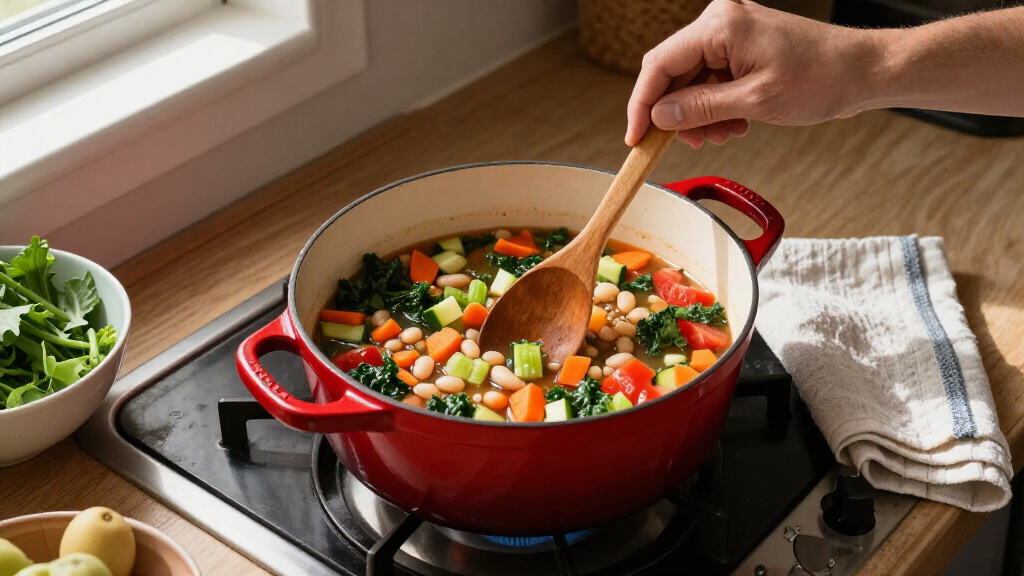
Its suggested sequence begins with 15 to 20 minutes of gently sweating diced onion, carrot and celery. Garlic and vegetables that need longer cooking go in next, followed by beans and tomato. Water or light vegetable stock and a Parmigiano-Reggiano rind form the simmering liquid; the guide recommends cooking that mixture for 30 to 40 minutes. More delicate vegetables and greens are added near the end.
The key storage instruction is to cook pasta in a separate pot and add it to individual bowls when serving. According to the guide, pasta left in soup continues absorbing liquid, which can leave it swollen and soft. It gives a refrigerator life of four to five days and a freezer life of about three months, provided the soup is cooled and stored promptly.
A Sunday cook-up • A week of warm bowls
Sunday Pot of Minestrone: The Vegetable Soup That Feeds the Week
A flexible Italian vegetable soup built for make-ahead meals: take time with the soffritto, simmer beans with a Parmigiano-Reggiano rind, and cook pasta fresh for each serving.
“Cook the pasta separately. Always.”Mad Tasting
Build the pot in stages
Layer ingredients by cooking time. Keep the base gentle, then add tender vegetables near the finish.
Soften the base
Gently sweat diced onion, carrot and celery in olive oil for 15–20 minutes without browning.
Add aromatics
Stir in garlic and vegetables that need more time to cook.
Simmer for depth
Add beans, tomato, water or light stock, and a Parmigiano-Reggiano rind. Simmer 30–40 minutes.
Finish with greens
Add delicate vegetables and leafy greens near the end so they keep their texture.
Serve with pasta
Cook pasta separately and add it to each bowl just before serving.
Keep the method; change the harvest
Minestrone reflects cucina povera: resourceful home cooking shaped by the garden and pantry.
Soffritto + beans
Onion, carrot and celery create the flavor base. Borlotti or cannellini beans bring body and help the soup feel substantial.
Follow what’s available
Try peas in spring, zucchini in summer, or squash and cabbage in winter. Regional versions vary across Italy.
Save the cheese rind
A Parmigiano-Reggiano rind simmers with the broth to add depth. Keep spare rinds in the freezer for another pot.
Protect the broth and the texture
The soup base waits well. Pasta is best cooked fresh, portion by portion.
Storage window
Cool promptly and store in airtight containers. Storage times are the guide’s recommendations; conditions and handling can affect quality.
Why pasta stays separate
Noodles left in broth keep absorbing liquid in storage. They can swell and turn soft, while the soup loses broth.
Cook only what you need for the meal, then spoon fresh pasta into individual bowls. The source also notes the broth may taste fuller after a day or two as beans break down and thicken it.
Reheat portions until steaming hot throughout; the guide gives approximately 165°F as a thermometer check.
What to expect from the batch
Yield depends on pot size and serving portions. Treat the guide’s numbers as estimates.
Several meals ahead
The guide estimates 4–6 meals; its recipe discussion also mentions roughly 10–12 servings from a standard Dutch oven. Exact quantities and serving sizes are not specified.
Choose a regional finish
Ligurian minestrone may be finished with pesto; Tuscan servings may accompany day-old bread. Tomato and summer zucchini appear in southern versions.
Cool, portion, reheat
Use shallow containers and cool promptly. Thaw frozen soup safely, reheat only the portion needed, and cook fresh pasta separately.
Before you ladle
How long does minestrone keep?
The guide recommends 4–5 days in airtight containers in the refrigerator, or about three months in the freezer. Cool it promptly.
Can the vegetables change?
Yes. The soup is presented as a seasonal template: peas in spring, zucchini in summer, and squash or cabbage in winter.
Why add pasta at serving?
Pasta stored in the soup absorbs broth and can become swollen and soft. Freshly cooked pasta keeps its texture.
What does the cheese rind do?
The guide says a Parmigiano-Reggiano rind adds depth to the broth during the simmer.
A Make-Ahead Meal That Holds Its Texture
The approach is aimed at households that want one cooking session to supply several later meals. The guide estimates that a Sunday pot can provide four to six meals, while its recipe discussion says a standard Dutch oven may yield roughly 10 to 12 servings; the exact yield will depend on pot size and portions. The practical benefit is having a prepared base that can be reheated and paired with freshly cooked pasta.
Separating pasta addresses a common quality problem in make-ahead soup: noodles left in broth can soften as they absorb liquid. The guide also says the soup may taste fuller after a day or two as beans break down and thicken the broth. That flavor change is an observation from the source, rather than a guarantee for every recipe or batch.
A Seasonal Italian Soup Tradition
The guide links minestrone to cucina povera, or resourceful home cooking that uses available garden and pantry ingredients. It says regional versions differ: Ligurian minestrone may be finished with pesto, Tuscan servings may accompany day-old bread, and southern versions may use tomatoes and summer zucchini. These examples underline its central point that the soup is a seasonal template rather than a fixed recipe.
The source recommends borlotti or cannellini beans and suggests using vegetables suited to the season, such as peas in spring, zucchini in summer, or squash and cabbage in winter. Its flavor advice is to give the soffritto time to soften without browning and to use a saved cheese rind during the simmer. The guide characterizes the rind as a low-cost way to add depth to the broth.
““Cook the pasta separately. Always.””
— Mad Tasting
Yield and Storage Depend on the Batch
The source does not provide a complete, tested recipe with exact quantities for every ingredient, nor does it specify how serving size produces its estimates of four to six meals and 10 to 12 servings. Those figures should be treated as estimates rather than fixed yields. The guide gives general storage periods but does not describe how they vary with refrigerator temperature, container size or handling.
Its supplied storage guidance says to cool soup promptly, refrigerate it in airtight containers for four to five days, and freeze it for about three months. It recommends reheating portions until steaming hot throughout, approximately 165°F if checked with a thermometer. The source excerpt ends during its discussion of reheating, so it does not provide further details on that point.
Cook, Cool and Reheat Portions
The guide’s next steps for a home cook are to prepare the soup base, simmer it with beans and a cheese rind, and add tender vegetables near the end. Cook only the pasta needed for the meal, then portion the remaining soup into shallow containers and cool it promptly before refrigeration or freezing.
For later meals, thaw frozen soup safely, reheat only the portion being served until steaming hot throughout, and cook fresh pasta separately. The source offers a method rather than reporting a broader development; it does not identify a publication date or say whether additional recipe testing or updates are planned.
Key Questions
How long does minestrone keep?
Mad Tasting’s guide says to refrigerate it in airtight containers for four to five days or freeze it for about three months. It also advises cooling the soup promptly.
Why cook the pasta separately?
Pasta stored in the soup continues to absorb broth and can become swollen and soft. The guide recommends adding freshly cooked pasta to each bowl when serving.
Can the vegetables change with the season?
Yes. The guide presents minestrone as a flexible soup, suggesting seasonal choices such as spring peas, summer zucchini, and winter squash or cabbage.
What does a Parmigiano-Reggiano rind add?
The guide says simmering a rind in the soup adds depth to the broth. It suggests saving cheese rinds in the freezer until needed.
Source: Mad Tasting
Fall Picks
fall essentials
As an affiliate, we earn on qualifying purchases.