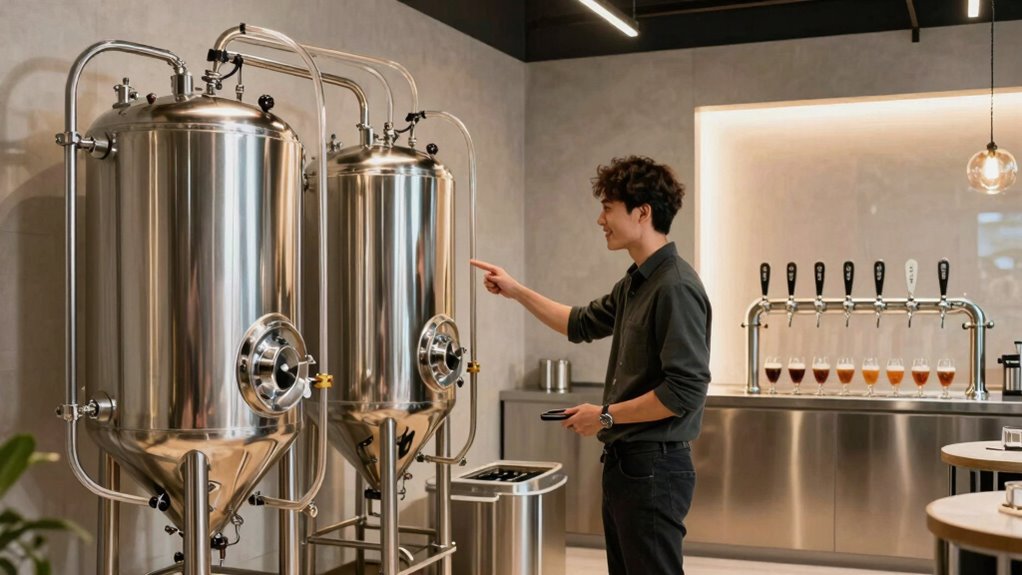

A glycol beer system keeps your beer cold and consistent from the fermentation stage all the way to pouring into a glass. It works by circulating a chilled liquid through pipes near your tanks and taps, absorbing heat to maintain the right temperature. This process helps you control the quality and flavor, ensuring every sip is fresh and perfect. If you want to know more about how it all works smoothly, keep exploring the details.

Get kitchen staples and gadgets delivered free with Prime
- Fast, free delivery on millions of items
- Prime Video, Amazon Music and more included
- Member-only deals all year
Key Takeaways
- Glycol systems keep beer at the right temperature from brewing to serving.
- They circulate a cold liquid to absorb heat and maintain consistent temperatures.
- These systems use insulated pipes to prevent heat from affecting the beer.
- They help ensure beer tastes fresh and stays at the perfect chill.
- Glycol systems improve brewing quality and make serving beer easier and more reliable.
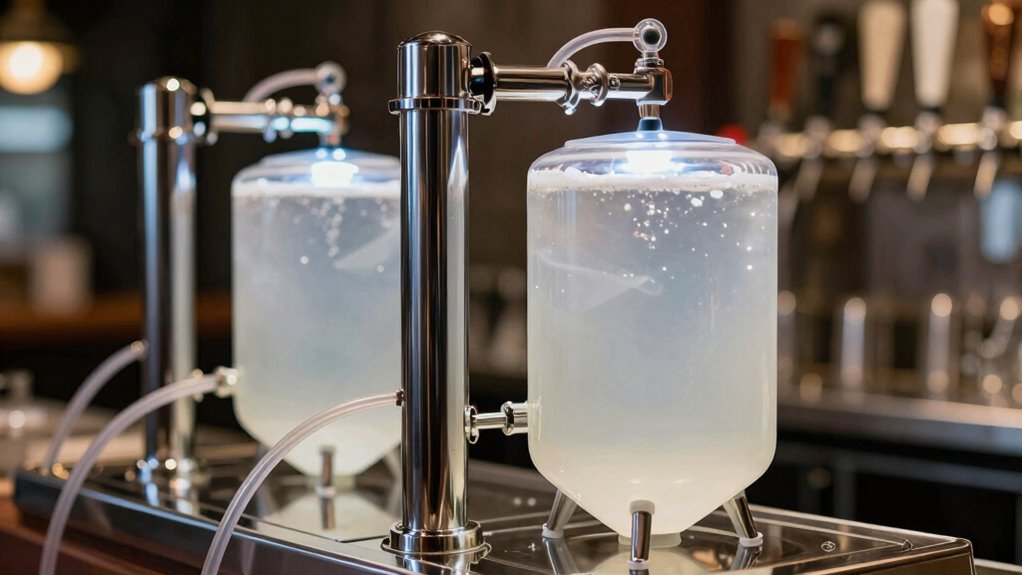
Have you ever wondered how breweries keep their beer perfectly chilled and maintain consistent quality from the fermenter to the tap? The secret lies in a clever system called glycol beer systems. While it might sound complicated, it’s really just a smart way to handle fermentation cooling and temperature regulation. When beer ferments, it produces heat. If that heat isn’t managed, the beer can spoil or develop unwanted flavors. That’s where glycol systems come in, helping breweries control temperature with precision.
Glycol systems keep beer at the perfect temperature from fermentation to tap, ensuring quality and consistency every time.
A glycol system works by circulating a chilled liquid—glycol—through pipes that run near or inside the tanks. Think of glycol as a super-efficient coolant, kind of like antifreeze in a car, but specially designed for brewing. As the glycol flows around the fermenters or serving lines, it absorbs heat, keeping the beer at a steady, essential temperature. This process guarantees that fermentation stays consistent, which is critical for producing quality beer. Proper fermentation cooling prevents temperature fluctuations that could lead to off-flavors or inconsistent batch results.
The key to successful temperature regulation is maintaining the right balance. The glycol system is connected to a refrigeration unit that cools the liquid before it circulates. The cooled glycol then travels through a network of pipes, gently absorbing heat from the beer or the lines that deliver beer to taps. When the glycol warms up, it returns to the refrigeration unit, where it’s cooled again, creating a continuous loop. This cycle keeps the beer at a precise temperature, whether during fermentation, conditioning, or serving. Additionally, the coolant circulation process is crucial for efficiency and reliability in maintaining optimal brewing conditions. Proper insulation of pipes is also vital to minimize heat gain and ensure energy efficiency.
Because glycol systems are designed to be flexible, you can adjust the temperature depending on what stage your beer is in. For fermentation cooling, you set the system to maintain a specific temperature that helps yeast work efficiently. During serving, the same system keeps tapped beer cold without the need for bulky ice or manual cooling methods. This consistency is essential for breweries aiming for quality control and efficiency.
In short, glycol beer systems are a game-changer for maintaining perfect temperature regulation. They let brewers keep their beer at just the right temperature, no matter the stage of brewing or serving. By doing so, these systems help guarantee every glass of beer you enjoy is fresh, flavorful, and consistent. Even if you don’t see the system itself, you benefit from its precision and reliability, making your beer experience better every time.
As an affiliate, we earn on qualifying purchases.
Frequently Asked Questions
How Does Glycol Prevent Beer From Spoiling?
Glycol prevents beer from spoiling by maintaining a consistent glycol temperature, which keeps the beer cold and stable. As you serve the beer, the glycol system circulates chilled fluid around the lines, preventing temperature fluctuations that can cause spoilage. This process guarantees beer preservation, retaining freshness and carbonation. By controlling temperature precisely, glycol systems help you serve high-quality beer every time, reducing waste and preserving flavor.
Is Glycol Safe for Beer Contact?
Imagine a protective shield of glycol wrapping your beer lines—this cool, non-toxic fluid is safe for beer contact when used properly. Glycol safety is well-established, and it’s designed to prevent spoilage without contaminating your brew. Beer contact concerns are minimal if the system is maintained and monitored regularly. As long as you follow proper procedures, glycol keeps your beer fresh without risking safety or flavor.
How Often Should Glycol Be Replaced?
You should replace glycol every 1 to 3 years, depending on your system’s usage and maintenance. Regular glycol maintenance and system inspections help identify any degradation or contamination early. Keep an eye on your glycol’s clarity and temperature performance, and if you notice any issues, it’s time for a replacement. Properly maintaining and inspecting your system guarantees ideal cooling and prevents costly repairs down the line.
Can Glycol Systems Be Used for Other Beverages?
Sure, glycol systems aren’t just for beer—they’re great for alternative beverage cooling too. You can customize a glycol system to suit different drinks, from wine to soft drinks. It’s ironic how a system designed for one purpose can easily adapt for others, saving you time and money. So, if you’re thinking beyond beer, glycol cooling offers flexible solutions, making it a smart choice for various beverage applications.
What Are Signs of Glycol System Failure?
If your glycol system shows increased temperature fluctuations, strange noises, or leaks, it might be failing. Regular glycol maintenance helps prevent issues, but during system troubleshooting, look for freezing or inconsistent cooling. These signs indicate you should check for leaks, blockages, or pump problems. Addressing these early keeps your system running smoothly and avoids costly breakdowns, ensuring your beverages stay at the perfect temperature.
Conclusion
So, next time you enjoy a perfectly chilled beer, remember the humble glycol system quietly working behind the scenes. It’s amusing how something so vital remains largely invisible—yet without it, your brew could turn into a warm disappointment. Ironically, the very complexity that keeps your drink cold is often overlooked, proving that sometimes, the simplest solutions are the most essential. Cheers to the unsung hero of your favorite pint!
Halloween Picks
halloween
As an affiliate, we earn on qualifying purchases.