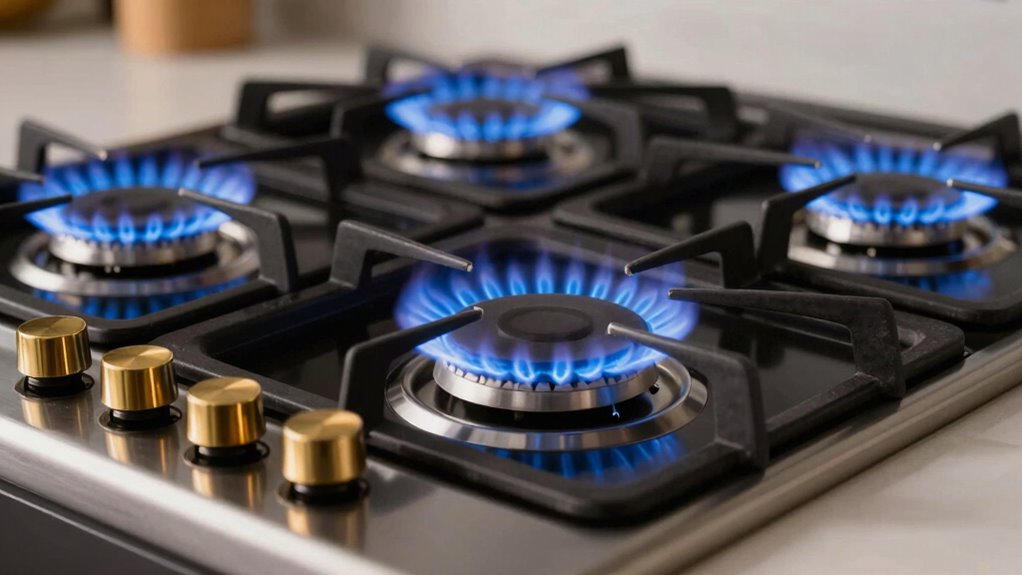

Focusing solely on high BTU ratings when choosing a gas range can backfire because more power doesn’t always lead to better cooking. High BTUs can cause uneven heat, wasted energy, and higher utility bills. Instead, look for ranges with balanced BTUs and good control features, like multi-ring burners. This will help you cook efficiently and avoid issues caused by overly powerful burners. If you’re curious, there’s more to discover about finding the perfect balance for your kitchen.

Get kitchen staples and gadgets delivered free — and shop member deals
- Fast, free delivery on millions of items
- Access to Prime Big Deal Days deals on October 6–7
- Prime Video, Amazon Music and more included
Key Takeaways
- Higher BTUs don’t always mean better cooking; excessive heat can cause uneven results or burning.
- Overpowered burners consume more gas and energy, increasing utility bills without improving performance.
- Moderate BTU burners with good control features can deliver precise heat for various cooking tasks.
- BTU ratings alone don’t reflect a range’s efficiency or ability to distribute heat evenly.
- Choosing a range with balanced BTUs and advanced controls optimizes both performance and energy use.
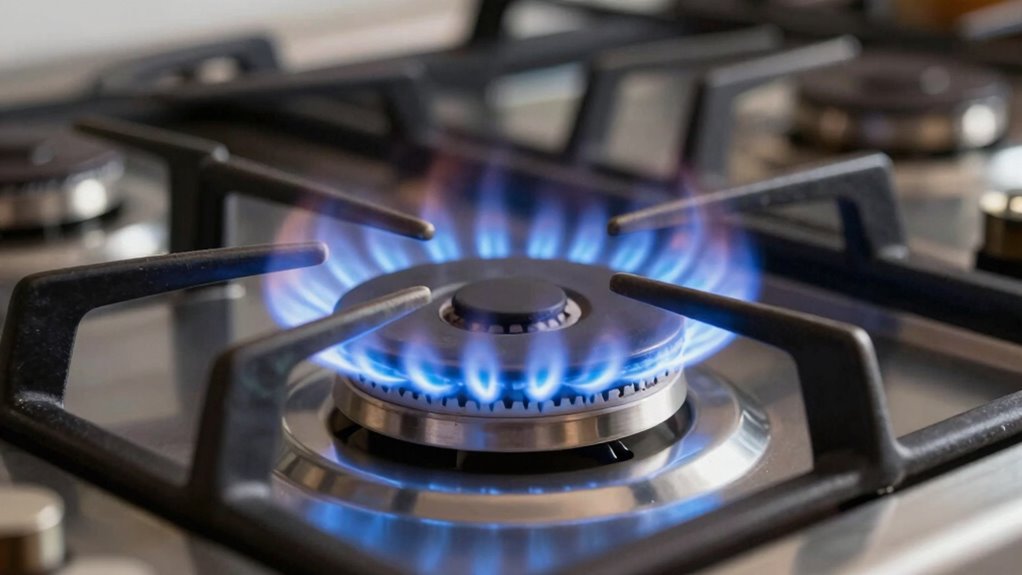
Ever wondered what BTUs really mean when choosing a gas range? If you’re into indoor grilling or just want an efficient kitchen, understanding BTUs can help you make smarter choices. BTU stands for British Thermal Unit, which measures the amount of heat a burner produces. Many people assume that higher BTU ratings automatically mean better performance, but that’s not always true. In fact, focusing solely on BTU numbers can lead you astray, especially when considering energy efficiency and the type of cooking you do most.
Understanding BTUs helps you choose efficient, effective gas ranges without overpaying for unnecessary power.
When it comes to indoor grilling, a higher BTU burner might seem appealing because it promises quick searing and high heat. However, if your primary goal is energy efficiency, more power isn’t necessarily better. Burners with extremely high BTUs can consume more gas and generate excess heat, which may increase your energy bills and make your kitchen uncomfortably hot. Instead, look for a range that offers a good balance—enough heat for grilling and boiling, but not so much that it wastes energy or causes temperature fluctuations. Remember, a burner with moderate BTUs can often do the job just as well, especially if it has better heat distribution and control features.
Furthermore, high BTU ratings don’t always translate to better cooking results. A burner with 20,000 BTUs might generate more heat than you need for everyday cooking, leading to uneven cooking or burnt spots. On the other hand, a range with lower BTUs can still be highly effective if it’s designed with good flame control and even heat distribution. This is critical for tasks like simmering delicate sauces or gently roasting vegetables. So, while those numbers on the box can catch your eye, they don’t tell the whole story about how well your range will perform in your kitchen.
Additionally, some ranges incorporate features like multi-ring burners that allow for more precise heat control, making the BTU rating less critical. Energy efficiency is another key aspect to consider. Gas ranges with extremely high BTUs tend to consume more gas, which isn’t ideal if you’re aiming to keep utility costs down or reduce your carbon footprint. Choosing a range with moderate BTUs, combined with features like good flame control and insulation, can help you cook effectively without wasting energy. It’s about finding the right power level for your needs, not just the highest number possible. At the end of the day, understanding the real meaning of BTUs helps you avoid overpaying for power you don’t need and ensures your kitchen remains comfortable, efficient, and capable of indoor grilling when you want it.
As an affiliate, we earn on qualifying purchases.
Frequently Asked Questions
How Does BTU Rating Affect Cooking Efficiency?
Higher BTU ratings can boost your cooking speed, but they don’t always mean better efficiency. When you have more power, energy transfer happens quickly, but uneven heat distribution can occur, leading to hot spots or inconsistent cooking. If your burner’s too powerful for the pot size or dish, you might waste energy and struggle to control temperature. Selecting the right BTU guarantees efficient heat transfer and even cooking results.
Can High BTU Ranges Damage Cookware?
Yes, high BTU ranges can damage cookware if it isn’t compatible. Cast iron or heavy-duty pots handle high heat better, but thin or delicate cookware might warp, crack, or degrade quickly. You also use more energy consumption with high BTU burners, which isn’t always efficient. To prevent damage, match your cookware to the range’s power level and avoid running burners at maximum unless necessary, saving energy and prolonging your cookware’s lifespan.
Is Higher BTU Always Better for Home Cooking?
Higher BTUs aren’t always better for home cooking. Imagine boiling water in minutes versus slowly simmering; more power speeds up cooking but can also lead to energy waste and overheating. While high BTUs enhance cooking speed, they can make delicate dishes tricky and increase energy consumption. Balance your range’s power with your cooking style to avoid overkill, ensuring efficient, safe, and enjoyable meals every time.
How Do BTUS Compare Between Different Fuel Types?
You’ll find that BTU comparisons vary with fuel type variations, affecting efficiency differences. For instance, natural gas typically offers lower BTUs compared to propane, but it’s often more efficient and cost-effective. Electric burners, meanwhile, don’t use BTUs but rely on wattage, so direct comparisons are tricky. Understanding these differences helps you choose the right fuel type for your cooking needs, balancing power, efficiency, and cost.
What Safety Concerns Are Associated With High BTU Ranges?
While high BTU ranges can seem tempting, they come with some gentle caution. You should prioritize gas safety by ensuring proper ventilation and regular appliance maintenance to prevent gas leaks or flare-ups. Overpowered burners can also increase the risk of accidents if not managed carefully. Staying vigilant and maintaining your range helps keep cooking safe, efficient, and enjoyable, even with those powerful burners.
Conclusion
Remember, higher BTUs don’t always mean better cooking performance. While more power might seem appealing, it can actually backfire if your kitchen isn’t equipped to handle the heat or if you prefer precise control. Instead of chasing the highest numbers, focus on finding a range that offers balanced power and control suited to your cooking style. Sometimes, moderate BTUs give you the best results without the risks of excessive heat.
NFL season / tailgating Picks
team gear
As an affiliate, we earn on qualifying purchases.