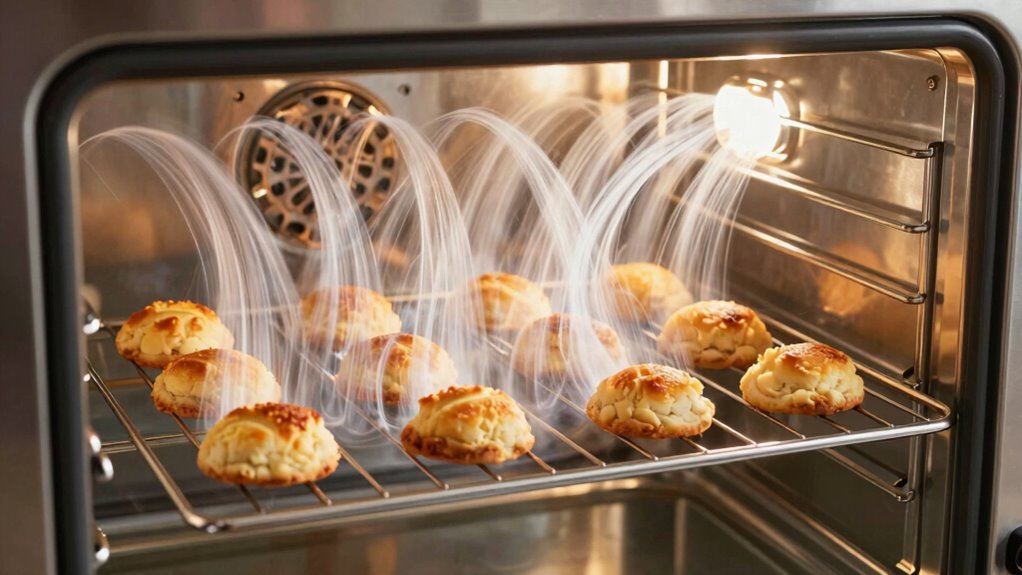
Convection ovens cook faster because their built-in fans actively circulate hot air throughout the chamber, ensuring even heat distribution. This continuous airflow accelerates heat transfer to your food, shortening cooking times while preventing hot spots or uneven results. As a result, you can cook meals more efficiently and achieve consistent quality. If you keep exploring, you’ll uncover how this airflow science makes convection ovens a smarter choice for faster, more even cooking.
Key Takeaways
- Convection ovens use fans to circulate hot air evenly, speeding up heat transfer to food.
- Continuous airflow reduces hot spots, ensuring uniform cooking and faster browning or crisping.
- Improved heat circulation allows for lower cooking temperatures, shortening overall cooking times.
- Even heat distribution prevents uneven results, enabling quicker achievement of desired doneness.
- Faster heat transfer and consistent airflow enhance cooking efficiency and reduce energy use.
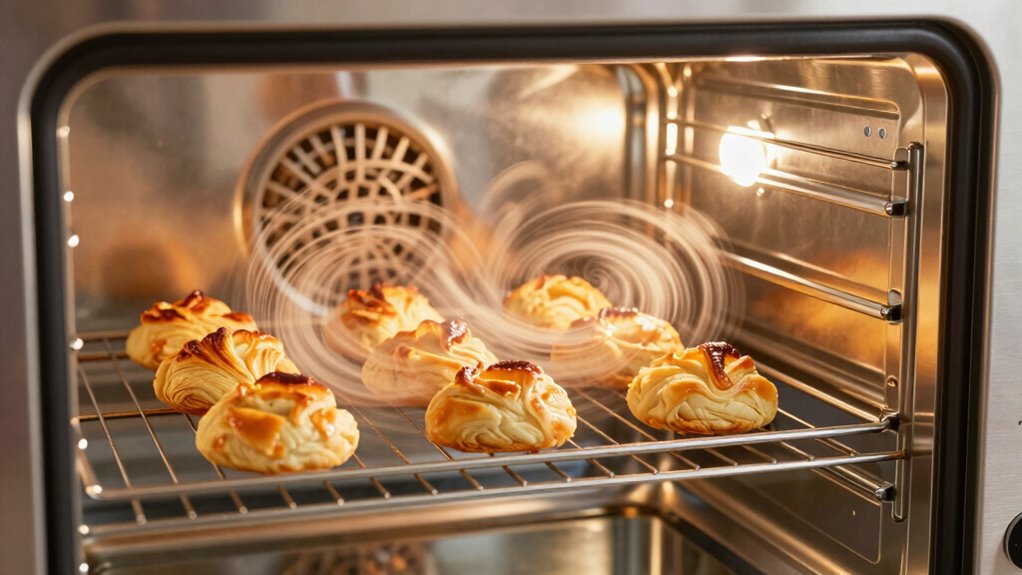
Convection ovens cook food faster than traditional models because they use a fan to circulate hot air evenly throughout the cavity. This continuous airflow enhances heat transfer, allowing your dishes to cook more quickly and evenly. Unlike conventional ovens, where heat rises from the bottom and creates hot spots, convection ovens maintain a consistent temperature across the entire cooking chamber. This steady heat distribution helps prevent uneven baking or roasting, ensuring your food gets cooked thoroughly from edge to edge. The improved airflow also reduces the likelihood of hot spots that can cause uneven browning or burning. When you’re baking in a convection oven, adjusting the baking temperature is essential. Since heat circulates more efficiently, you often need to lower the recommended temperature by about 25°F to prevent overcooking or burning. This adjustment takes advantage of the oven’s superior heat distribution, allowing you to achieve the desired doneness without risking dryness or uneven browning. You’ll find that recipes tailored for traditional ovens can often be adapted easily for convection models by simply lowering the temperature and reducing cooking time. The key to maximizing the benefits of a convection oven lies in understanding how heat moves within the cavity. The fan creates a continuous airflow that transfers heat more rapidly and evenly around your food. This means that hot spots are minimized, and your baked goods, casseroles, or roasted vegetables come out perfectly cooked on all sides. The even heat distribution also shortens cooking times, saving you energy and helping you plan meals more efficiently. With convection cooking, you might notice that your baked goods develop a crisp crust or a golden exterior quicker than expected, a direct result of improved heat circulation. Additionally, proper airflow management can extend the lifespan of your oven by preventing hot spots that cause uneven wear on heating elements. Another advantage is that you can often cook multiple dishes at once without worry about flavors mixing or uneven results. The consistent heat distribution ensures each item receives the same temperature exposure, so you don’t need to rotate trays or worry about some areas cooking faster than others. This uniformity is particularly beneficial when baking cookies, bread, or pastries, where precise heat control impacts texture and appearance.
Frequently Asked Questions
Do Convection Ovens Use More Energy Than Traditional Ovens?
Yes, convection ovens tend to use more energy than traditional ovens because their fans and additional components increase energy consumption. However, you might find that they’re more efficient overall, as they cook faster and often reduce overall cooking time. This can lessen the environmental impact by decreasing energy use per meal. So, while individual energy consumption might be higher, the quicker cooking process can balance out the environmental footprint.
Can Convection Ovens Be Used for Baking Delicate Items?
Yes, you can use a convection oven for delicate baking, but you should adjust your approach. The even airflow helps with cake browning, giving a beautiful crust, while reducing temperature or baking time can prevent over-drying. For pastries delicate in texture, use lower fan settings or turn off the convection feature to avoid disrupting the fine, flaky layers. This way, your baked goods stay tender and perfectly cooked.
How Does the Size of the Oven Affect Airflow Efficiency?
Think of your oven as a busy highway; the size influences how smoothly traffic flows. A larger oven offers more space for airflow patterns to circulate, preventing hot spots and ensuring even cooking. Conversely, a smaller oven’s limited capacity can cause turbulence, reducing airflow efficiency. So, your oven’s size directly impacts how well heat distributes, making capacity a key factor for ideal baking and roasting results.
Are Convection Ovens Suitable for All Types of Cooking?
Convection ovens are suitable for most types of cooking because they offer great cooking versatility and precise temperature control. You can bake, roast, toast, and even dehydrate with ease, thanks to the even airflow that guarantees uniform heat. However, for delicate baking like soufflés or certain pastries, you might prefer a traditional oven. Overall, convection ovens give you flexibility and efficiency for a wide range of culinary tasks.
What Maintenance Is Required to Keep Convection Fans Working Properly?
Think of your convection fan as the heart of your oven’s rhythm. To keep it beating smoothly, regularly check the fan bearings for wear and lubricate if needed. Also, clean or replace the air filter to prevent dust buildup. These simple steps guarantee proper airflow, maintaining efficiency and prolonging the lifespan of your convection oven. Stay attentive, and your oven will serve you well for years to come.
Conclusion
Understanding how convection ovens use airflow is like revealing a secret recipe for faster cooking. By circulating hot air evenly around your food, they turn your kitchen into a race track where heat zooms to the finish line. Now, armed with this science, you can confidently bake and roast, knowing you’re harnessing the power of airflow to save time and achieve perfect results. It’s like having a culinary turbo boost right in your oven!